School District Roofing in Bryan, TX
A school roof walk after a storm needs a work window that fits the calendar and the affected building. The Bryan-College Station area saw its most significant hail on April 8, 2021 from 9 until 9:30 p.m.; reported diameters spanned 1-2.75 inches. School maintenance records should identify the roof zone examined after a reported concern and any subsequent repair that could affect the current scope. We mark roof areas that need attention, check seams, edge details, drains, curbs and interior reports, then decide whether a repair, defined replacement area or larger project belongs in the scope.
That first record gives facilities staff and the general contractor something concrete to sequence. We note which rooms or building services sit below each roof zone, where materials can move, and how the opening will be dried in at the end of the shift. For a broader roof condition review, a photo-backed condition report can carry marked findings into a district planning meeting without turning one observation into a building-wide conclusion.
Calendar: Set a work window that fits the school day
A school roof project crosses several calendars: student occupancy, staff access, deliveries, mechanical work and the roofing crew’s own dry-in sequence. Hot roof conditions make the work window a practical part of production planning. We schedule roof openings, material staging and noisy tasks against the hours available, then confirm who can release each area and who receives the end-of-day handoff. A weekend or break period can create a useful window, but it does not replace a written plan for weather changes or occupied spaces.
We divide the roof into workable zones instead of treating every building as one continuous surface. A phased occupied-building reroof can keep the active opening separate from completed areas, while a general contractor coordination plan identifies the trade that follows at each tie-in. The scope should say where access begins, which routes stay clear, and what temporary protection remains in place if the next shift cannot start immediately.
Findings: Separate a hail mark from a repair decision
A dented edge, puncture, split seam or membrane mark calls for a different check. We photograph the condition, inspect nearby transitions and compare the roof surface with interior reports. That lets the district see what is confirmed, what needs closer access and which areas should be protected first. We set the repair boundary from the roof in front of us and keep the next inspection or follow-up task specific to that building.
Where the report points to a localized issue, we define the repair boundary and test the tie-in to sound material. If water has traveled toward a classroom, storage room or mechanical space, we trace the path back through drains, seams and penetrations rather than assuming the visible ceiling mark sits directly beneath the entry point. A hail-damage roof assessment can separate immediate dry-in from follow-up work, and a Bryan-area roof walk helps establish condition before a larger replacement decision.
Water path: Check the roof after the storm passes
Storm debris can collect at drains, scuppers and low points, where water remains after the surrounding roof looks clear. We inspect the outlet, nearby flashing and the slope leading to it, then record whether the issue is a blocked path, a damaged detail or a surface condition that needs more evaluation. That distinction matters when a district is balancing immediate building use with a repair scope. A drain and scupper review can be included with the storm walk so the report covers how water exits, not only where it appeared inside.
Heat changes the same work plan from another direction. At the College Station station, the high reached 112 degrees on August 20 and 27, 2023. For summer roofing work, the daily plan checks the receiving surface against adhesive or coating instructions, identifies shaded storage where needed and allows for crew breaks. We set a dry-in limit before materials are removed or prepared. The project record should name the zone, task and handoff time so the following trade knows whether the working surface is ready.
Scope: Match the assembly and the trade sequence
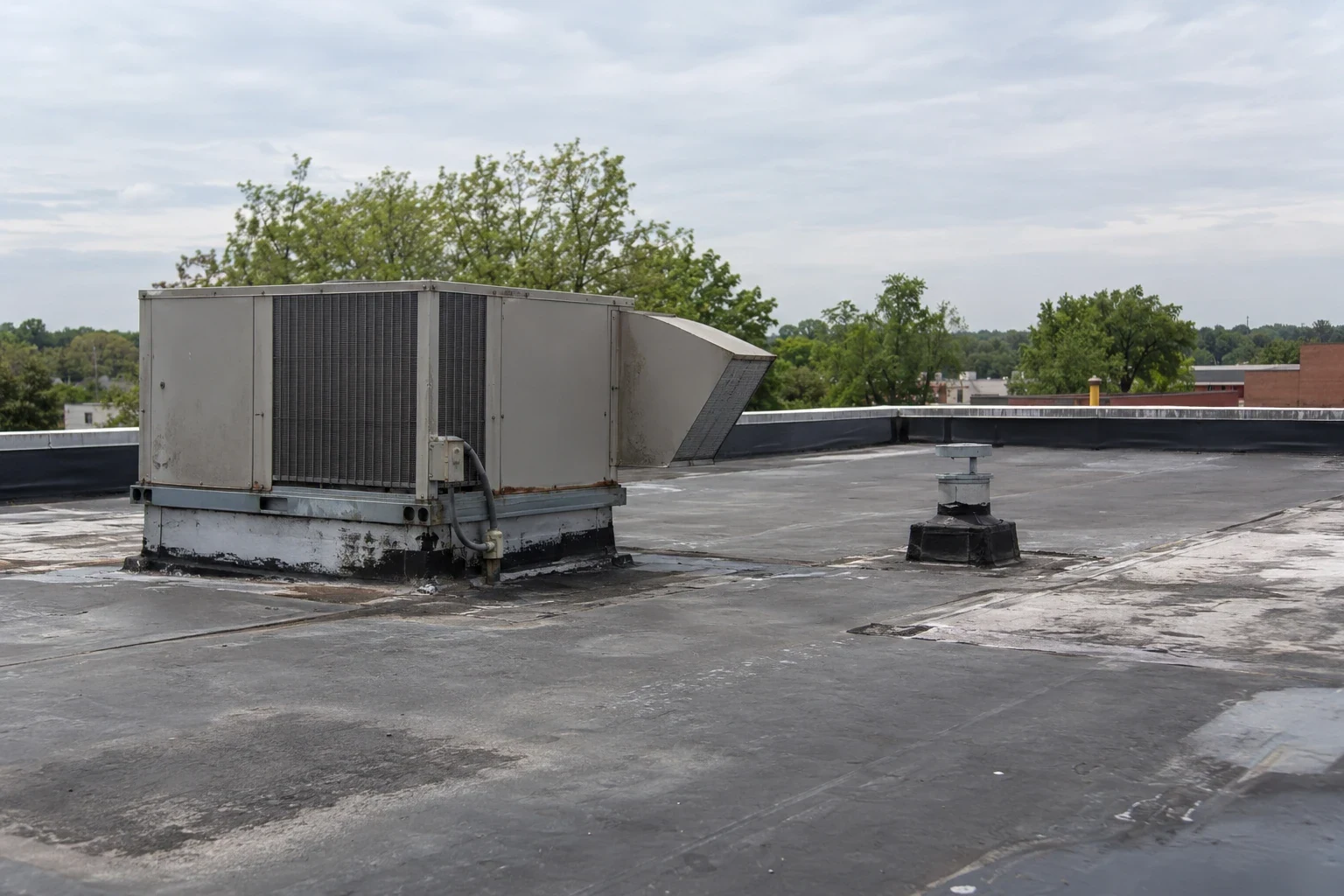
A district may have several roof assemblies, repairs from different years and equipment installed by different trades. We identify the visible system before selecting a repair method, then check how insulation, cover board, membrane, edge metal and penetrations meet. A patch that does not reach stable material can leave the weak transition in place. A replacement scope should show the tie-ins, penetrations, drainage details and perimeter work that must be completed along with the field surface.
Mechanical curbs and conduit supports deserve a place in the sequence because the next trade can reopen roofing work after the membrane crew leaves. We mark each interface, confirm who handles the equipment connection and protect the roof until the tie-in is complete. A curb and support detail review helps define that boundary, while a public-agency roof record can provide a useful comparison for coordinating multiple buildings without assuming that their assemblies match. If replacement is under consideration, we compare repair, recover and tear-off paths against the inspected conditions.
Permit: Carry the work through inspection
For a finish replacement inside Bryan's limits, the roofer files with the city and requests its final inspection. We allow time for review and the result before treating the district project as closed. Bryan’s development-services portal supports online applications, inspection scheduling and results, which gives the district a way to follow the permit sequence without relying on an informal handoff.
Closeout should make the next roof decision easier. We provide the marked repair boundary, photographs, materials and areas completed, remaining items, and any condition that needs another visit. If the project includes several buildings, the record separates each roof zone so a completed area is not confused with work still pending. For a district with competing repair priorities, a roof capital plan can turn these findings into a phased list of near-term protection, planned repair and future replacement work.
Keep the field record tied to the affected building, including the access route, roof zones reviewed and areas that need a return visit. Facilities staff can then compare immediate protection, repair and further evaluation without extending one roof’s findings to the rest of the district.

Frequently Asked Questions
Can roof work be scheduled while classes are in session?
Yes, when the work can be divided into controlled zones and the access plan is agreed before mobilization. We identify the active opening, delivery path, restricted areas and end-of-shift dry-in so the district can coordinate the roofing sequence with building operations.
What should a district do after hail is reported?
Start with buildings where interior reports or visible roof conditions call for attention. Arrange a roof inspection that records seams, edges, penetrations and drainage, then separate immediate protection from follow-up evaluation. The next task should match the affected roof zone and the conditions found there.
How do you handle a leak when the ceiling stain is away from the roof entry?
We trace the water path through the roof assembly and nearby details, then check the area around the interior report. Water can travel along insulation or structure before it becomes visible, so the repair scope follows the verified entry point and the condition around it.
Does every building in a district receive the same roofing scope?
No. We document each roof’s assembly, condition, drainage and trade interfaces, then group work only where the construction and timing genuinely match. That keeps a sound roof from being folded into a replacement scope because another building has a different problem.
What belongs in the closeout record?
The record should identify the roof zones completed, photographs, repair materials, permit inspection status and any item that remains open. We also note the tie-ins or equipment work that could affect the roof later, so the next maintenance visit starts with a usable handoff.
Set the district roof walk
Share the building use, roof areas of concern and likely work window. We can inspect the reported conditions, mark the repair boundary and coordinate the next roofing task with the district schedule.