Home / Service Areas /
Commercial Roofing in College Station, TX
Commercial roof work in College Station needs a plan for the occupied space, equipment interfaces and temporary closure before a membrane or flashing detail is removed. In College Station, TX, we begin with the surface, edges, drains, penetrations and interior report, then connect the observed issue to a repair boundary. That keeps the decision useful for a property manager and the general contractor scheduling the next trade. A commercial roof inspection can establish what is visible before an opening or replacement is priced.
Local uses: plan for several kinds of operating space
College Station has retail and hospitality activity connected to the city's academic economy. Northgate includes dining, retail, hospitality and mixed-use development, while the Midtown District contains existing housing, office and retail uses. Those areas show why roof work cannot be assigned one generic access plan: storefront deliveries, service entrances, occupied floors and equipment routes may differ from building to building. A Northgate service visit or a Midtown District review still starts by identifying the property contact and the roof being inspected.
The city also has a hot-weather record, including two College Station station readings of 112 degrees in August 2023. That is useful context for planning a heat-sensitive installation window, not a substitute for checking the roof temperature, substrate condition or forecast on the work day. The service plan should name the task that can be completed and made watertight before the crew leaves. Where staging or access depends on a busy commercial area, we confirm the delivery route before selecting the daily work zone.
Field review: separate symptoms from the water path
A leak report may identify a room or ceiling stain, but it does not prove that the entry point sits directly above it. We compare the interior location with roof seams, flashing, curbs, drains, parapet transitions and earlier repairs. If water can travel along a deck or insulation layer, the inspection records that uncertainty rather than assigning a cause prematurely. A commercial repair assessment can then define a test area or a contained opening before the proposed repair expands.
Hail review also depends on the installed assembly. We look for displaced metal, punctures, fractured coating, opened laps and damage around rooftop equipment, then photograph each roof zone with a reference point. Surface marks may warrant closer examination, but their presence alone does not establish moisture below the membrane or a need for full replacement. If a suspected wet area affects the choice, a moisture survey can help identify locations for confirmation when conditions suit the method. The resulting notes separate confirmed findings from questions that still need testing.
Assembly: match repair material to the roof
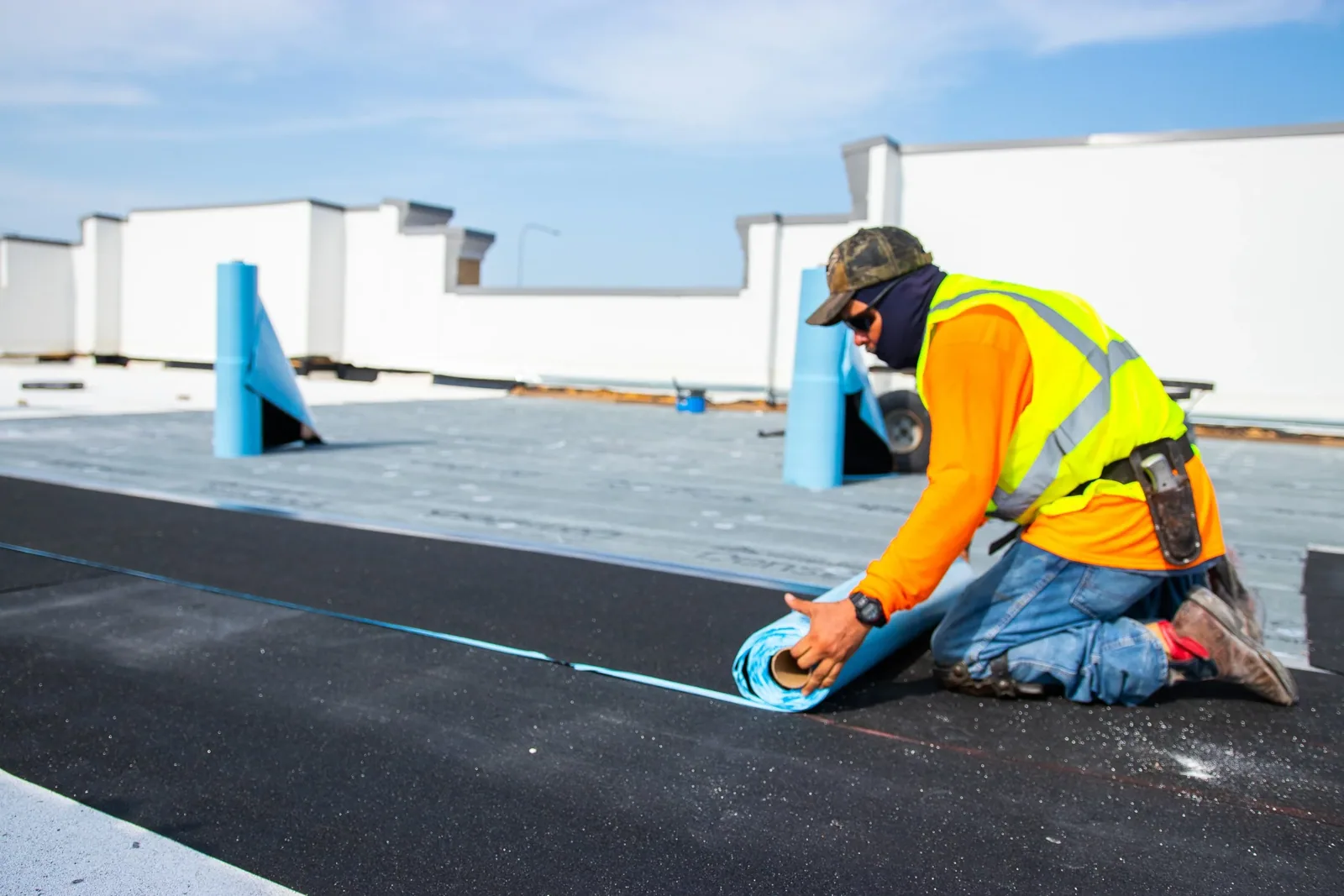
Membrane repairs depend on product type, seam method, substrate and attachment. We identify whether the visible roof is a thermoplastic sheet, rubber membrane, asphalt-based assembly or metal system before selecting a compatible detail. The proposed work names surface preparation, material transition and tie-in location. A TPO system review can help compare that assembly where the installed membrane is confirmed, while an inspection keeps the recommendation tied to the conditions at the property.
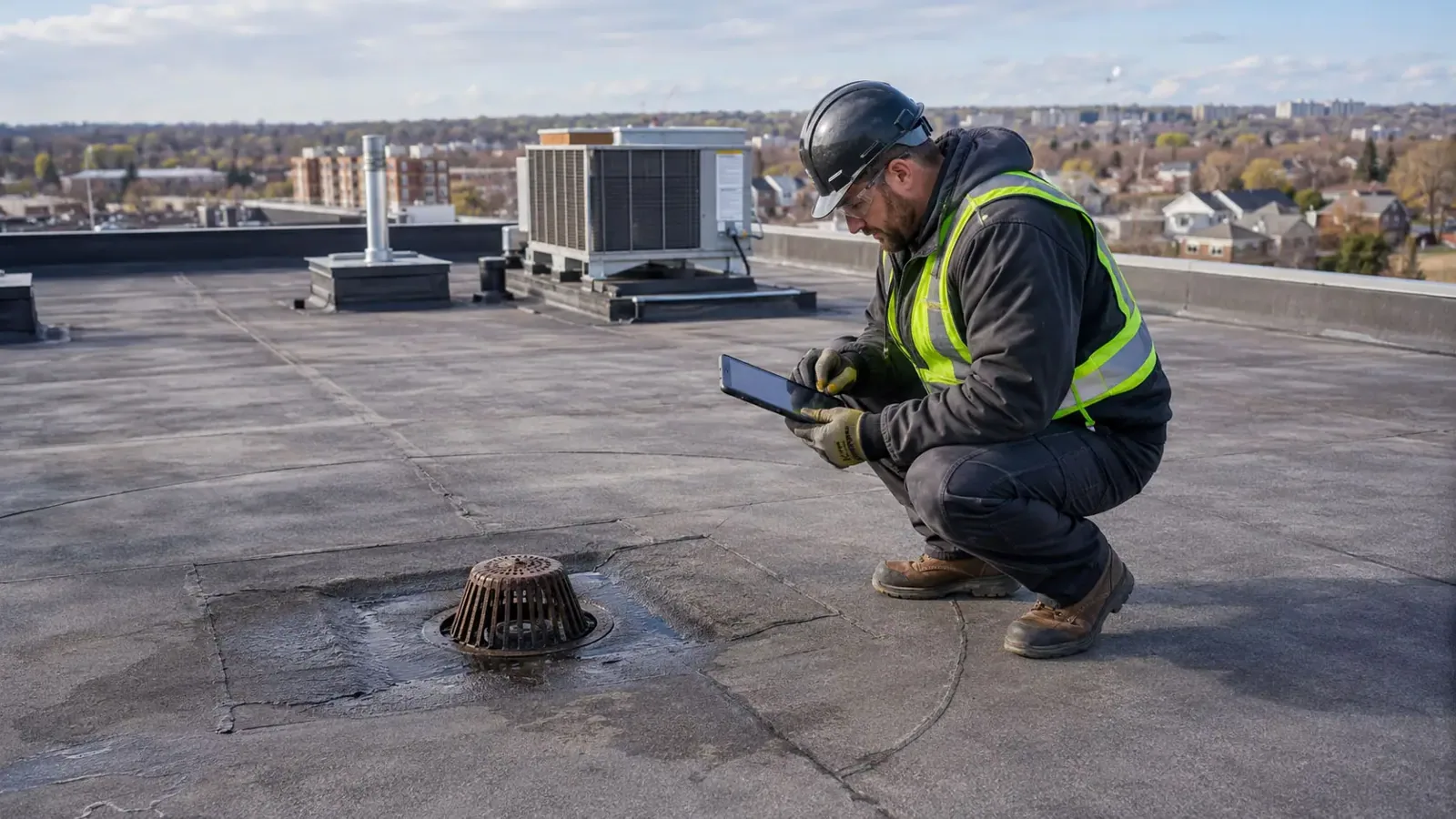
At drains, scuppers and low points, a repair must preserve the path water uses to leave the roof. We inspect the bowl, flashing, sump and nearby seams, then distinguish debris removal from a failed connection or recurring ponding condition. A drain and scupper review can identify the roof-side work and any separate plumbing question. If later trades will add curbs or conduit, the scope records who closes each penetration and how the tie-in will be inspected before equipment is returned to service.
Work window: protect the occupied area below
A roof opening above a retail or hospitality space can affect entrances, staff circulation and deliveries even when the roof crew works in a small area. Before mobilization, we confirm the approved access point, lift position, staging limits, work hours and space directly below the planned task. The superintendent and property contact agree on the temporary protection and dry-in boundary. A maintenance visit can also be scheduled around the building's operating needs, with drains and transitions checked without turning a routine inspection into an open-ended project.
Heat and sudden weather changes influence how much membrane or coating work can be completed safely in one shift. We check product requirements and actual conditions, identify a secure stopping point, and sequence the crew so every exposed section can be dried in before the work window closes. Materials arrive when the roof area is ready rather than blocking a customer route for hours. When a storm-related issue needs documentation, a hail damage review can organize dated photographs and roof observations without promising an insurance result.
The pre-work conference should cover temporary controls below the roof as carefully as the surface repair. If a crew will remove wet insulation or cut back flashing, the property contact and superintendent need the exact room or aisle to protect, the person checking that barrier, and the condition for removing it. We note those responsibilities beside the affected roof zone so the field crew and the building team use the same handoff. After permanent work, a return inspection checks that the opening, tie-in and protected area have all been closed out.
Handoff: leave the next decision traceable
Closeout records the assembly observed, roof zones opened, material installed, transitions completed and any condition outside the repair boundary. Photos should show edges, seams and penetrations as well as the general field so a later inspection can find the same locations. The contact receives any temporary protection limits and the follow-up item that could change the recommendation. For a larger site program, a roof condition report can carry those findings into the next maintenance or replacement discussion without mixing observations from different buildings.
A project that replaces roof finishes inside Bryan follows Bryan's permit and inspection rules; those municipal requirements do not automatically apply to a College Station property. We confirm the jurisdiction and planned work before putting an administrative step in the scope. When no permit rule is established by the available project information, the proposal should identify that question for confirmation instead of making a broad claim. The field record then closes with the repair limit, dry-in status, access handoff and any task that remains with another trade.
When an owner is comparing repair with a wider renewal, we separate known quantities from allowances for concealed material. The proposal can identify the surface that will be removed, the deck or insulation condition that would change the estimate, and the daily stopping point for weather protection. That lets the project team compare scopes with the same assumptions instead of treating a low initial price as proof that both bids include the same roof work. The condition record stays available for later service.
Frequently Asked Questions
What should the first roof visit establish?
We confirm the reported area, roof access, building use and decision needed. The inspection then maps visible conditions to a roof zone and identifies any test that could change the repair boundary.
Does the 2021 hail event determine the repair scope?
No. It gives a dated reason to review reported conditions, but the actual assembly, impact and moisture evidence at the property control the recommendation.
Can work proceed above an occupied storefront?
The work window depends on access, protection below, weather and the area exposed. We coordinate a secure dry-in point with the property contact before opening the roof.
How do you handle roof drains during a membrane repair?
We inspect the outlet, sump and nearby flashing as connected details. The scope distinguishes a roof defect from debris or a downstream drain issue that needs another trade.
What information helps arrange a College Station service call?
Share the property address, roof concern, building use, site contact and available access window. That lets us plan the visit around the correct building and operating conditions.
Arrange a College Station roof review
Tell us the roof concern, building use, property contact and proposed work window. We can coordinate access and identify the next roofing task.