Home / Service Areas /
Commercial Roofing in Hearne, TX
A roof over a loading or service area can take heat through the day, so the crew needs a work window that leaves each opening secure before conditions change. In Hearne, TX, we begin with the roof assembly, the reported water path and the operating route below. Hearne's rail and highway connections are part of its economic setting, making delivery timing and staging practical questions for a roof scope. The first step is a commercial roof inspection that maps findings to the property, not to a general area description.
Local setting: coordinate deliveries and roof access
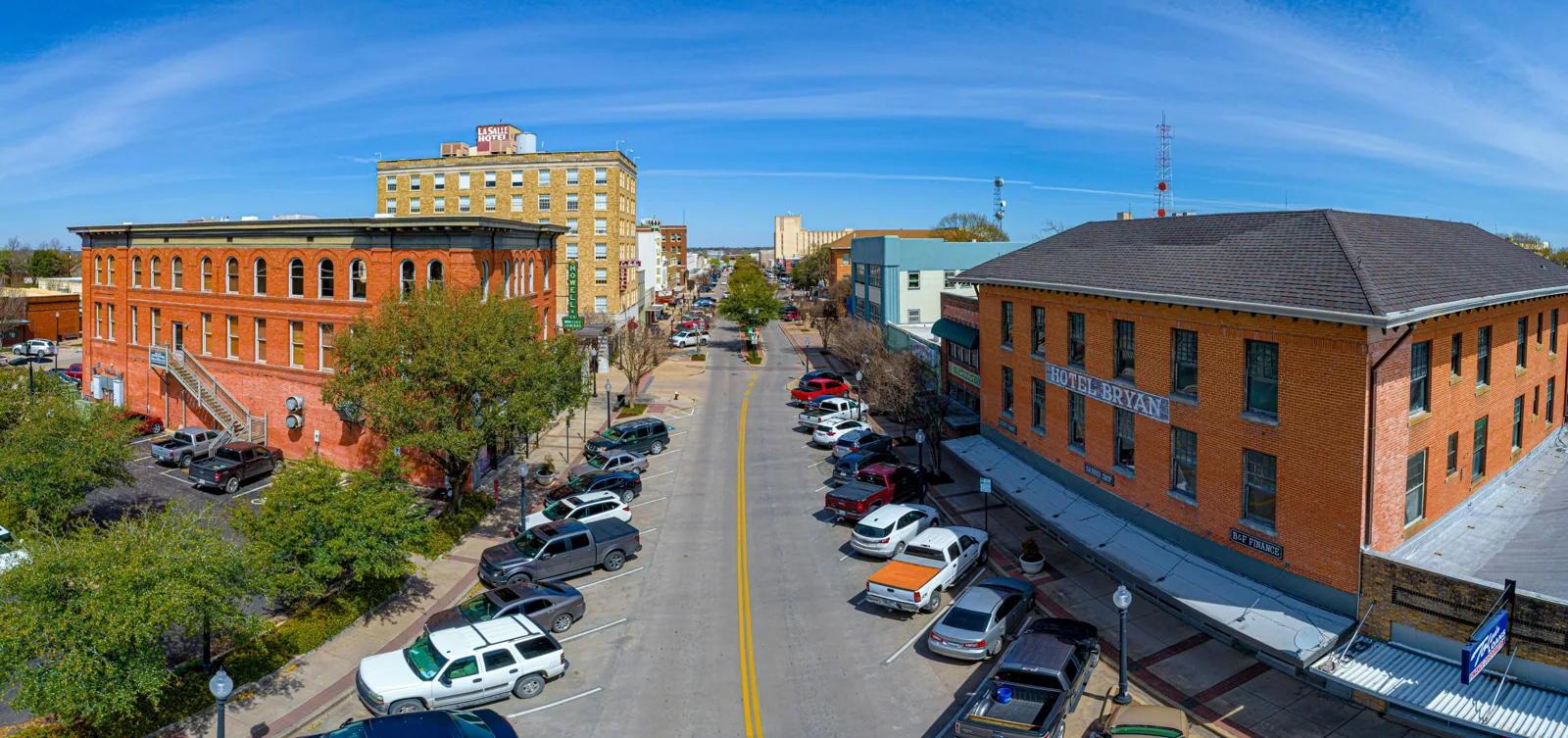
Hearne's commercial setting includes major rail lines and highways. For a property near downtown or Highway 6, roof access and delivery staging should be confirmed with the site contact. Those features matter to roofing only through the actual building's access, operating schedule and surrounding work routes. We confirm which entrance a supplier may use, where a lift can stand, how deliveries are handled, and what must remain open below. Storefront roofing in Downtown Bryan runs on a different staging pattern, and the Hearne inspection stays specific to its own roof and property contact.
For downtown work, the site contact identifies active entrances, street-side protection needs and the person who can approve a temporary change. The City describes a downtown revitalization plan as in development, so we do not assume planned improvements are complete or that every property shares one operating rule. Those controls keep a roof opening from interrupting an adjacent route or leaving another trade without a clear handoff. A property in Bryan sits in a separate municipality with its own work sequence.
Condition: trace the leak before widening the work
Interior staining is a starting point, not a roof diagnosis. We compare the reported room with seams, penetrations, edge metal, drains and wall transitions, then check whether water may have moved along the deck before appearing inside. The scope identifies the observed defect and records concealed conditions that have not been opened. A commercial roof repair review can define a test location or a targeted removal rather than pricing a broad replacement from a single symptom.
The roof type governs the repair method. We identify whether the assembly uses a membrane, asphaltic layers or metal before specifying a patch, flashing correction or larger repair. Around drains and scuppers, we inspect the outlet, sump, membrane tie-in and overflow route together. A drainage detail check can distinguish maintenance from a connection failure or recurring ponding. If moisture beneath the surface could change the scope, a targeted moisture survey may help select locations for confirmation, provided conditions support the method.
Repair boundary: keep temporary protection distinct
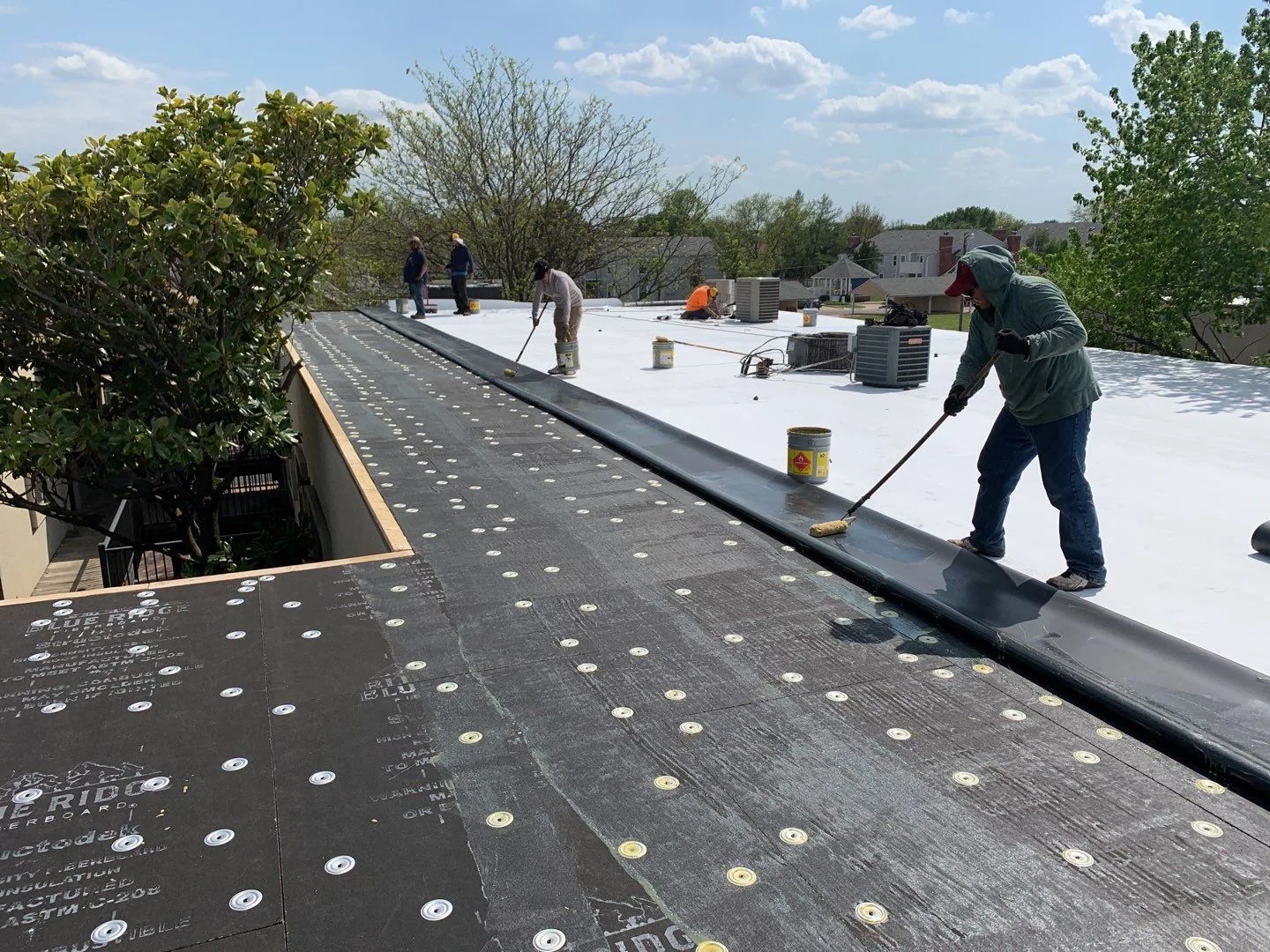
When water is active, dry-in and interior protection come before a permanent detail. We identify the access route, the area below the opening and the temporary measure that can hold until the lasting repair is ready. The crew records where that protection begins and what condition remains unresolved. A emergency roof response can stabilize an active entry, while a follow-up scope identifies removal, substrate preparation, compatible materials and tie-in to sound roof surfaces.
A hail or wind report does not by itself establish how much roofing needs replacement. We photograph displaced edges, punctures, open seams and damaged flashing, then compare the findings with the installed assembly and any interior report. A localized failure may support repair when surrounding material remains sound; repeated deterioration or moisture across separate areas may justify a replacement comparison. The proposal states what would expand the work boundary and whether an authorized opening or test is needed before a final quantity is set. A wind damage assessment can organize those observations without predicting coverage.
Sequence: align the roofing crew with the next trade
Rail and highway access can help a delivery arrive in Hearne, but the property still determines where a truck can unload and how material reaches the roof. We confirm the site contact, lift location, secure storage and route for moving materials. If mechanical or electrical work is scheduled, the trade sequence identifies who installs a curb, who flashes it, and who accepts the finished connection. A curb and support scope can make that handoff explicit before equipment is set.
Weather and surface readiness determine which tasks can be completed in the available shift. We divide larger work into sections that can be dried in and checked before the crew leaves, and we establish a stop point for an interruption. That is useful where an operating business needs a clear entrance and a predictable return to the roof. For a planned renewal, a modified-bitumen system review can compare assembly details after the existing layers have been identified, while a maintenance visit can track drains and repairs that do not require an open roof.
Before a shift begins, the site lead should know who can approve a change if an opening reveals wet insulation, loose decking or a failed connection. We photograph the exposed condition, stop at a secure edge and give the owner a defined next decision before extending removal. The same record notes whether a delivery or lift must be rescheduled. This keeps construction direction tied to a visible roof condition and avoids leaving a temporary repair without a named return task.
Closeout: document the property-specific result
The handoff should identify the roof zone inspected, the assembly where confirmed, the repair boundary, photos, materials and details left for follow-up. If another contractor must finish a connection, the record names that interface and the condition required before the roofing crew returns. A dated report helps prevent findings from one building from being carried into the next service call. The condition report process can organize those observations for future maintenance and capital planning without treating a municipality as a single roof.
For a Hearne property near downtown or Highway 6, we confirm current restrictions with the owner or general contractor, then sequence deliveries and protection around the approved route. Closeout records any temporary controls, inspection status and remaining repair item so the building team knows what is complete and what still needs a decision. That final record gives the next trade a working surface and handoff they can verify before equipment or interior work resumes.
For a building with recurring leaks, a useful service history records the date, roof zone, weather-related report, repair material and result of the return check. A later crew can compare that information with current seams, drains and penetrations rather than repeating an unbounded search. We also identify any condition that remains concealed or outside the approved work. The owner can then choose whether to authorize another test, keep the area on a maintenance list or prepare a separate project scope.
Frequently Asked Questions
How should a Hearne roof visit be arranged?
Identify the building, contact, reported roof condition and access point. We then confirm delivery, staging and work hours with the person responsible for the property.
Do rail lines or highways set the roof scope?
They can affect delivery planning, but assembly, access and roof condition set the scope. We verify the route and staging area before ordering materials.
What does a downtown roof repair need to account for?
Confirm active entrances, street-side protection and any current access constraints. We keep the roof boundary tied to the building rather than assuming all downtown properties operate the same way.
Can a leak be stabilized before a permanent repair is ready?
Yes, when the opening can be made safe and dry-in can be installed. We record the temporary measure separately, then define the lasting correction after inspection.
What should be included in closeout?
Photos, roof zone, material and tie-in notes, temporary protection limits, inspection information and any item assigned to another trade should remain with the property record.
Plan a Hearne roof visit
Send the property contact, affected roof area, building use and time access is available. Our field review can check the reported condition with your site lead and set a clear roofing scope.