Home / Roof Systems /
PVC Commercial Roofing in Bryan, TX
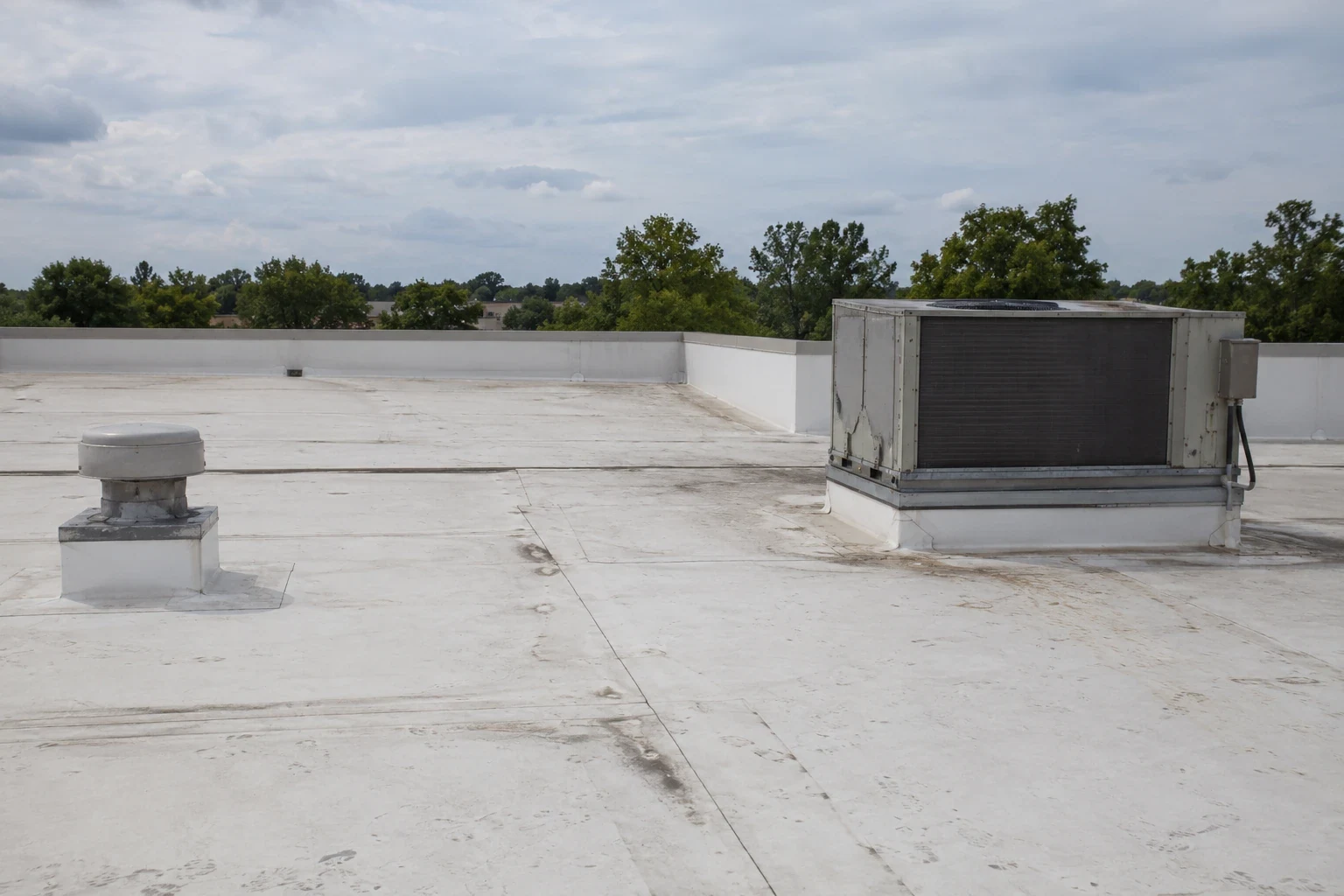
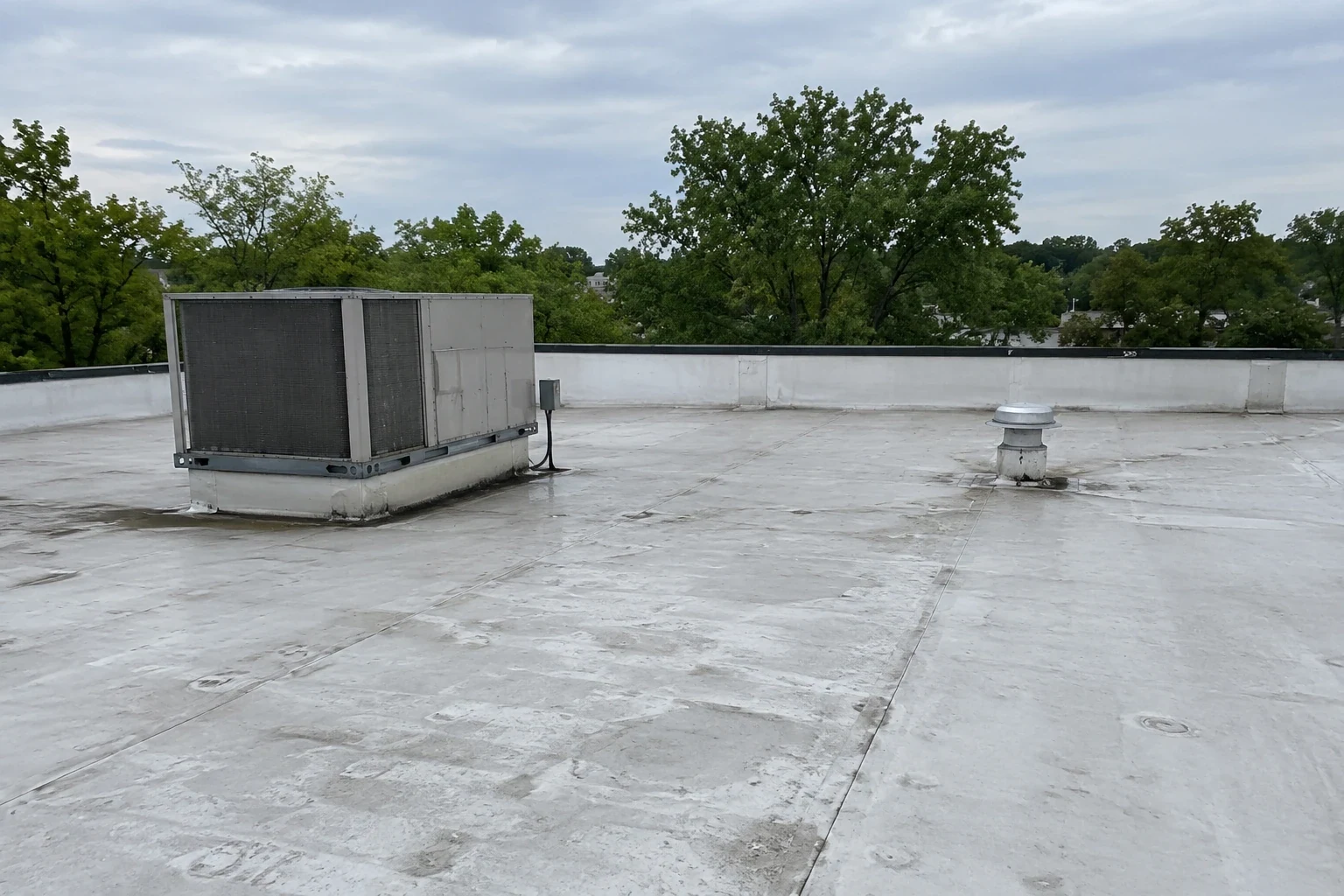
Rooftop exhaust makes PVC selection a coordination task: the discharge, service traffic and proposed membrane details need to be reviewed together, particularly where grease or chemical exposure may reach the roof. In Bryan, we assess the building's use, existing assembly, discharge points, seams and drainage before writing a PVC roofing scope. PVC is a heat-welded thermoplastic membrane; choosing it means considering the exposure at the roof as well as insulation, attachment, edge details and future equipment work.
For a Bryan Business Park roof, inspection establishes chemical exposure and service traffic rather than assuming conditions from location alone. Before selecting a PVC assembly, we identify the existing membrane, nearby discharge points and surfaces that need cleaning or compatibility testing. Significant hail fell across the Bryan-College Station area on April 8, 2021, so a post-storm walk can check exposed seams, flashings and penetrations before a planned reroof. We document the observed surface, define questions that need testing and coordinate a dry-in plan before work begins.
Exposure review: Match the material to the roof use
PVC can be considered where a project needs a thermoplastic sheet and the expected roof exposure suits that assembly. We ask where kitchen exhaust, process discharge, chemicals, grease and maintenance traffic reach the surface, then compare those areas with the system requirements. A TPO membrane is also heat welded but is not interchangeable in every exposure; KEE membranes are another formulation to evaluate when the project requirements call for them. Product selection remains tied to manufacturer data and the actual building conditions.
Before recommending a new layer, we inspect existing roof sections, terminations, drains and the condition of the supporting assembly. Records can help identify prior repairs and roof age, but field observations still determine what is present. If wet insulation or a concealed deck issue is suspected, we identify the evidence needed before installation. A commercial roof inspection can establish visible repair boundaries and flag areas where openings or other testing may be appropriate.
Welds and details: Build continuity at every change
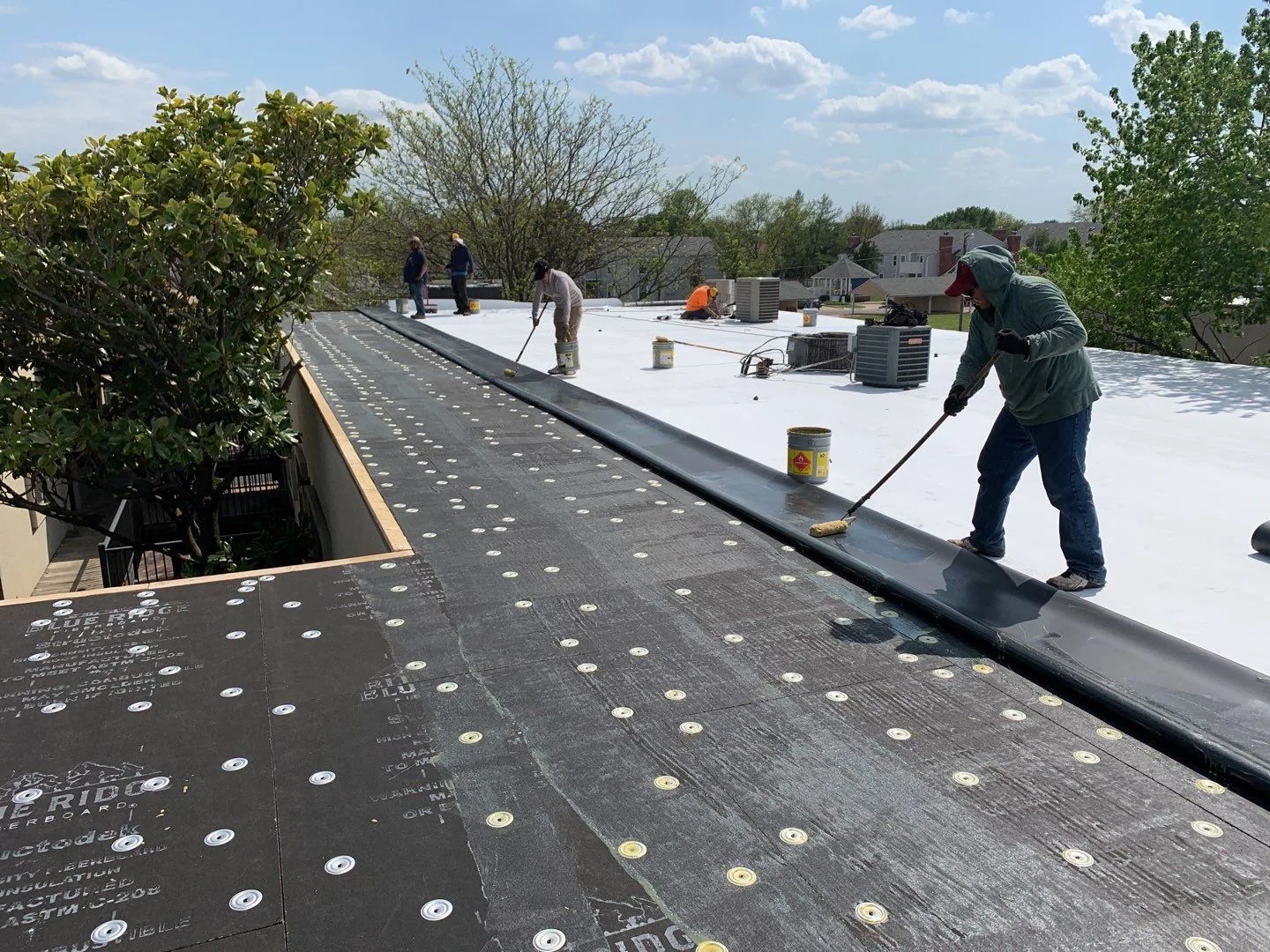
Hot-air welds join PVC sheets, and each lap has to be clean, aligned and fused through its intended width. We inspect trial welds and production seams as installation proceeds, adjusting the work when temperature, wind or substrate conditions change. Wrinkles, contamination, incomplete fusion and poorly formed corners can interrupt the water-shedding layer. A defined seam repair starts with identifying whether the separation is isolated or part of a larger assembly concern.
The membrane meets a different detail at a wall, curb, drain, skylight or roof edge. Those transitions need compatible flashing and a termination that can remain secure as the structure moves and the roof is maintained. We coordinate curbs and support points with mechanical trades before they set equipment, then confirm who furnishes each component and who closes the roof opening. A drain and scupper scope may be scheduled alongside membrane work when the water path needs attention.
Drainage: Preserve the route water must take
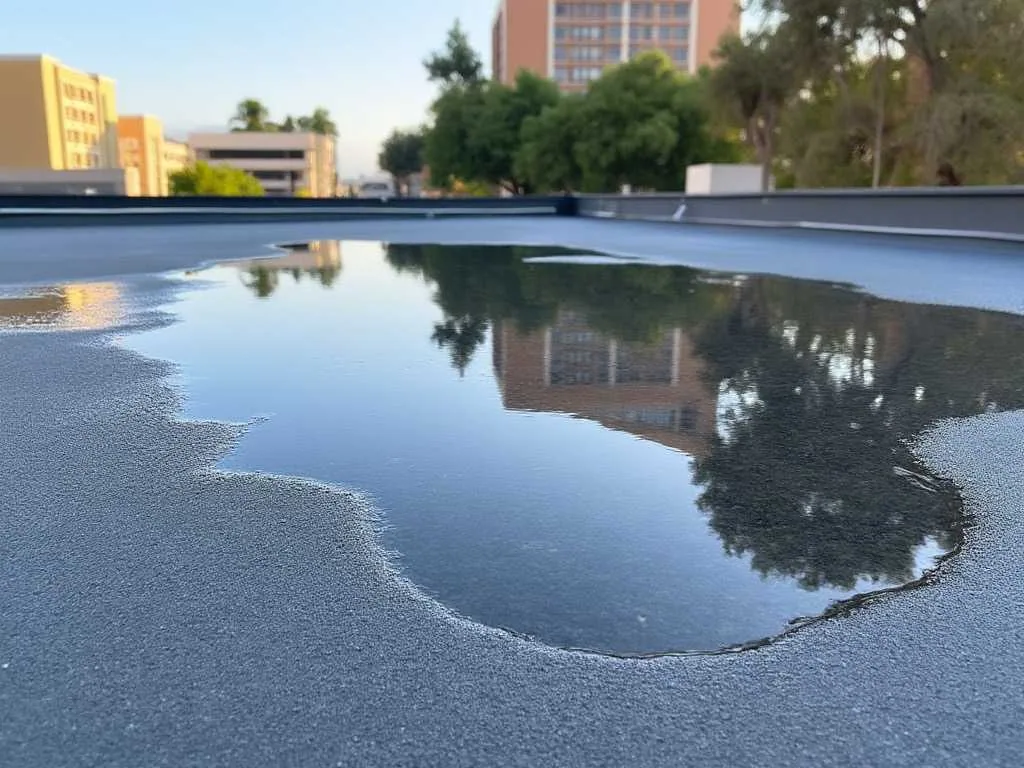
A new PVC sheet follows the shape beneath it, so it will not by itself correct a low area or an undersized drain. We review slope, drain bowls, overflow points and scuppers, then note where standing water or debris may complicate the finished work. The proposal should distinguish membrane replacement from correction of a drainage or structural issue. Where ponding is present, a roof drainage evaluation helps define which part of the water path needs work.
Roof openings also need to shed water without trapping debris or directing runoff toward a wall. We coordinate new and existing penetrations with the general contractor and other trades so that conduit, curbs and membrane tie-ins are resolved in sequence. In an occupied facility, staging and material movement can cross the same route used for service access. The work plan establishes a delivery path, protected staging area and daily closure point before material arrives at the roof.
Work window: Control exposure during installation
Roof replacement starts with the limits of the area that can be removed, insulated and closed during each work period. We account for forecast conditions, access, debris handling and interior uses before setting the tear-off sequence. Before work starts, the general contractor and roofing crew set the municipal closeout checkpoint alongside deliveries, staging and the membrane handoff. We also confirm who will request inspection access and how the site contact will receive the closeout photographs after the final seam is complete.
A secure tie-in is needed whenever work stops for a shift or changes from one roof section to another. We establish the membrane termination and temporary protection before exposing the substrate, then check that details at drains and equipment remain protected during work. An occupied-building reroof plan can coordinate noise, access and temporary protection around business use. For a roof already showing widespread deterioration, a replacement scope may be more appropriate than patching isolated seams.
Records: Make future roof work easier to plan
Closeout should identify the membrane system, completed areas, drain and edge details, repairs retained in place and locations affected by other trades. Photographs tied to roof zones help a later facilities manager find the relevant connection without relying on an old verbal handoff. A roof condition report can organize observed findings and photographs for maintenance planning. It records field observations; structural capacity and manufacturer determinations remain separate professional decisions.
After installation, maintenance looks for damage, loose terminations, debris at drains, displaced flashings and changes around equipment. Early attention to a small cut or open transition can keep water from traveling into insulation and interior finishes. A maintenance visit records the visible change and determines whether the next step is localized repair or further evaluation. A leaking PVC connection is examined for contamination, movement and weld condition before repair, so new material can be tied into a suitable surface and checked at the completed seam.
Bring the roof age if known, leak locations, access limits, building use and proposed project dates to the initial conversation. We can arrange a walk, review available drawings and discuss how PVC compares with the existing assembly. For a Bryan roof, that means linking the material decision to actual exposure, drainage and tie-in conditions rather than treating a product name as a complete specification. The resulting scope can set out what is included, which conditions still need investigation and where the general contractor should schedule the next trade.
Frequently Asked Questions
When is PVC a reasonable option for a commercial roof?
PVC can suit a project when the roof exposure, assembly, manufacturer requirements and project design align. We inspect exhaust locations, drainage, existing layers and details before comparing it with other systems.
Does restaurant exhaust affect PVC roofing?
Exhaust location and discharge matter. We identify where grease or other material reaches the roof and check that the selected membrane and details are suitable for those conditions before the system is specified.
Can PVC be installed over an existing commercial roof?
The existing assembly has to be evaluated first. We review layers, attachment, moisture concerns, deck condition and project requirements, then determine whether a recover can be considered or removal is needed.
How are PVC seams checked during installation?
The crew checks welds as the work progresses, with attention to preparation, fusion, corners and terminations. Weather and substrate conditions inform the work window and when a seam should be tested again.
What does a hail inspection look for in Bryan?
We document visible membrane cuts, displaced flashing, seam concerns and related interior reports, then identify any areas requiring closer investigation. The April 2021 hailstorm affected the Bryan-College Station area; inspection establishes property-specific conditions.
Review a PVC roofing scope
Share the roof condition, building use, exposure concerns, where the PVC roof is failing, what is below it and the proposed work window. We can arrange a walk and set out which conditions still need investigation.