Commercial Roof Drain and Scupper Repair in Bryan, TX
Water that remains around a roof outlet after the rest of the field drains can point to a blocked strainer, damaged bowl, failed membrane connection or a restriction farther downstream. Standing water leaves seams and flashing exposed to prolonged wetting, so we inspect the outlet and surrounding assembly before choosing a repair. The scope distinguishes roofing work from plumbing-line service and preserves the intended water path.
A drainage project in Bryan Business Park begins by checking the property’s outlet locations, roof access and any shared work approaches. We coordinate the work route with the building contact, photograph the drain or scupper condition and identify whether interior water entry is present. If the outlet is leaking, the repair plan identifies the membrane connection and any plumbing work needed before the opening is closed. A safe temporary measure can limit exposure while a damaged outlet is prepared for permanent repair.
Trace the water: Find where flow slows
We start at the field surrounding the outlet and follow the surface toward the drain or scupper. Debris, a displaced strainer, membrane buildup or a damaged sump can slow flow. We record whether water is localized at one detail or visible across a larger area. The roof inspection checks accessible outlets and adjacent seams so a drain repair does not overlook the entry path beside it.
We check the outlet, nearby seams and the surrounding roof surface to locate where flow slows. We look for a blocked opening, loose clamp, deteriorated seal, restricted scupper throat or signs that the water route is affected by the roof surface. If the outlet appears open but water remains, the building may need a plumbing contractor to assess the line below. The repair note states where the roofing contractor’s work ends and what evidence should be checked next.
Drain assembly: Restore the membrane connection
At a roof drain, the membrane, clamping ring, bowl and strainer form one working detail. We inspect the attachment and visible condition of each part, then identify whether repair requires resetting the membrane, replacing a component or rebuilding the surrounding area. Compatible materials and sound substrate matter at the flange. A localized roof repair can restore a damaged connection without coating over the outlet or narrowing its opening.
If removal exposes wet insulation, corroded metal or a deteriorated deck, the repair boundary may need to expand. We document the condition before rebuilding and coordinate any structural or plumbing work outside the roofing scope. A new drain connection is checked at the membrane transition and its surrounding field, with the outlet left accessible for future cleaning. The closeout identifies what was replaced and whether the drainage path needs a separate follow-up observation.
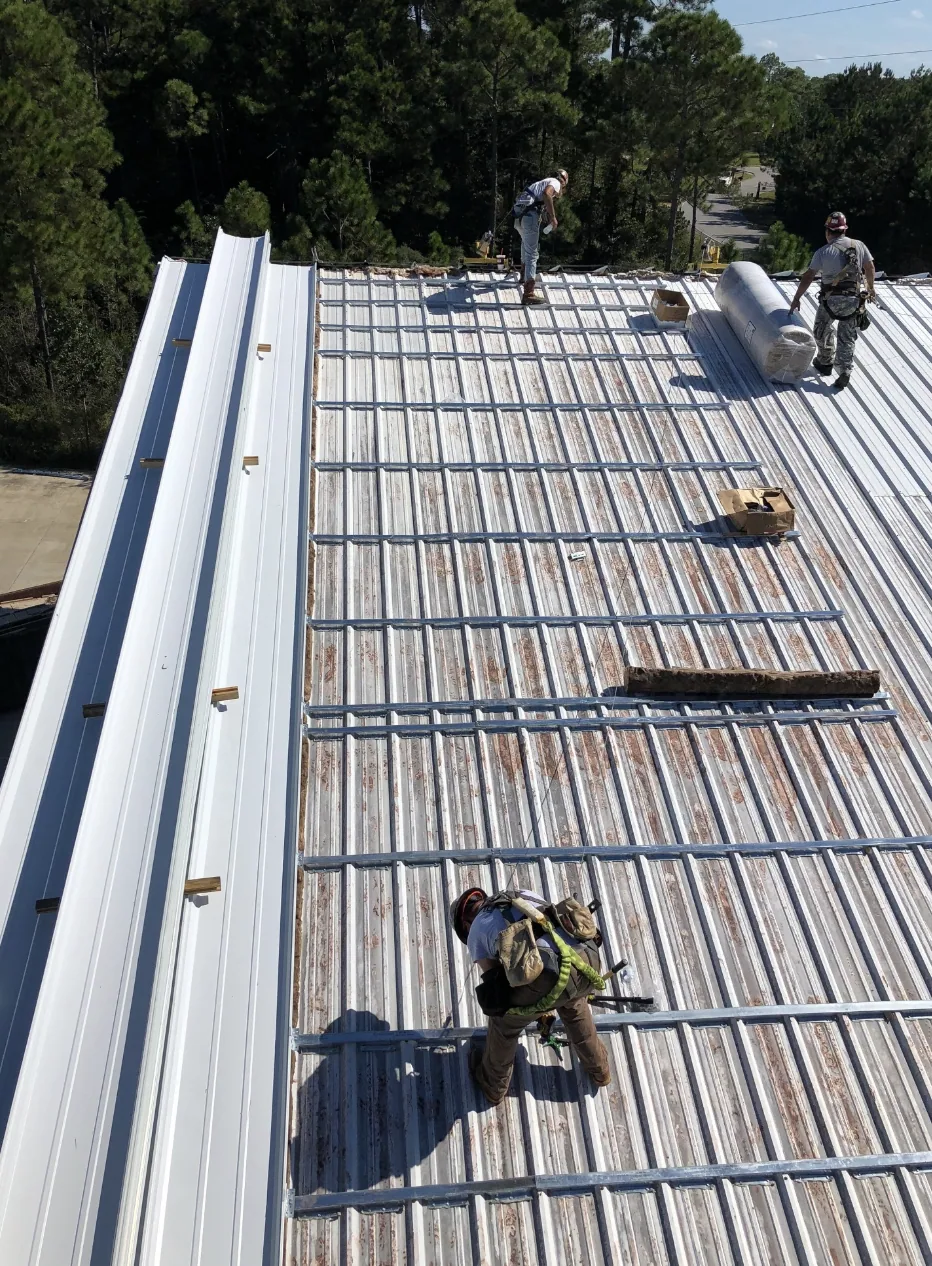
Scuppers: Check throat, edge and discharge
A scupper depends on an open throat, sound metal or compatible lining and a water path beyond the wall. We inspect the membrane termination, opening edges and visible discharge route for loose material, corrosion, blockage or separation. A failed flashing connection at the scupper may allow water into the wall assembly even when the roof field looks intact. The repair restores the transition and preserves the outlet opening.
Parapet height, coping condition and the scupper’s connection to a downspout can affect access and sequencing. We distinguish repairs at the roof opening from downstream metal or drainage work, and coordinate the appropriate trade when the outlet discharges into a damaged leader. No sealant should be applied in a way that reduces the throat or traps debris at the face. Photos before and after work help the building contact see that the outlet remains functional.
Bryan work context: Plan access and inspection
At a business-park building, the drain-repair schedule is agreed with the property contact after reviewing the route to each outlet and any equipment service already planned. We establish where materials can be staged, how crews reach the roof and which interior areas require protection. The work window accounts for the outlet’s location and weather, especially when a temporary opening would expose occupied space.
The 2019 tornado east of Bryan in Brazos County and the 2021 regional hailstorm make post-storm drain checks useful when debris or impact may have affected roof details. We inspect the outlet and surrounding membrane, checking for debris, impact or a separate drainage condition. If the building is within city limits and work expands to replacement of roof finishes, Bryan requires a contractor-obtained building permit and final inspection. We identify that transition if it becomes part of the scope.
Repair sequence: Protect the outlet during roofing work
Before removing material, we identify the expected repair boundary and how water will be managed during the work. The outlet must remain clear or be temporarily protected without creating a new ponding point. We remove damaged components to a sound edge, inspect exposed materials and restore the membrane connection using compatible products and attachment. If weather changes the work window, the opening is secured and the next step is communicated to the building contact.
Adjacent seams, penetrations and low points are reviewed before the repaired detail is closed. Where drainage changes require a broader evaluation, we document the issue rather than using an unapproved filler to redirect water. A planned maintenance visit can include inspection of strainers and outlets after debris-producing weather. The owner receives the repaired location, materials used and any remaining plumbing or structural item that needs another trade.
Frequently Asked Questions
Does standing water always mean the drain is broken?
No. Debris, a blocked strainer, surface condition or a downstream line restriction can affect flow. We inspect the outlet and surrounding roof, then identify whether plumbing or broader evaluation is needed.
Can you repair a drain without replacing the whole roof?
Often a localized connection can be repaired when surrounding materials and substrate are sound. We define the repair boundary after examining the membrane, flange and exposed materials.
Who clears a blockage below the roof drain?
Roofing work addresses the roof membrane and visible drain assembly. A plumbing contractor should assess a restricted pipe below the roof when the outlet and bowl are clear.
Will sealant repair a leaking scupper?
Sealant alone may not restore a failed membrane termination, metal throat or discharge connection. We identify the failed component and rebuild the transition while keeping the opening clear.
How should drains be checked after a storm?
We inspect strainers, outlets, nearby seams and any debris or impact visible on the roof. The assessment follows the actual condition rather than assuming every drain was affected by the weather event.
Verification: Leave a clear drainage record
At completion, we photograph the outlet and surrounding roof surface, record the work performed and identify remaining limits. When conditions allow, the detail is checked for a clear opening and a stable membrane transition. We do not use a hose test where it could introduce water into an unresolved assembly or violate building operations. The record identifies the type of verification performed and any follow-up needed to assess downstream drainage.
The closeout separates roof work from plumbing-line service and notes any observed ponding or surface condition outside the repaired outlet. This gives the facility contact a useful maintenance record and helps the next inspection focus on the actual water path. The repair closes out when the scoped roof connection is restored and the outlet remains clear; the record lists any separate trade work or concealed condition still open. The surface condition and outlet should be reviewed together when water remains after the drain has been cleared.
The repair scope also considers how maintenance staff will reach the outlet after work. We leave strainers removable, avoid trapping debris behind new metal and identify components that need periodic cleaning. If the building has multiple outlets, we record which ones were inspected and which remained outside the work area. This creates a useful starting point for the next drainage check.
A commercial roof inspection can map other outlets before a drainage program is scheduled.
Describe the slow or leaking outlet
Tell us whether the problem is at a roof drain, scupper or interior ceiling, and what building activity is below. We can arrange a safe inspection and repair scope.