Commercial Roof Capital Planning in Bryan, TX
A roof capital plan starts by separating immediate dry-in from work that can be priced and sequenced after inspection. The Bryan-College Station area had reported hail diameters of 1 to 2.75 inches on April 8, 2021. The area’s most significant hail was concentrated in the thirty minutes from 9 p.m. to 9:30 p.m. In 2019, an EF-2 tornado damaged four commercial buildings or warehouses and one house in Brazos County, after touchdown about four miles to the east of Bryan. We inspect the assembly, mark active leaks and repair boundaries, then separate immediate protection from work that can be planned after further review. A roof planning visit in Bryan starts with the roof, the building use and the work window available to complete it.
Decision order: protect first, then rank the work
A useful roof plan begins with water entry, open seams, loose edge details and conditions that can interrupt building operations. We identify what needs temporary protection or repair now, what requires a test or closer inspection, and what can be monitored at the next scheduled visit. The categories describe the work sequence, not a promise about timing or cost. A roof with a leak over occupied space may move ahead of a sound section with cosmetic wear, while a section with wet insulation may need a defined investigation before anyone prices a larger scope.
A loose edge or open seam can require a different scope from moisture beneath the membrane. We inspect the related seams, penetrations, drainage and perimeter details, then mark any area that needs closer access before ranking repair, testing or replacement. A commercial roof inspection can document the conditions with photographs and a marked plan. The findings separate immediate repair from further testing and replacement-study items instead of treating every observation as the same urgency.
Condition register: make each roof decision comparable
Capital planning improves when each property is inspected with the same fields but judged on its own roof. We record membrane type when known, visible repairs, drainage, perimeter details, equipment penetrations, insulation concerns and access limits. The report distinguishes what we could observe from what remains concealed. If a test opening would clarify retained layers, we name the proposed location and repair responsibility before making the cut. Before assigning a future phase, we verify which earlier repairs were completed and whether later equipment work altered a penetration or curb. A record from before a tenant improvement may miss that change. Updating the property file with each completed task keeps known work separate from open findings. That record prevents an old service note or a tenant stain from being mistaken for a complete roof assessment.
A consistent roof register lets facilities teams compare findings across buildings without assigning a life expectancy that the inspection cannot establish. Each item should show a location, condition, photograph and action: repair, investigate, maintain or evaluate for replacement. Our condition report can carry the findings, while a roof asset register keeps inspection dates and open work together. Managers can then carry a repair boundary into the next scope discussion without having to reconstruct which drain, curb or wall transition was involved.

Local work context: plan around the building use
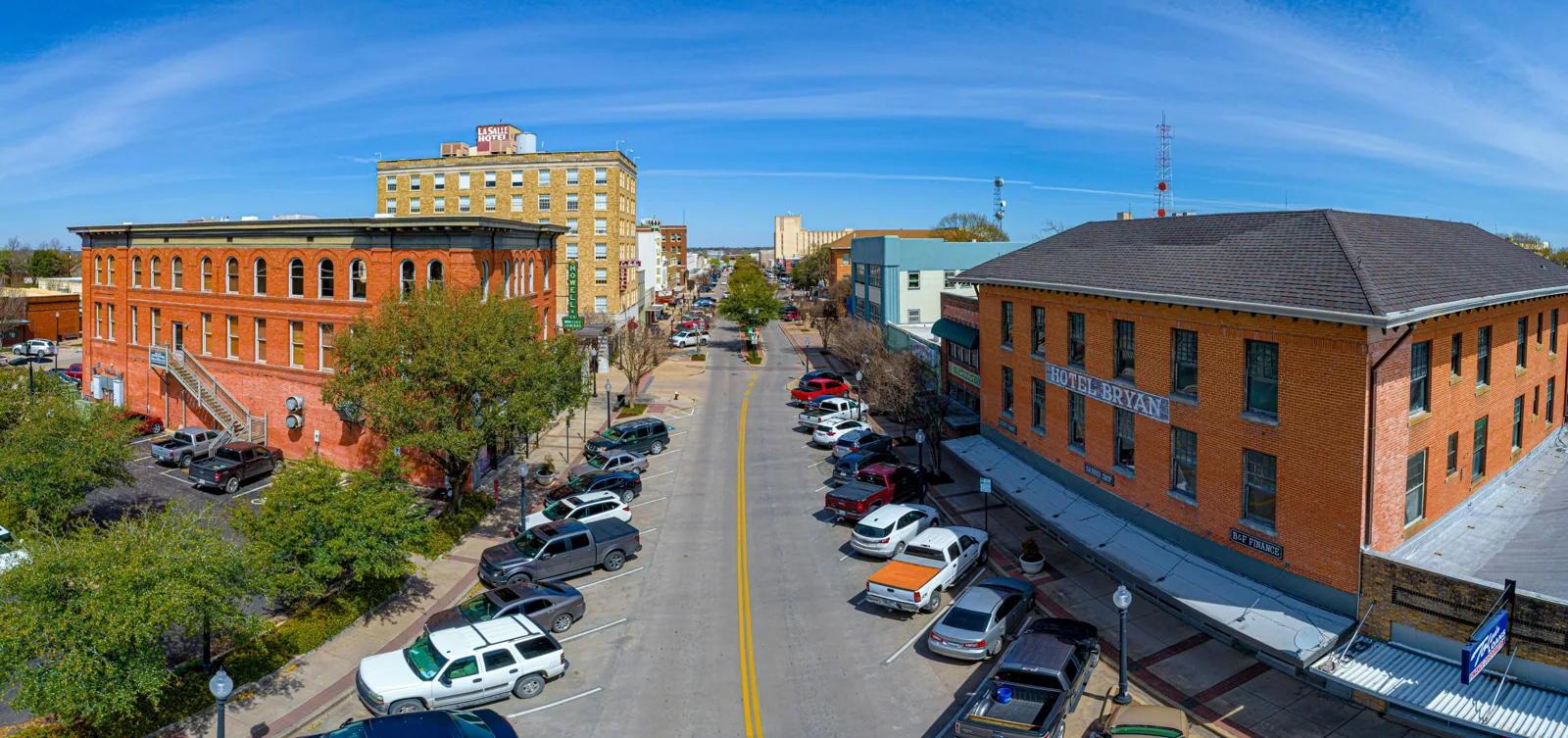
For a planned project within Bryan Business Park, the budget assumptions should identify who controls roof entry, which approach can receive deliveries and when the occupants can release the work zone. Downtown Bryan's commercial mix includes restaurants, shops and art galleries, where storefront access and customer hours can shape a different work window. We verify those conditions at each property, then divide a larger replacement into workable sections and note which trade owns equipment shutdowns or resets.
For a roof review near Bryan Business Park, the site contact can identify delivery limits and operating windows before the crew mobilizes. We use that information to divide a larger replacement into workable sections and note which trade owns equipment shutdowns or resets. A property-management roof plan can also carry tenant notice and access tasks beside the roofing scope. The result is a sequence that fits the property rather than a generic calendar applied to every building.
Scope comparison: show what drives the roofing choice
Repair, recover, restoration and replacement should be compared against the observed assembly. For each option, we identify preparation, insulation, membrane, flashing, edge metal, drainage and equipment tie-ins that are included. The owner can compare the work boundary and assumptions without treating unlike scopes as equivalent. A recover needs review of the retained roof, added load, compatible layers and finished drainage height. A coating path needs suitable substrate and preparation. If moisture, attachment or deck condition remains unclear, the plan should state the investigation needed before a permanent scope is set.
Qualitative cost drivers include removal and disposal, access equipment, wet insulation, perimeter work, material staging and the number of roof openings that can be closed during a work window. We list those conditions by roof section so a change in scope can be discussed before installation begins. The replacement proposal can separate base work from concealed-condition allowances, while a maintenance visit can address drains, seams and flashings that remain serviceable. The estimate states the scope priced today and the variables still open. If inspection uncovers concealed conditions that change preparation or the repair boundary, we document the revision before work proceeds. A service-life discussion remains tied to the observed assembly and its current condition.
Approval sequence: carry the plan through closeout
For a roof-finish replacement inside Bryan's municipal boundary, the roofing contractor files for the permit and the city carries out a final inspection. We place those checkpoints beside owner approvals, tenant notices, material delivery, roof access and trade coordination. Bryan's development-services portal lets the project contact submit an application, arrange an inspection and review its result while roofing proceeds through dry-in and tie-ins. Repair-only work may follow a different process, so the scope should state the work type before the schedule is agreed.
At closeout, the plan should return to the owner as a current record: completed work areas, photographs, open items, inspection result and next review task. If another trade has not completed an equipment connection, the handoff identifies the person responsible and whether the roof tie-in remains open. That gives facilities a clear starting point for the next roof walk and lets a general contractor close the roofing sequence without losing a deferred item in the project file.
Frequently Asked Questions
How do you choose which roof gets attention first?
We rank active water entry, exposed openings and conditions affecting occupied areas first, then separate investigation and planned work. The inspection record shows why each item is placed in that sequence.
Can a roof plan tell us when a system must be replaced?
A walk can document visible condition and identify whether more testing is needed. We do not assign a replacement date from one surface observation; the recommendation follows the assembly, moisture findings, repairs and project constraints.
What information helps compare bids for several buildings?
Use a common roof-zone map, photos, defined work boundaries and separate line items for preparation, insulation, membrane and details. We also call out access, staging and concealed conditions that can change the work.
How does a Bryan storm report affect the plan?
It helps set the inspection focus, but the current roof walk determines the repair need. We check reported areas and related edges, seams and penetrations, then document each finding before changing a planned scope.
Which approvals belong in a Bryan replacement schedule?
For replacement work within Bryan's municipal boundary, the roofing contractor handles the permit filing and a final city inspection follows the roof-finish work. We include both checkpoints in the planned sequence.
Build the next roof work sequence
Tell us which roof section needs review, what the building does and when access is available. We can schedule a field walk and identify the next repair, test or replacement decision.