Healthcare System Roofing in Bryan, TX
On April 8, 2021, hail of 1-2.75 inches was reported in Bryan-College Station, with the most significant hail falling between 9 and 9:30 p.m. For a healthcare roof, that exposure makes the first decision practical: identify zones for immediate dry-in, areas needing closer inspection, and surfaces that can remain closed while another trade is scheduled. We connect the reported roof area to the clinical or support space below, then set the repair boundary before the work window begins.
Roofing across a healthcare system is a coordination problem as much as a membrane problem. Each facility also has its own access contact, equipment route and interior protection needs, which we resolve before assigning the roof work window. We map roof zones, interior uses, equipment routes, and the people who can release each work area before setting a sequence. A Bryan service-area roof walk starts with the affected building use and the condition visible at the roof, then establishes the next safe handoff.
Weather exposure: Set the first work window
The 2019 Brazos County EF-2 event began roughly four miles east of Bryan. Its damage included one house and four commercial or warehouse structures. After severe weather, a portfolio review separates visible impact from older wear before assigning work. We check edge metal, membrane attachment, penetrations, rooftop screens and interior reports, then mark which locations need temporary protection before the next rain. The sequence follows the condition and the consequence of leaving an opening exposed.
At a healthcare property, a dented edge, split flashing, puncture or displaced equipment connection calls for a closer look at the roof assembly. We photograph the affected area, check nearby transitions and compare interior reports with visible conditions. A focused commercial roof inspection records what the walk found and where access ended. When water enters an occupied floor, a roof emergency repair visit begins by confirming current response availability and safe access; we then identify temporary protection while developing the permanent scope.
Continuity: Divide work by occupied zone
A roof replacement can affect rooms below it through noise, dust, odors, vibration, and temporary changes in water control. We review the proposed roof opening against the space underneath, then divide the work into sections that can be opened and closed within an agreed work window. The general contractor coordinates notices, interior protection, material staging, and any required clinical-area release. A shift should end with the day’s roof area dry, the drain path open, and a clear record of what remains for the next crew.
Hospitals and medical offices have different operating patterns, so phase each building with its own contact, access rules and work window. A procedure space, records area, office, loading zone, or mechanical room may call for a different access route or quieter work period. We confirm which areas remain occupied and who can authorize temporary changes before lifting materials. A hospital roof section may need tighter coordination around sensitive interior functions, while a medical office roof scope can be divided around its own tenant and service schedule.
Assembly review: Find the condition behind the symptom
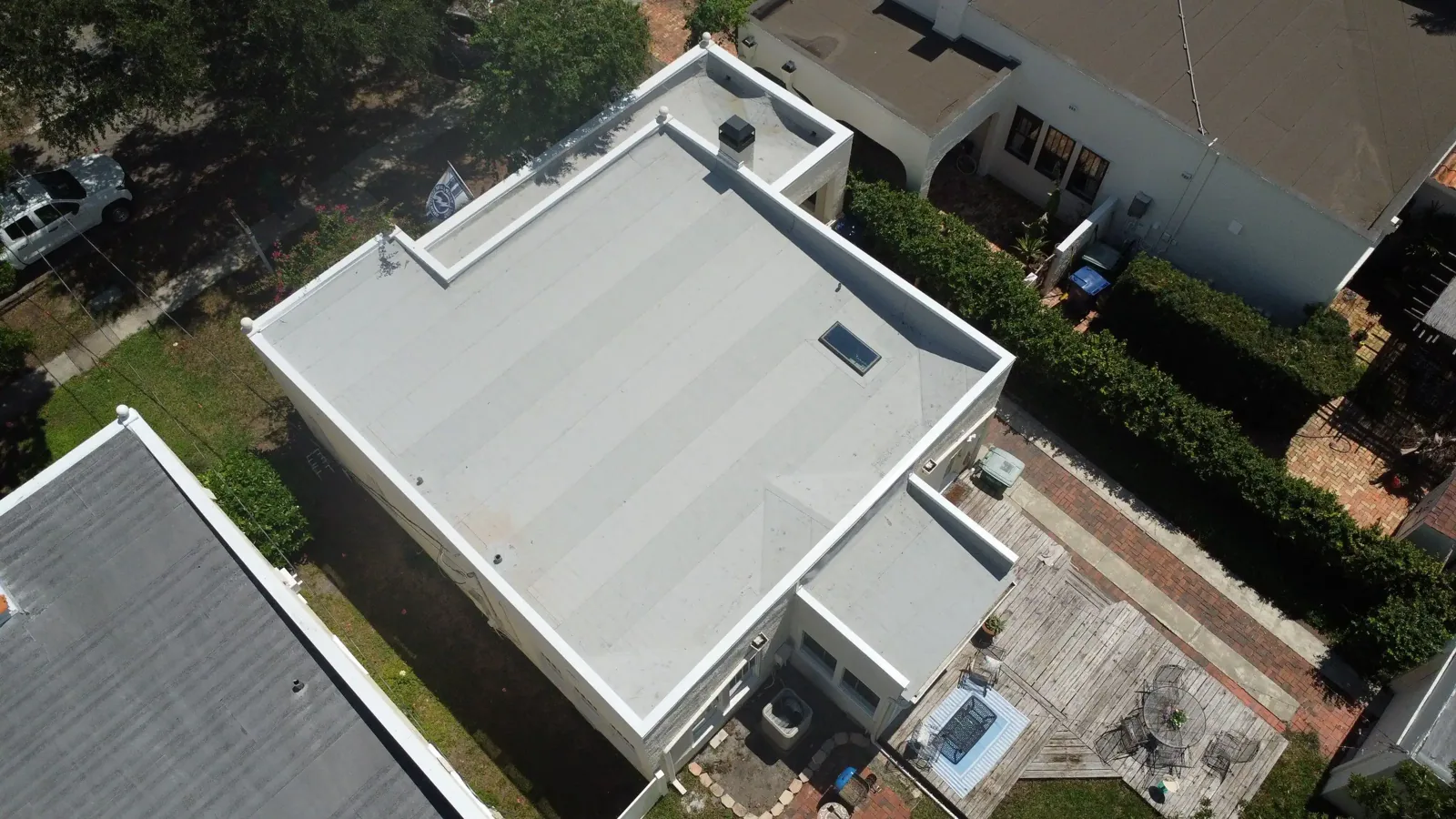
A ceiling stain can follow a deck flute, insulation joint, conduit or framing member before reaching an interior finish. We compare the reported location with membrane seams, wall transitions, curbs, drains, and previous repairs. If moisture may be concealed, we define a limited test area and restore it the same day where the assembly allows. The findings determine whether a repair is local or whether a broader section needs removal.
A system-wide repair program also needs consistent records. The roof plan should use the same building labels, grid references, and photo direction from inspection through closeout, so a later team can tell which detail was repaired. A photo-backed condition report separates observed damage, confirmed moisture, and follow-up questions. That distinction helps facilities staff compare urgent work with planned replacement without treating a suspected issue as a proven failure.
Trade sequence: Protect openings and equipment tie-ins
Mechanical, electrical, and roofing scopes meet at curbs, sleeves, conduit supports, drains, and exhaust connections. Before a unit is lifted or a new penetration is cut, we identify who supplies the curb, who reconnects equipment, and who flashes the finished assembly. Temporary protection is ready before removal starts. Keep the opening closed until the next trade is ready, or install a defined temporary cover and confirm its handoff with the facility contact.
Access can be the schedule constraint. A lift route may conflict with deliveries, a loading area may need to remain clear, or a roof ladder may serve several occupied zones. We walk the route with the general contractor, select a staging location, and keep material movement away from egress and service paths. For a phased job, an occupied-building work sequence should show each roof section, the trade responsible at the interface, and the condition required before interior operations resume.
Portfolio control: Rank work across buildings
When several roofs need attention, ranking them by age alone can send crews to the wrong place first. We compare active leakage, exposed insulation, failed perimeter details, drainage concerns, access restrictions, and the consequence of a delayed repair. A roof with a small open transition above a critical occupied area may need earlier stabilization than a larger surface with no active water path. The list is revisited when weather changes a condition or a new inspection finding shifts the boundary.
Shared records make that ranking useful. A portfolio register can note the inspection date, roof zone, observed condition, immediate action, proposed scope, and open coordination item for each property. We can organize those observations into a portfolio roof register for staff who coordinate multiple buildings, while claim documentation keeps event-related observations and repair records together. Neither record substitutes for confirming the condition on the specific roof before work is authorized.
Frequently Asked Questions
How do we keep a roof repair from disrupting patient areas?
We map the work zone against occupied rooms, access paths, and the interior protection needed below it. The crew opens a defined section, restores dry-in before leaving, and hands the area back under the agreed sequence.
Can one inspection cover every building in a healthcare system?
A coordinated program can use one record format, but each roof needs its own inspection. We note its assembly, drainage, penetrations, visible conditions, and access limits before comparing priorities across the portfolio.
What should happen after hail or tornado conditions in Bryan?
Start with the reported roof area and any active interior water, then document edge metal, seams, penetrations, and drainage. We separate temporary protection from permanent repair so the next work window is assigned to a defined scope.
Who coordinates rooftop equipment during replacement?
The general contractor aligns the roofing and mechanical scopes. We identify each unit or penetration that affects the membrane, confirm who handles lifting and reconnection, and close the opening only after the interface is ready.
Which Bryan permit steps affect roof-finish replacement?
The roofing contractor obtains the building permit for roof-finish replacement within Bryan city limits, and the work requires a final inspection. We include those milestones in the schedule and preserve access for the inspection.
Permit and closeout: Leave a usable handoff
Within Bryan city limits, roof-finish replacement includes contractor permit handling and a final inspection. We reserve that inspection window before demobilizing and keep the roof access route clear for the official visit. The scope should identify the roof area, assembly layers, edge and penetration details, drain work, and any condition that remains outside the repair boundary. The general contractor can then coordinate the inspection and the next trade against a documented roofing handoff.
At completion, we provide photographs and written notes that identify repaired areas, materials installed, equipment interfaces changed, and drains checked. The facilities team can carry those records into maintenance planning and compare future observations with the work actually performed. If another roof area needs testing or a separate repair, it stays listed as a follow-up item instead of being implied as part of the finished scope. Identify the affected clinical or support space, its access contact and any shutdown restrictions so the inspection can be scheduled with the facilities team.
Plan the next healthcare roof task
Send the affected roof zone, the occupied functions below, and the access limits; we will set a walk and confirm a manageable first repair step.