Data Center Roofing in Bryan, TX
For a data center, rooftop work intersects with uptime planning even when the roof itself is the only construction scope. Heat, penetrations, intake and exhaust locations, service routes and water control all affect the work sequence. In Bryan, we inspect the existing assembly and identify how much can be opened, where equipment access is restricted and what interior areas need protection. We then set the repair boundary and dry-in sequence with the facility contact and general contractor before work is scheduled.
The Bryan-College Station BioCorridor ordinance establishes a mixed-use biotechnology district shared by Bryan and College Station, with land-use categories for research, office and manufacturing. City materials separately identify Texas Avenue as a corridor for retail and commercial property improvements and include South College Avenue in the corridor beautification program. Whichever district a facility sits in, we verify the actual building and roof before scoping work. A local 2019 EF-2 tornado occurred east of Bryan in Brazos County. It damaged one home and four buildings used for commercial or warehouse purposes. The BioCorridor and South College Avenue give broad geographic context without implying a facility location.
Access: Protect controlled routes
Before mobilization, we confirm roof access points, security procedures, delivery staging, lift locations and any limits on photography or worker movement. A crane path that crosses an operating entrance or a material pallet blocking service access can interrupt another part of the facility's plan. The project team defines who escorts workers where needed, when deliveries may arrive and how a weather delay is communicated. Access decisions should be settled before roofing materials reach the site, not while the crew is waiting at a gate.
Inside, the facility lead identifies areas where debris, noise or a roof opening requires additional protection. Roofing and mechanical trades need a shared map of equipment, cable routes, intake and exhaust locations. A phased occupied-building sequence can separate the work zone from active operations and set a daily closeout point. We coordinate the roofing activity; facility operations determine which controls apply to their environment.
Assembly: Inspect the roof before specifying work
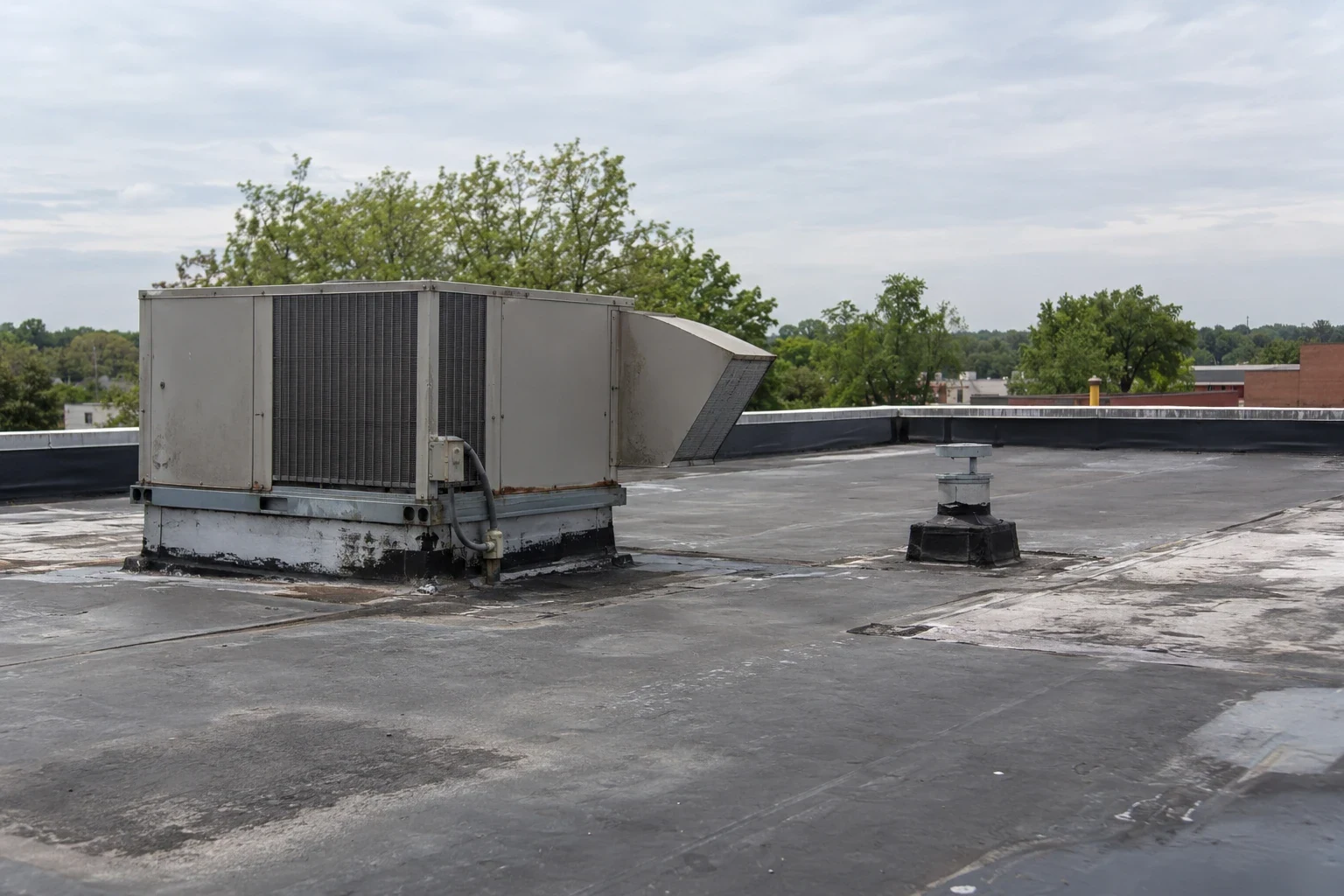
Data center roofs may support rooftop units and multiple cable, conduit and piping routes, but those conditions must be inspected rather than assumed. We map penetrations, curbs, edge metal, seams, drains and transitions and review available drawings or maintenance records. If moisture is suspected in the assembly, infrared imaging can help select areas for investigation when conditions suit that approach. A test opening may be needed to confirm layers, insulation and deck. Findings establish whether the scope is localized or extends beyond a single detail.
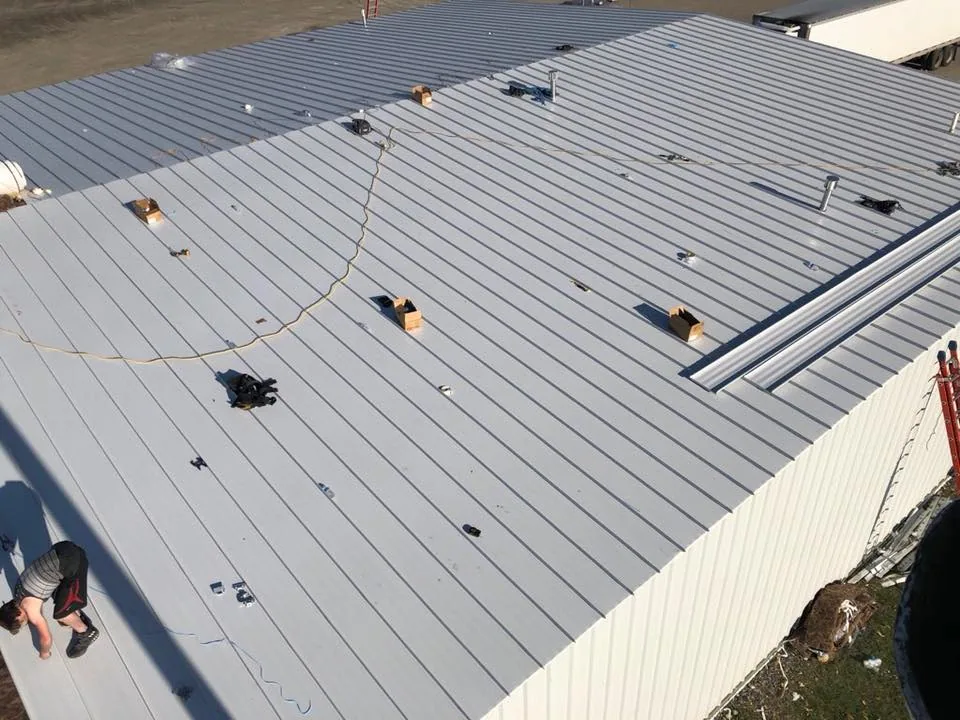
A TPO membrane, PVC system, EPDM or metal roof each has distinct seams, attachment and flashing requirements. Existing material, substrate, drainage, wind exposure and project specifications shape the recommendation. A coating is appropriate only when the surface and preparation support it; it cannot resolve concealed moisture, failed deck or a drainage problem. We state what is known and which detail needs confirmation before committing to installation.
Penetrations: Coordinate equipment work
Curbs, conduits, refrigerant piping and exhausts require weather-tight connections that remain accessible for later service. We record the current flashing condition and determine whether each item stays, moves or changes as part of the project. If another trade is modifying equipment, roofers need confirmed dimensions and timing before the membrane is opened. The handoff identifies which party supplies a curb or sleeve, who completes the roofing detail and what inspection closes the connection.
Abandoned penetrations also need an explicit closure detail. A cap placed over a pipe does not automatically restore the membrane or insulation beneath it. We examine the existing transition, identify any soft or wet material and define whether patching or a larger replacement is needed. A curb coordination scope can align the opening with mechanical work, while a moisture survey may help target concealed areas for follow-up.
Weather: Maintain a defined dry-in point
Heat affects work timing, material staging and surface preparation; Easterwood Field in College Station recorded 112 degrees on August 20 and 27, 2023. We use conditions on the roof and the forecast to set a work window, protect materials and define a secure stopping point before the crew leaves. A data-center schedule may have additional facility controls, so weather contingencies should be agreed with the operating contact.
A storm may prompt a roof walk; observed membrane, edge and interior conditions guide the diagnosis. We examine the membrane, seams, edge details, rooftop equipment and interior evidence at the facility. For an active leak, the facility contact and roofing lead should confirm current dispatch availability, safe access and the first area needing temporary protection. The permanent scope follows confirmed conditions and any equipment coordination needed for access.
Drainage: Keep water away from critical rooms
We inspect drains, strainers, scuppers, gutters and low points to see how water leaves the roof. Debris or an added assembly can restrict an outlet, while equipment supports can create a local obstruction. If interior water appears near a critical room, we trace its path through the roof before treating the nearest visible seam as the source. Photographs, marked roof areas and written observations give the facility team a location-specific account to compare with its operational records.
Parapets, expansion joints and roof-to-wall transitions need continuity where sections meet. A maintenance or equipment change can disturb flashing, so completed work should be checked before the area is returned to routine access. Our roof inspection records drain and transition conditions. A related manufacturing plant roofing scope addresses similar operating handoffs, while a cold storage roof scope also requires close coordination around environmental controls.
Frequently Asked Questions
Can roofing proceed without interrupting data center operations?
We plan roof access, openings and dry-in boundaries with the facility contact. Whether operations need an adjustment depends on the roof zone, lift path, equipment work and site controls.
Do you inspect cable and equipment penetrations?
Yes. We record visible flashing and identify which penetrations need repair, replacement or trade coordination. Any equipment relocation requires confirmed dimensions and responsibility for the final roof connection.
Can infrared locate a leak in the roof?
It can help identify areas for follow-up when conditions support the method. We compare results with visible findings and may recommend a test opening when assembly layers need direct confirmation.
What does the April 2021 hail mean for a Bryan roof?
The storm provides a dated reason to review maintenance records. We inspect the property’s membrane, edges, equipment and interior conditions before defining repair or replacement.
What happens if a drain is blocked during work?
We protect outlets from construction debris, check the water path and document any restriction. A drainage issue is addressed as part of the scope before the affected section is closed.
Closeout: Preserve records for the next change
At handoff, we document roof areas repaired or replaced, significant penetrations, edge transitions, drain details and any unresolved item that needs further investigation. The record can help facilities staff see how later equipment work intersects with the roofing. We set required permit and final-inspection milestones on the project schedule, with access arranged for the applicable city inspection before closeout.
Future roof work should begin with the documented condition and the facility's current access requirements. Preventive maintenance records visible changes such as loose flashing, punctures, debris or later trade work; it does not replace investigation of concealed moisture or system design. We can schedule a maintenance visit and provide a written report with photographs. That makes the next roofing task easier to define before a small detail reaches an occupied area.
Set the data-center roof controls
Share the roof concern, site access requirements and preferred work window. We can inspect the assembly, map equipment interfaces and coordinate a dry-in plan with the facility and construction teams.