Home / Roof Systems /
KEE Commercial Roofing in Bryan, TX
A membrane proposed near exhaust equipment needs a specification based on the actual discharge, compatible details and access for later maintenance, rather than the material name alone. In Bryan, we inspect the existing assembly and roof use before considering KEE, a ketone ethylene ester modified thermoplastic membrane related to PVC. We review seams, penetrations, drainage and expected exposure, then check system-specific requirements rather than assuming that a polymer name settles the specification. The roof has to work with its substrate, details, tie-ins and future service needs.
Texas Triangle Park is a rail-served industrial park in northeast Bryan, while Lake Walk includes offices, dining, hospitality and retail uses. These different settings raise different questions about roof access and nearby exhaust, but do not establish the condition or chemical exposure of a particular building. Both August 20 and August 27, 2023 brought a 112-degree high in College Station. Roof-surface conditions and the selected product's handling limits set the work window at the property under review. We connect local context to a site walk and the project documents.
Material fit: Read the product requirements
KEE membranes are part of the thermoplastic single-ply family, but exact formulation and system details vary by product. We review the manufacturer's current technical information, project specifications and intended exposure before incorporating a product into the roofing scope. A PVC membrane or TPO system may also meet the design intent, depending on chemical exposure, assembly design and project requirements. We do not treat one formulation as an automatic upgrade for every roof.
Existing deck, insulation, attachment and roof layers affect whether a new membrane can be installed as a recover or requires removal. We inspect visible conditions and compare them with drawings and repair records, then identify uncertainty that may need testing. A commercial roof inspection can document the field and details before the system decision is made. Where suspected moisture could change the scope, targeted investigation helps keep the choice tied to the actual assembly rather than an assumption.
Seam control: Confirm each weld in the field
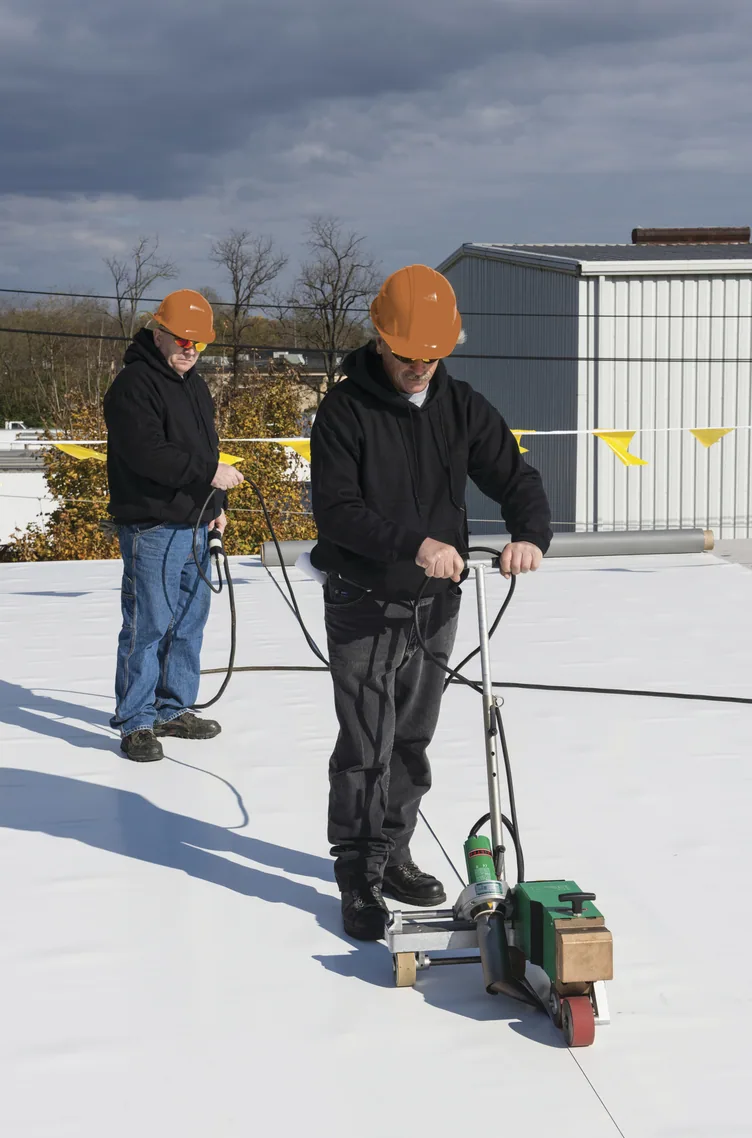
Heat-welded seams depend on clean, compatible surfaces and consistent conditions while the crew works. We verify the welding setup and examine seams as installation advances, watching for wrinkles, contamination, incomplete fusion and changes at corners. A roof section is not ready to close simply because the sheet looks continuous from a distance. A localized seam repair needs the same attention to preparation and nearby movement; new work also needs details that can be checked before equipment or later trades cover them.
Temperature, wind and substrate moisture affect how much roof can be installed during one work window. We sequence the material delivery, staging and protected tie-ins so the crew can finish and secure each section. At a transition between old and new membrane, the proposal identifies where the existing material remains and how the connection will be terminated. That description helps the general contractor keep follow-on work off an unfinished edge and gives maintenance staff a record of the repair boundary.

Roof exposure: Check exhaust and service paths
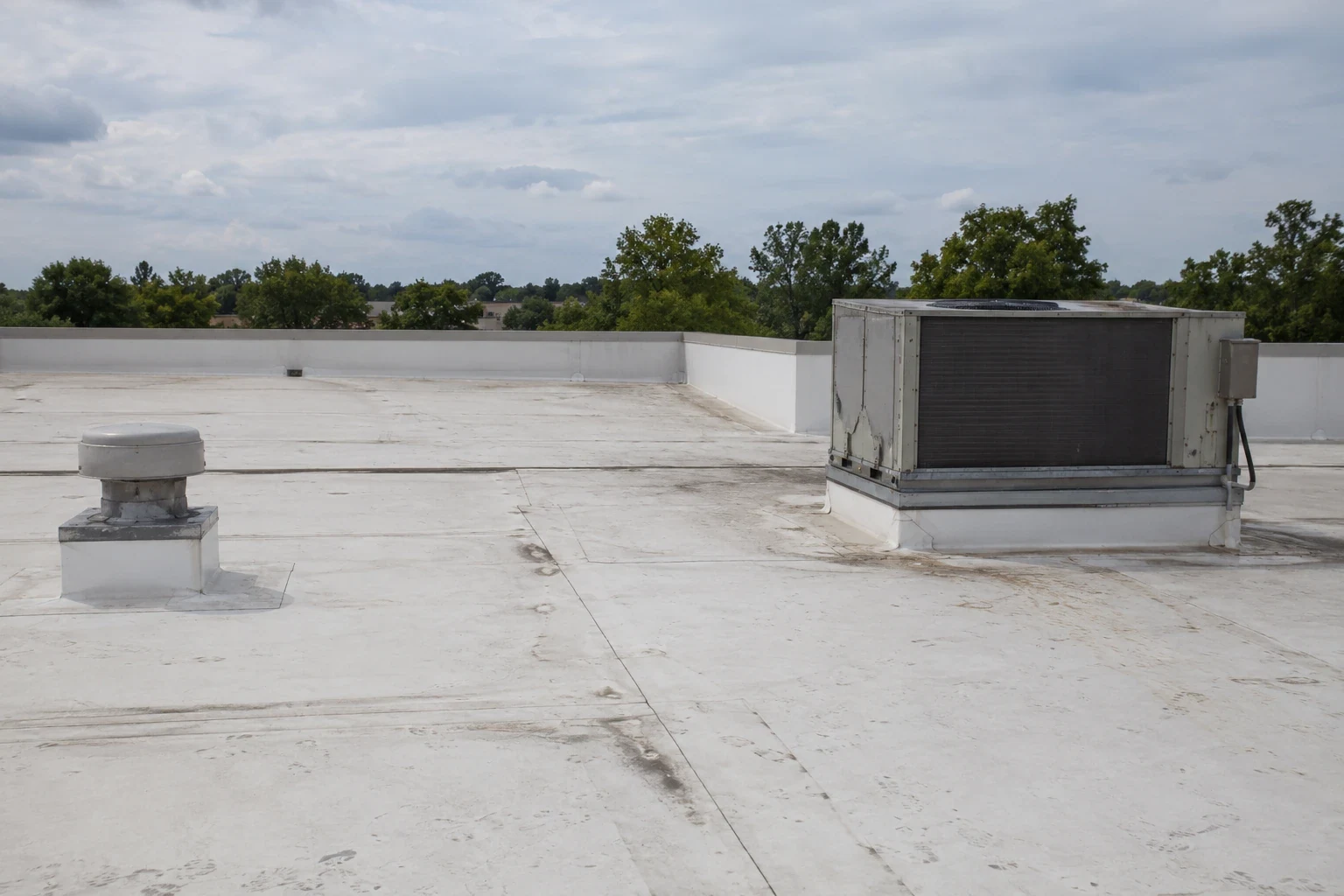
Where a roof receives grease, process residue or other discharge, the team needs to identify its location and consult the selected product's requirements. We map exhaust outlets and service routes during the walk, then coordinate changes with the mechanical contractor. The name KEE alone does not establish that any formulation is suitable for every discharge. A material compatibility review considers the discharge source and the membrane together, since routine cleaning or equipment service can bring other substances to the roof. The manufacturing roof scope should connect the discharge point, membrane selection and access plan without assuming that all operations in an industrial park produce the same exposure.
Service traffic can damage the surface even when the membrane is correctly specified. We identify common equipment routes, working clearances and points where tools or maintenance carts may cross seams. Walkway protection, if specified for the chosen system, should not block drain flow or conceal a detail that needs inspection. A curb and support coordination plan aligns the roofing detail with equipment placement and allows trades to agree on who closes each opening.
Drainage and flashing: Close every roof junction
Roof slope, drain capacity and overflow paths influence how the finished membrane sheds water. We inspect drain bowls, scuppers, gutters and low areas, then establish whether the project addresses only the membrane or also the water path below it. A ponding-water review can help distinguish a surface problem from conditions that require drainage or structural input. The project schedule leaves room for any required municipal inspection before the final tie-in is covered.
Curbs, pipe penetrations and wall flashings need compatible details that remain accessible after other trades complete their work. We coordinate the flashing sequence with the project team before a penetration is made and record the finished connection. Where a roof includes skylights, a skylight flashing scope can address the interface between glazing frames, curbs and membrane without relying on a surface patch over the junction. Drain strainers and nearby laps also need inspection access.
Project closeout: Keep the next decision traceable
Closeout records should identify the installed membrane, completed roof sections, tie-ins, penetrations and any existing conditions left in place. Photographs and written notes can help a future manager compare the current surface with later observations. The condition report records visible findings, while structural capacity and product compatibility are reviewed against the project requirements. The Bryan permitting portal supports application, inspection scheduling and results, so inspection status can be tracked through the handoff.
Ongoing care should follow the installed product's maintenance guidance and the roof's actual use. We check seams, flashings, drain paths and changes from later work, then record repairs or concerns that need follow-up. A maintenance program can identify small openings before water reaches insulation or interior space. An active opening needs a repair compatible with the existing KEE assembly, including any aged surface preparation and tie-in details required by the selected material.
Before scheduling a KEE project, gather available specifications, roof records, leak locations, exhaust information and planned mechanical work. We can walk the building, identify what is known about the assembly and describe the next investigation or roofing task. This keeps system selection connected to project requirements, site exposure and the work sequence. For Bryan's industrial and commercial properties, the practical value comes from a membrane and set of details that match the building's needs and leave a clear repair boundary for future service.
Frequently Asked Questions
How is KEE different from standard PVC roofing?
KEE is a modifier used in some thermoplastic membrane formulations. We compare the specific product data, exposure and project requirements with PVC and other assemblies before recommending a system.
Does KEE resist every chemical used on a commercial roof?
No single product description can answer that for every chemical or discharge. We identify what reaches the roof and compare it with the selected manufacturer's written compatibility information.
Can KEE roofing be installed over an existing membrane?
A recover depends on the existing layers, moisture, attachment, deck and design requirements. We inspect the roof and identify any needed testing or structural input before proposing that approach.
How are KEE seams verified?
We inspect preparation and welded seams as installation advances, including corners, terminations and transitions. The work window and system instructions guide how each section is tested and secured.
How do you schedule KEE seam work in hot conditions?
We check the roof-surface conditions and follow the selected KEE system's handling and welding instructions. The work window is set for the roof and product being installed.
Compare KEE with the roof conditions
Share the building use, known roof assembly, existing KEE membrane condition, exhaust locations, any chemical exposure near the area and the proposed work window. We can walk the roof and define the next investigation or roofing task.