Manufacturing Plant Roofing in Bryan, TX
Production equipment makes a roof opening a coordination decision, not just a roofing detail. In Bryan, we inspect the membrane, deck, drains and penetrations, then align repair or replacement with equipment operation, exhaust routes and the facility work window. Heat affects surface preparation and material handling, while an interruption below can change the acceptable sequence. A useful scope identifies which areas can be worked, how each will reach dry-in and where another trade must complete or protect a connection.
Bryan’s public industrial areas include Brazos County Industrial Park and Bryan Business Park. For a plant in either park, we confirm the receiving approach, roof entry and staging window with its contact before scheduling crews. A 2019 EF-2 track crossed Brazos County about four miles east of Bryan, where one house and four commercial buildings or warehouses were damaged. Bryan Business Park and Brazos County Industrial Park are where that confirmation starts; the plant visit then sets roof access and the production schedule.
Penetrations: Set the mechanical handoff
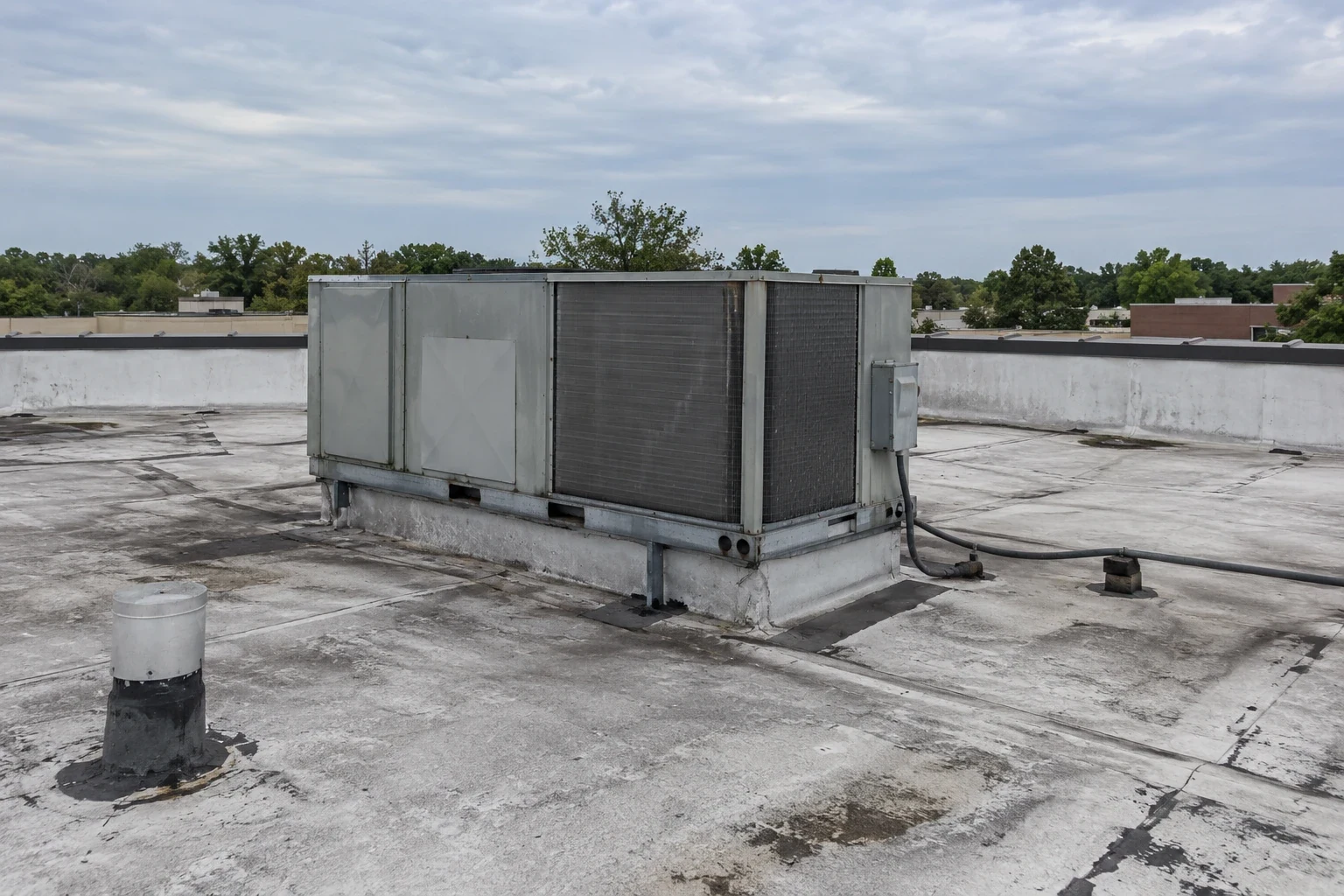
Exhaust stacks, piping, conduits, rooftop units and service platforms interrupt the roof field and can hide prior repairs. We map visible penetrations, inspect their flashing and note whether equipment can remain in place during roofing. If a unit needs lifting or temporary disconnection, the mechanical contractor's timing and equipment plan should be agreed before the roofing crew removes a curb or membrane. The scope identifies which trade provides the curb, who completes the flashing and what inspection confirms that the tie-in is closed.
Production modifications may leave capped penetrations or unused supports. An abandoned opening still needs a compatible closure, sound substrate and a defined repair boundary. We do not cover an unresolved hole or build a new detail around a component whose position is still changing. A curb and equipment-support scope can be sequenced with roofing work, while penetration and skylight flashing needs to match the membrane or metal assembly around it. The field walk records dimensions and trade responsibilities before the roof is opened.
Assembly: Check deck, insulation and attachment
Plant roofs can include multiple sections from different project phases. We inspect seams, laps, fasteners, edge details, transitions and visible patches, then review records for earlier repairs or reroofing. If moisture may be present within the insulation, an infrared survey can help select areas for follow-up when conditions are appropriate. A test opening is useful when the roof build-up or deck condition remains uncertain. The scope then separates localized work from conditions that require broader replacement or design review.
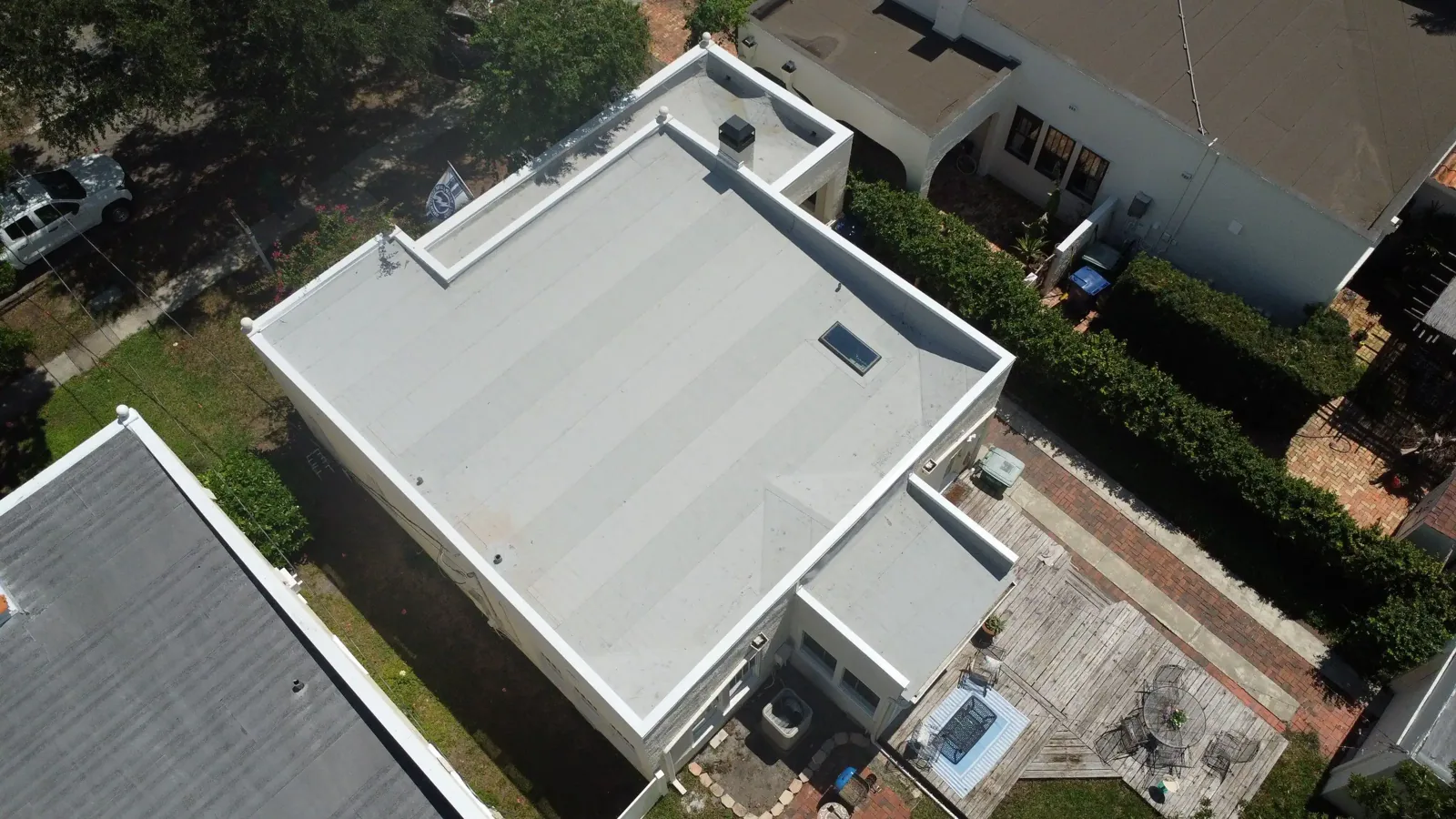
A new surface must suit the existing deck, attachment method, drainage and operating requirements. A TPO system, cold-storage roof requirements or metal system brings different seam, edge and penetration details. A coating belongs only on a compatible prepared surface; it does not restore wet insulation or correct a structural issue. We compare repair, recover and replacement based on observed conditions and project requirements, and identify areas that need confirmation before pricing is final.
Production: Protect the work window
Work sequencing should account for vibration-sensitive equipment, exhaust discharge, access controls, material staging and shifts. Before mobilization, we review which interior areas need protection, how roof workers reach the work zone and whether lifting can cross an active production path. The general contractor and facility contact determine any shutdown window and the communication path for a roof opening or weather delay. A written daily boundary helps production staff understand where roofing is underway and when the next handoff occurs.
We limit exposed roofing to an area that can be restored or protected before the shift ends. If the deck or insulation differs from what the visible surface suggested, the team pauses at a safe boundary, documents the condition and agrees on the next task. That is especially useful when a production area below cannot absorb water intrusion or airborne debris. An occupied-building sequence can define roof sections, interior protections and the trade path without implying that all work can happen without operational changes.
Weather: Read Bryan conditions into the sequence
Heat changes the practical timing of roof work and the handling of membranes, adhesives and coatings. During hot weather, the crew checks surface conditions and follows the selected membrane's handling limits before setting each work window. For a Bryan plant, we use the property's own conditions and the forecast to plan surface preparation, crew timing and protection of materials. Each phase needs a realistic dry-in point so production does not inherit an exposed roof at the end of a shift.
After a severe weather day, we give the facility a roof walk focused on exposed edges, equipment supports, seams and interior signs rather than assuming every section has the same condition. We inspect roof areas, edges, flashing, rooftop equipment and interior evidence, then photograph findings. When a leak threatens an active production area, our emergency roof response can be dispatched day or night, including weekends, to protect the space and establish the next repair boundary. A wind-damage review follows the observed condition.
Drainage: Keep process areas out of the water path
Drains and scuppers need to remain clear of debris and accessible after equipment or piping changes. We check strainers, drain bowls, gutters, slopes and low points, then identify ponding or a route that terminates against a curb or parapet. Water can travel beneath a membrane before reaching an interior drip, so we trace staining and wet materials toward the roof rather than placing the repair only over the visible symptom. Each conclusion is tied to what the inspection can establish.
Plant additions may introduce a different roof elevation, wall transition or movement joint. The tie-in between old and new work needs a clear membrane termination and water path, especially when other trades need access nearby. We record drain locations and protect them during construction so debris does not enter the system. A roof condition inspection can document current details, and a distribution center roof scope offers a related planning lens for industrial facilities that share freight and operating constraints.
Frequently Asked Questions
Can production continue during a plant reroof?
The answer depends on roof access, interior protection, equipment timing and the areas that can be opened and closed each shift. We map those boundaries with the facility lead and general contractor before mobilizing.
What happens if a curb needs to move?
We coordinate the lift, disconnection and replacement detail with the mechanical trade. The roofing scope identifies who supplies the curb and who completes the flashing before work begins.
How is hidden moisture evaluated?
Infrared scanning may help identify areas for closer review when conditions suit the method. A test opening can confirm the roof layers, insulation and deck at a selected location.
Does Bryan storm history determine damage?
No. It supports the reason to inspect after a weather event, while the roof walk and interior observations establish the property's condition. We document the evidence and repair boundary.
What permit is needed for a replacement?
For a roof-finish replacement in Bryan, the contractor's application must cover the work and the project requires a city final inspection; verify the parcel boundary before scheduling.
Closeout: Leave the next trade a clear roof
Closeout records the repaired areas, installed materials, penetrations, edge transitions and drain details. Photographs and written observations help facilities staff identify where future mechanical changes intersect with the roofing. Inside Bryan city limits, the contractor secures the roof-finish replacement permit and the City performs the final inspection. We put both milestones in the production schedule, then arrange site access when the roof is ready for the inspector.
After handoff, periodic maintenance can find debris, loose flashing, punctures or changes made by another trade before those items disrupt production. We can set a maintenance visit around facility access and record conditions needing repair or further investigation. The report helps separate a localized issue from a system-wide decision without claiming a roof's remaining life from a visual walk alone. A planned maintenance visit and photographic condition record give the team a clear starting point for the next work order.
Plan the plant roof handoff
Share the production use, known equipment changes and preferred work window. We can inspect the roof, define the opening limits and coordinate the roofing handoff with facility and construction staff.