Planned Commercial Roof Repair in Bryan, TX
A loose flashing connection can leave a small separation that needs more than another bead of sealant, particularly where the membrane meets metal that moves independently of the roof. Planned commercial roof repair in Bryan, TX gives that detail a defined scope: we inspect its supporting surface, identify the failed connection and choose a repair that can be installed within the building's available work window. The membrane patch follows that examination.
Downtown Bryan's shops, galleries and restaurants bring different operating needs to a roof repair appointment. A flashing above a dining area may require a separate interior protection sequence from work above storage, even when both occupy the same roof section. We establish access and the occupied area beneath the defect, then identify what the roofing crew can open and close without depending on an unfinished task from another trade.
Defect limits: Find the sound working surface
A torn membrane edge can extend into material that has lost flexibility or into insulation that no longer supports the patch. We examine the surrounding field, previous repairs and the connection to nearby details, marking a boundary where the selected repair can be attached reliably. A hands-on roof examination also checks whether the visible defect belongs to a wider pattern of movement, drainage or attachment problems needing a different scope.
The repair boundary is not chosen merely to match the size of available material. Loose cover board, damp insulation or damaged deck can require removal beyond the surface opening. We state those reconstruction tasks separately so the crew has the components and approval path needed to finish them. Where the roof remains serviceable outside the affected zone, that distinction preserves useful material while correcting the assembly at the failure.
Open seam: Restore the connection at its edge
A seam that lifts under examination needs its condition checked along the adjoining length before the crew starts patching. Dirt, incompatible coatings and aged repairs can interfere with bonding, while movement at the substrate can place repeated stress on the same edge. We clean and prepare the suitable area, select the appropriate repair method for the membrane and verify the finished connection. A seam repair includes the surrounding transition rather than closing only the most visible gap.
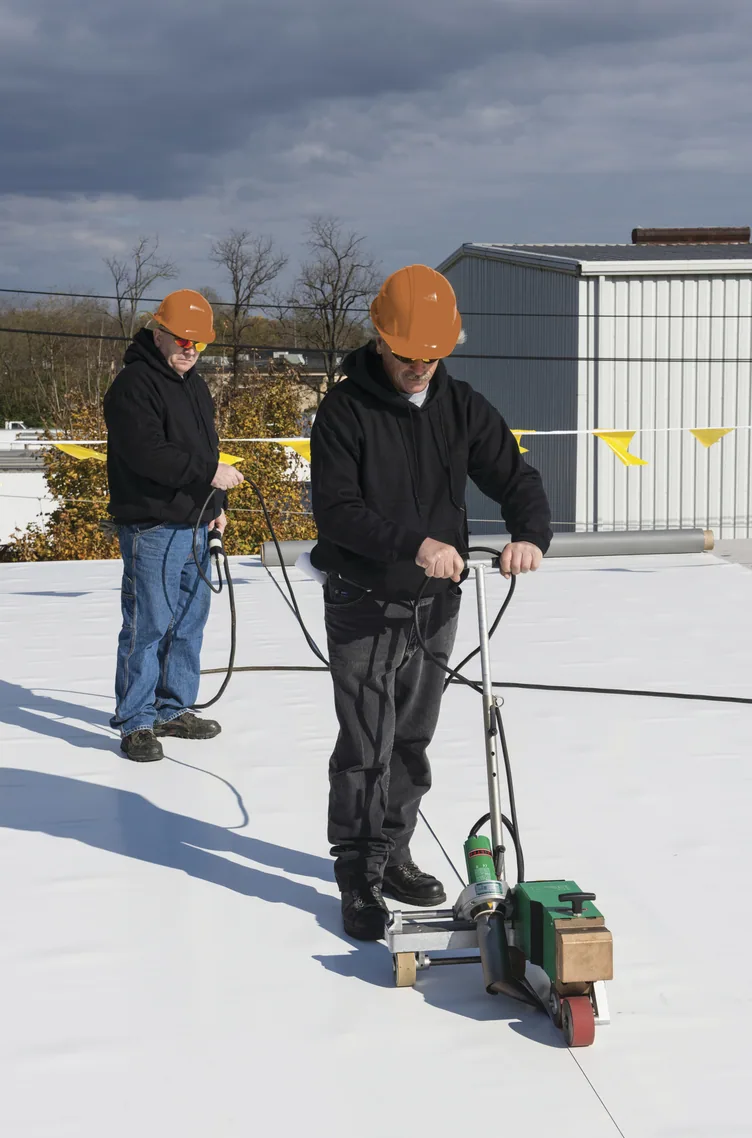
The work differs by system. Heat-welded material needs suitable membrane condition and welding technique, while adhesive or taped repairs require compatible components and preparation. We identify the existing membrane before choosing those components. Mixing products because they look similar can leave a weak interface; a successful installation requires the repair material, substrate and application conditions to suit each other across the full repair zone.
Metal interface: Keep movement out of the seal
A curb corner or wall termination concentrates several connections in a small area, making the failure path easy to overlook. We examine membrane upturns, terminations, counterflashing and adjacent metal, then determine whether the repair needs a rebuilt flashing rather than a surface coating. A properly shaped corner provides room for the membrane to turn without a stressed fold, with closure details that suit the selected EPDM assembly or other installed system.
Equipment vibration or a loose support can reopen a repaired interface unless the mechanical defect is corrected. We establish the required equipment support work with the responsible trade before final flashing. The roofing scope identifies what remains temporarily protected and when the permanent detail can be completed. That handoff keeps the crew from sealing a connection that another trade will need to dismantle during the same project.
Operating building: Place the repair in the work window
For a property in Brazos County Industrial Park, the area beneath the roof opening is reviewed before the repair window is agreed. We confirm the actual use below the defect and arrange protection where removal could release debris or water. Material staging stays within the approved working area, with loading and movement considered before supplies are set beside equipment, fragile deck zones or a roof edge.
The crew also needs a route that can remain available until the repair is complete. Locked ladders, deliveries and mechanical service appointments can shorten a nominal work window. We coordinate those restrictions, choose an opening size that can be restored during the visit and prepare for a weather interruption. Rain arriving before a prepared interface can be closed changes the task, so temporary protection is ready before the damaged components are removed.
Standing water: Repair the detail and its exposure
Water held around a patch places continuing demand on seams and penetrations after the repair is complete. We inspect the outlet, nearby surface slope and obstructions that affect the water path. The cause may be removable debris, a damaged drain connection or a low area needing a separate drainage correction. Combining membrane work with drainage repairs can address that exposure when both tasks are supported by the inspection findings.
A surface patch cannot restore insulation crushed below it or correct a broader deck deflection. We describe those conditions in the scope and identify when a recover, section replacement or design review warrants comparison. Delaying that decision while applying successive patches can leave the same weak area under new layers of repair material. The owner needs the physical condition and available options stated clearly, with an interim weather closure where the permanent work needs preparation.
Frequently Asked Questions
Can the repair crew use material left over from a different roof?
The components must match the installed system and the repair method. We identify the membrane and suitable substrate first, then select compatible material rather than relying on color or appearance.
Why would a small split need insulation removed beneath it?
Moisture or deterioration below the split can leave the patch unsupported. We inspect that buildup and remove unsuitable material to a sound boundary, making the surface repair part of a stable reconstructed detail.
Should a mechanical technician complete support changes before flashing?
Support alterations usually need to reach the agreed configuration before permanent flashing closes the interface. We coordinate temporary protection and the handoff so equipment work does not disturb a newly finished seal.
How do we separate an urgent patch from planned repair?
Active water entry receives a stabilization task appropriate to the conditions. The permanent repair scope then addresses the damaged assembly, compatible materials and any related drainage or trade work that the temporary closure could not resolve.
What tells us a local repair is no longer the right scope?
Widespread deterioration, recurring movement or moisture beyond the repair zone can change the options. We show those findings and compare the reconstruction required for repair with a larger section or assembly replacement.
Completed work: Check the repair before releasing access
A repaired seam is examined after installation, while corners and terminations are checked for gaps, loose edges and unfinished adjoining work. Drain baskets and surrounding surfaces are cleared of loose repair debris before access is released. We photograph the repair boundary and the rebuilt detail so the general contractor can identify the work completed during the visit. A condition record with repair findings also distinguishes resolved defects from observations that need later attention, preventing a local repair from being mistaken for acceptance of the entire roof.
Material compatibility, concealed moisture, access and the amount of reconstruction drive repair cost and timing. We establish those requirements before setting the work date, then identify any decisions that remain dependent on an opening. Future visits can focus on the repaired interface, drainage and nearby trade activity. Protective walking routes and clear penetration procedures help preserve the completed work when equipment maintenance returns to the roof after the roofing crew has left.
Define the next repair task
Send the roof defect, use of the space beneath it and proposed work window. We can examine the repair boundary and coordinate a suitable closure.