Warehouse Roofing in Bryan, TX
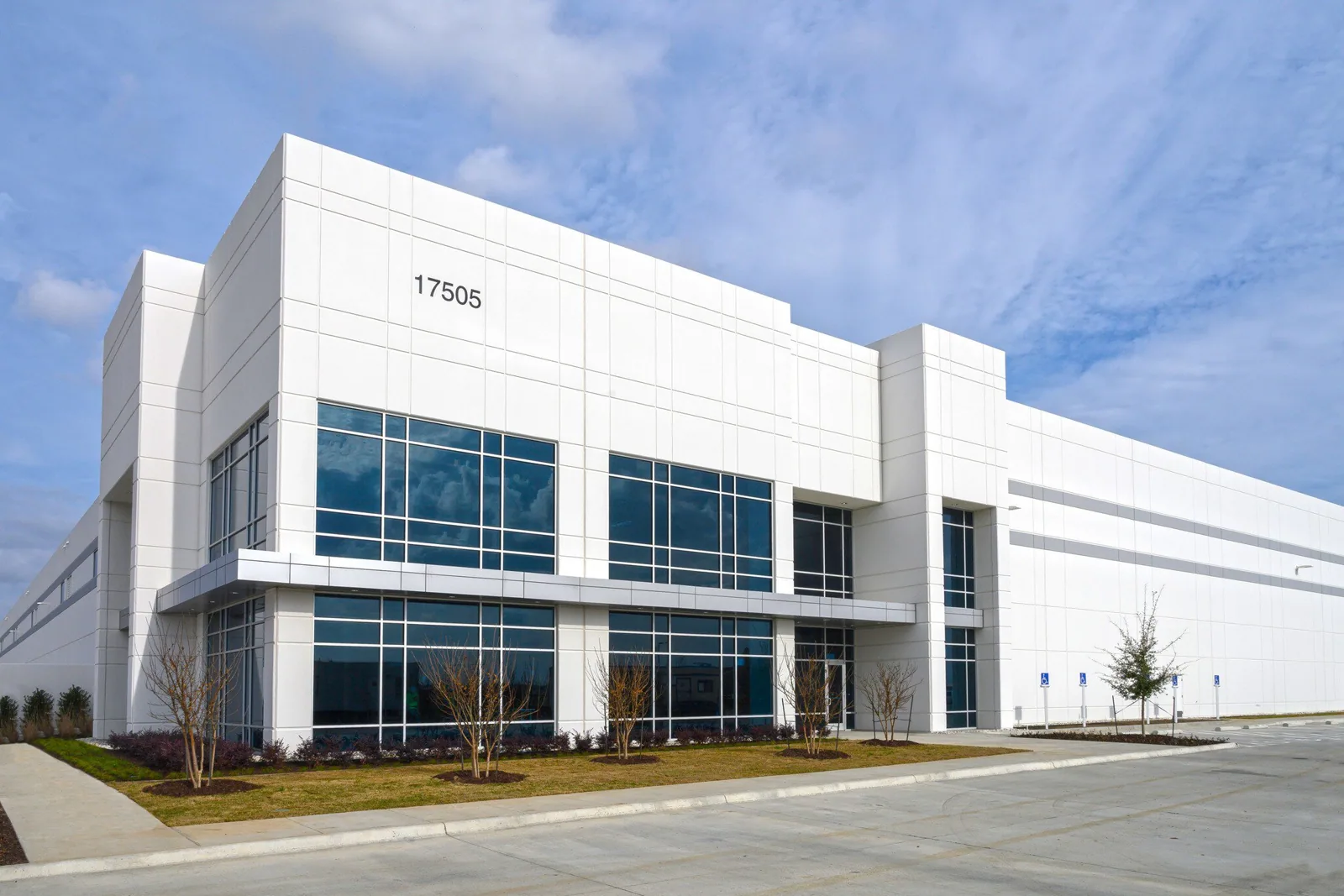
Heat over a warehouse makes the work window part of the roof plan: insulation, membrane and exposed deck need protection while the building keeps receiving and moving goods. In Bryan, we begin with the roof assembly, drainage path, penetrations and access conditions, then match the scope to the operating schedule. Warehouse roofs can combine repairs, equipment curbs and several membrane areas, so a replacement decision starts with what is present rather than a drawing alone.
Bryan Business Park lies southeast of FM 2818 and Mumford Road; Brazos County Industrial Park sits west of FM 2818, south of State Highway 21. At working properties, deliveries, truck circulation and interior activity can affect material staging and which sections may open at once. The April 8, 2021 event gives a search date for older warehouse records. In Bryan-College Station, the hail maximum came during the half-hour beginning at 9 p.m.; reported stones ranged from one inch to 2.75 inches. That timeline does not establish damage at this roof. We inspect visible conditions, document the repair boundary and agree on dry-in before work begins. Bryan Business Park and Brazos County Industrial Park are the city's two public industrial parks, and that coordination starts with each building's receiving contact. A distribution center roof adds dock-schedule pressure, and a manufacturing plant roof adds production equipment.
Assembly: Find what the roof is carrying
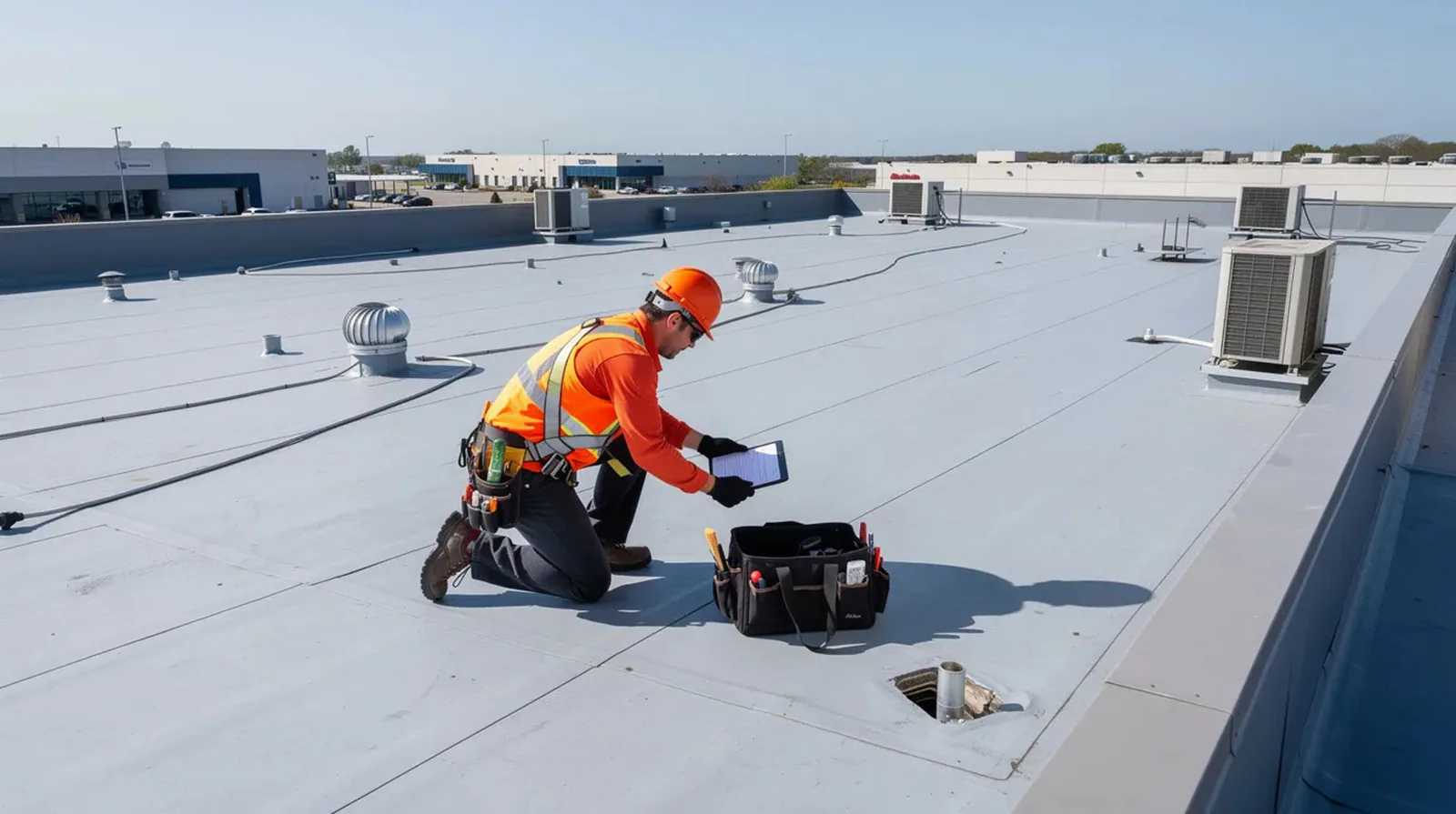
A warehouse may have single-ply membrane, built-up roofing, modified bitumen, metal panels or a recover above an earlier system. The surface does not reveal every layer below it. We inspect seams, laps, fasteners, edge metal, walls and penetrations, then review available records for prior reroofing or repairs. Where moisture is suspected, an infrared survey can flag areas for follow-up when conditions suit that method; a test cut can answer questions that surface observations cannot settle.
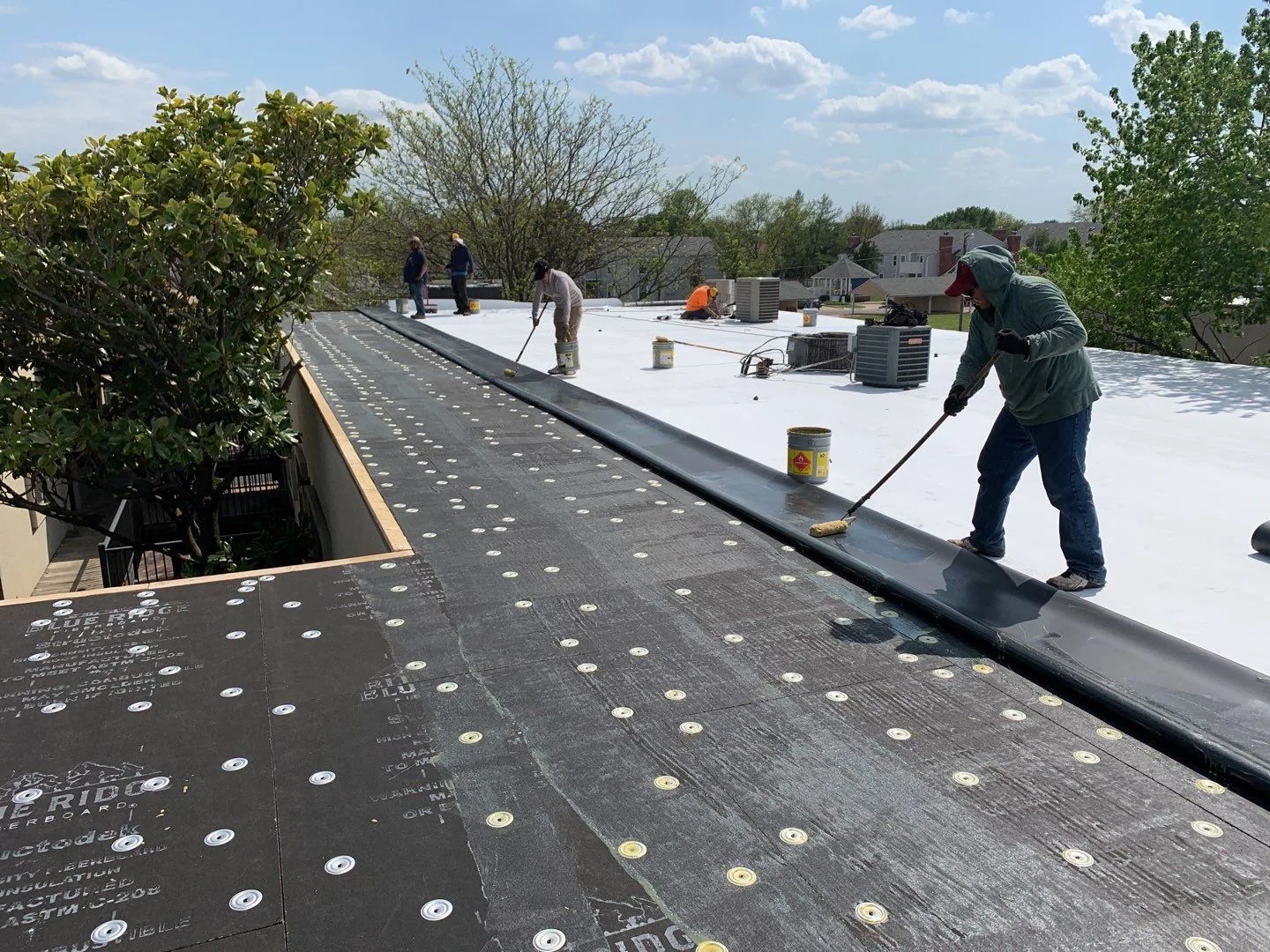
Equipment changes can leave capped curbs, abandoned supports or patches that no longer match the surrounding membrane. We mark transitions and check how they affect water flow and future access. A TPO assembly, standing-seam roof or metal retrofit each calls for different edge and penetration details. Substrate, deck condition, drainage and project requirements guide the choice; material is only one part of a working roof.
Operations: Protect receiving and dispatch
Receiving schedules affect more than the driveway. Crane access, forklift routes, dock doors, exhaust discharge and overhead equipment can change material delivery and roof access. Before mobilization, we identify staging, lift paths, work hours, roof access and building zones needing protection from dust or noise. The general contractor and facility contact can resolve conflicts with deliveries, mechanical work and interior operations before tear-off exposes a section.
For an occupied warehouse, the daily plan identifies where the crew will work, what remains weather-tight and how a weather change alters the sequence. We open only the area that can be protected and brought to a secure tie-in during the planned window. An occupied-building reroof sequence keeps work areas distinct when operations continue. If equipment must be moved or disconnected, roofing and mechanical responsibilities should be agreed before removal, not after the membrane is cut.
Drainage: Trace outlets, edges and low points
A blocked drain can affect a broad roof area well beyond the ceiling stain. We check drain bowls, strainers, scuppers, gutters, slopes and visible ponding, then note whether debris or a change in elevation interrupts the water path. Closing a seam while leaving an obstructed outlet does not resolve the drainage condition. We record the affected area and determine whether the next step is cleaning and repair, a drainage correction or a broader assembly review.
Perimeter edges, expansion joints and parapet transitions deserve the same attention as the field. Hail or wind can stress exposed details, so the inspection checks metal attachment, flashing and membrane termination. A post-storm review records those conditions by roof zone and separates confirmed openings from marks that need a closer test. Our roof inspection records findings, and a defined ponding-water repair addresses a confirmed low-area problem.
Scope: Separate roofing from other trades
Cost and duration depend on roof area, existing layers, deck repairs, insulation, access, disposal, tie-ins and how much work must be phased around operations. A coating may suit a sound compatible surface after preparation; it cannot correct wet insulation or failed drainage. A recover may reduce tear-off only when the existing assembly and project requirements support it. Replacement exposes more of the roof for assessment but needs a larger dry-in and interior-protection plan. We compare these options with observed conditions before setting scope.
Units, skylights, exhausts and conduit crossings need a clear trade sequence. We confirm curb dimensions, who moves equipment, who supplies components and who closes the membrane. That prevents a finished surface being cut without a repair boundary. For roof-finish replacement inside Bryan, permitting sits with the roofing contractor and the project closes with a city inspection. We plan for that review alongside delivery dates and daily tie-ins, using the online portal to submit the application and coordinate its inspection record.
Weather window: Keep exposed areas recoverable
Regional heat affects crew timing, surface preparation and material handling. The College Station observations at Easterwood Field include two 112-degree highs in August 2023, on the twentieth and twenty-seventh. For summer warehouse work, the schedule provides protected material storage and a checked application window. For a roof project, the practical response is to plan work windows, protect materials and limit each exposed area so it can reach dry-in before the crew leaves. Wind or rain changes the plan, so staging and temporary protection must be set before work starts.
After hail or wind, we inspect the warehouse roof for punctures, displaced edge details, damaged flashing and open seams. Each finding is mapped beside any interior report so repair boundaries follow the affected assembly and the path needing investigation. When a leak threatens stored goods or interior operations, our emergency service can respond any hour, weekends and holidays included, to stabilize the opening and establish a permanent repair boundary. A hail assessment or tornado-related scope follows observed conditions.
Frequently Asked Questions
Can a warehouse stay open during a reroof?
Yes, when sequencing can protect the interior and keep access workable. We divide the roof into sections, coordinate deliveries and occupied zones, then set a daily dry-in boundary with the general contractor.
How do you choose between recover and tear-off?
Existing layers, moisture, deck, attachment and project requirements decide whether a recover is suitable. We inspect the assembly and confirm concealed conditions before recommending a scope.
What do you check after Bryan hail?
We examine membrane, seams, edge metal, flashing, penetrations and interior signs of water entry. The April 2021 storm date can help organize maintenance notes; an inspection documents the condition of this roof.
Will new rooftop equipment affect the work?
Curb size, lifting path and trade timing affect the roof detail. We agree on the opening and flashing responsibility before a unit is moved or set.
What permit applies to replacement in Bryan?
Bryan requires the roofing contractor to file for a permit before finish replacement inside city limits, then arrange the final city inspection. We coordinate that timing with deliveries and access.
Maintenance: Preserve a useful roof record
After repair or replacement, a repeatable record helps facilities staff compare changes. We document membrane, seams, drains, edges, penetrations and repaired areas with photographs and written observations. Maintenance checks visible flashing and looks for punctures, loose components, standing water or later trade work. If a mechanical contractor adds a curb or changes a pipe route, the roofing detail should be recorded and inspected after the work.
A maintenance visit does not make an aging assembly new; it identifies what changed and where repair merits consideration. We can arrange recurring checks and note conditions that warrant a closer survey or test opening. Bryan's industrial properties make access and delivery coordination part of future work, so records should include practical roof access details. A maintenance program keeps the next task defined, while condition reports give the property team photographs and findings for planning.
Set the warehouse work window
Give us the facility use, roof issue and target work window. We can arrange a roof walk, document the assembly and agree on the next task with your operating and construction teams.