Home / Roof Systems /
TPO Commercial Roofing in Bryan, TX
A TPO specification starts with the existing roof and the work planned above it: which layers can remain, where new equipment will interrupt the sheet, and how the membrane will meet each transition? In Bryan, we inspect the membrane, seams, insulation, drainage and transitions before recommending installation, repair or replacement. The decision includes more than the white sheet. Existing layers, wet insulation, equipment openings and the planned tie-ins determine how the new surface can be made weather-tight and maintained.
A building in Bryan Business Park needs its own membrane-work sequence, with access and occupied-space protection confirmed before installation. Roof records can be compared with the 2019 tornado east of Bryan in Brazos County and the significant April 2021 hail across the Bryan-College Station area. Those events make a roof walk useful after weather concerns, but the condition of this assembly must be established at the property. We document the findings, define the work boundary and agree on a dry-in sequence before opening the roof.
Material choice: Specify the whole assembly
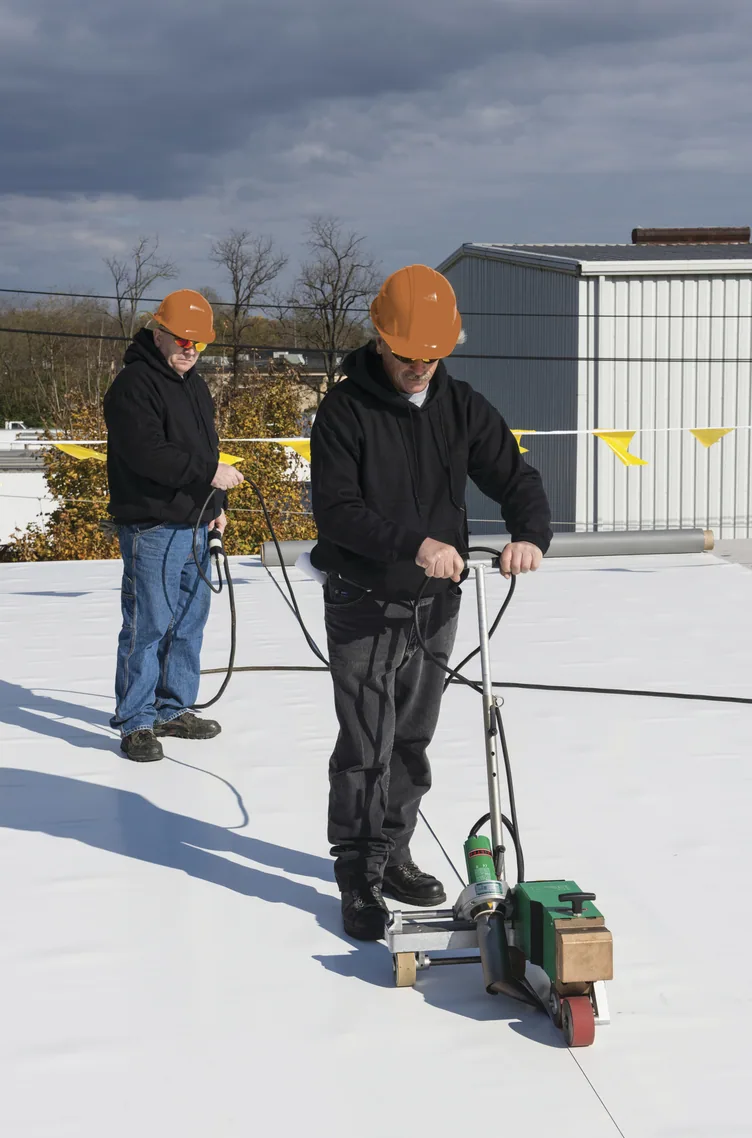
TPO is a thermoplastic single-ply membrane whose seams are joined with hot air. Its performance depends on a compatible assembly beneath it, sound terminations and details that keep water from entering at changes in plane. We review the existing deck, insulation, slope and attachments before setting a scope. A PVC membrane or EPDM assembly may also suit a project, but the selection follows the building's conditions and project requirements, not a color preference alone.
Existing roof layers can change how a new system attaches, where fasteners land and whether added weight is acceptable. We inspect visible conditions and review available records, then identify concealed questions that need testing or design input. If moisture is suspected, infrared imaging can flag sections for follow-up when the roof and weather conditions suit that method. We compare the scan with field observations and use a test opening when the assembly question requires direct confirmation. We also check whether old penetrations or abandoned curbs need removal before the new surface is laid, since leaving an unused opening can complicate drainage and future maintenance.
Seam integrity: Follow every welded connection
A TPO seam is only one part of a continuous weather layer. We examine laps for incomplete welds, contamination, wrinkles, fishmouths and movement, then check how the membrane terminates at walls, curbs and edges. Repairs must suit the membrane's condition and the detail around it. A commercial roof inspection can map visible conditions before a larger repair or replacement scope is priced, while a seam-failure repair addresses a defined separation.
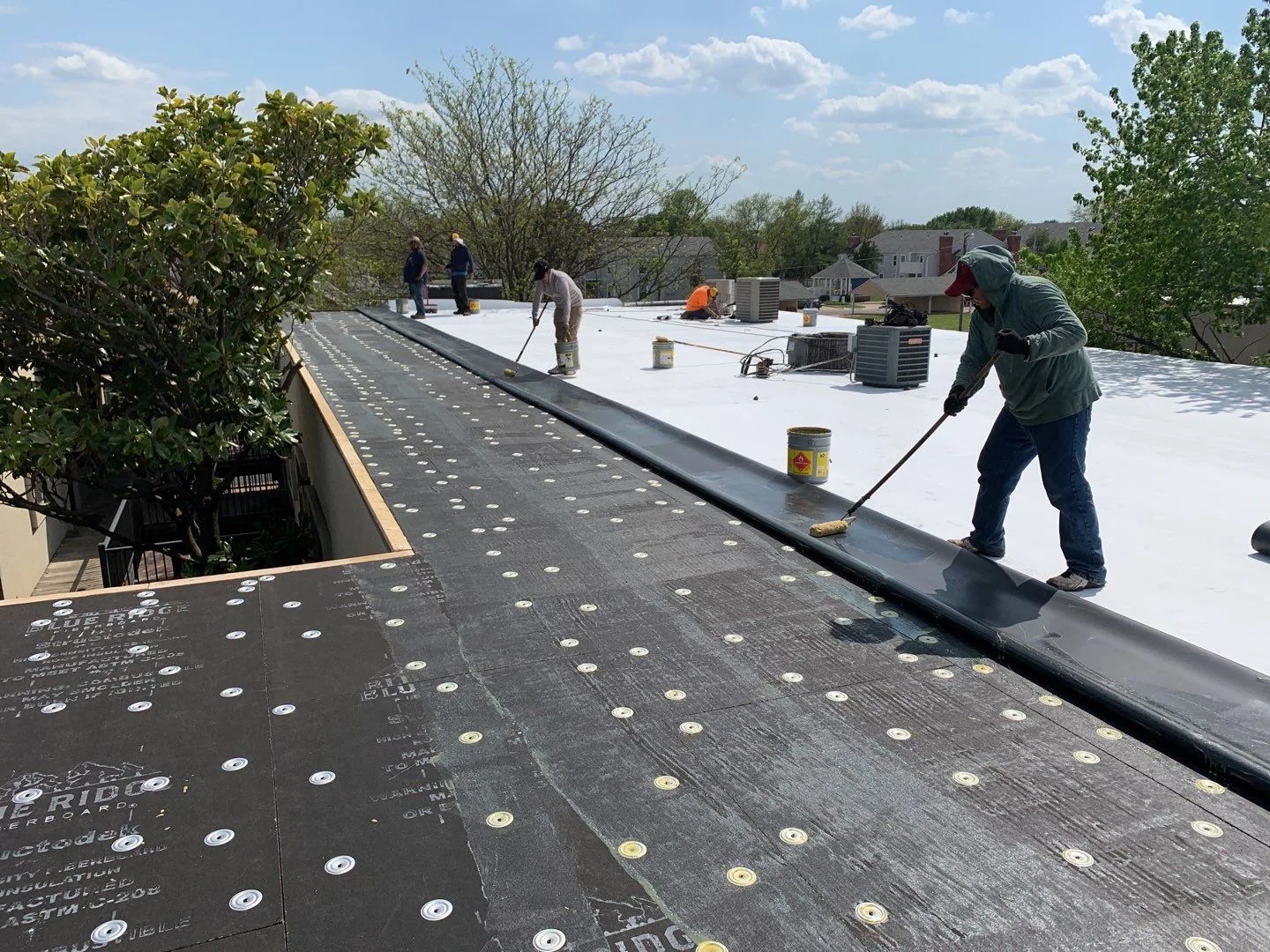
Installation quality depends on preparing the surface and checking welds as work proceeds. Temperature, wind, moisture and substrate conditions affect the work window, so the crew sequences areas that can be opened and closed safely. At a tie-in to an existing roof, we establish which assembly remains, where the new material starts and how that junction will be protected during each shift. That boundary matters to the general contractor because other trades may need access beside the same seam. A transition at an addition or phased reroof needs a durable termination that can tolerate movement between the sections; the drawings and field condition should agree before the crew closes the junction.
Water path: Coordinate drains and transitions
A membrane does not correct a low area simply by covering it. We review how the roof slopes toward drains, scuppers and gutters, then note ponding, blocked flow paths and changes in elevation that affect the finished surface. Drain bowls and adjoining flashing need to connect with the new membrane without restricting the opening. Where water stands after rain, a ponding-water assessment can separate a drainage issue from a membrane defect before the work scope is fixed.
Equipment curbs, skylights and pipe penetrations interrupt the field and require details compatible with the selected system. We coordinate dimensions and installation responsibility with the mechanical or electrical trade before a roof opening is made. A curb and support scope can be timed with roofing work so flashing is completed after the equipment position is settled. The handoff records who provides each component, who closes the membrane and how the completed connection will be checked.
Work sequence: Keep the building dry-in ready
For a recover, replacement or new installation, the sequence starts with access, material staging, roof openings and the amount of surface exposed at once. We coordinate delivery paths, occupied areas, equipment shutdowns and other trades with the general contractor. Bryan's online permitting portal supports applications, inspection scheduling and results, so the project team can track its closeout alongside delivery dates and daily tie-ins.
Work proceeds in sections that can reach a secure tie-in before the shift ends or weather changes. The plan identifies where tear-off stops, how insulation and membrane will be protected, and what happens if a substrate condition differs from the visible surface. For occupied properties, an occupied-building sequence can coordinate noise, access and temporary protection around the building's use. A written restoration assessment may also determine whether an existing assembly merits repair rather than new TPO. We record the installed membrane, transitions and drain details so the facilities team can identify the next inspection point.
Closeout: Leave a maintainable roof record
A completed TPO installation still needs clear records for future inspections and repairs. We document the installed areas, major transitions, drain details and locations where other trades affect the roof. That record helps a facility manager distinguish a new roofing connection from a later equipment change. Our roof condition reports use photographs and written observations to support maintenance decisions; they do not substitute for structural engineering or manufacturer determinations.
Maintenance should follow the assembly's actual conditions. Leaves, debris, loose edge details, punctures and abandoned equipment can affect drainage or hide a developing seam problem. A preventive maintenance visit records observed changes and separates a localized repair from a broader condition needing review. If an opening is admitting water, the repair plan identifies a compatible patch and sound welding surface, with the seam checked before the affected roof section returns to service. The findings and photographs can give the next facilities manager a useful starting point when a later trade proposes new equipment or a penetration. We can schedule a walk for a specific leak, upcoming replacement or question about the present assembly and set the roofing scope from what is visible on site.
Frequently Asked Questions
Can a new TPO membrane go over the existing roof?
The assembly decides that. We inspect the existing layers, attachment, moisture concerns and deck conditions, then identify whether a recover can be considered or removal is needed. Structural review may be required when the added load or deck capacity is uncertain.
What should be checked after hail in Bryan?
Start with the roof areas and details exposed to the reported event, then document punctures, displaced flashings, open seams and interior water evidence. The April 2021 hailstorm affected the Bryan-College Station area, but a property inspection establishes whether this roof was affected.
How do you keep a building dry during TPO replacement?
We divide the work into sections, limit exposed area, secure tie-ins and set a dry-in point for each shift. Access, forecast, occupied use and other trades determine how much roof can be opened safely at one time.
What happens where new TPO meets the old roof?
We mark which assembly stays, where the new sheet starts and how the junction is protected each shift. The termination has to tolerate movement between sections, so drawings and field conditions are compared before the crew closes it.
What information helps price a TPO project?
Roof dimensions, access, existing layers, deck observations, drainage, curbs, penetrations and the intended work window all affect scope. We inspect the property and identify unresolved conditions before turning those details into a roofing proposal.
Plan the next TPO roofing task
Tell us the existing membrane, roof condition and how the building operates. We can arrange a walk, document the assembly and agree on the next roofing task.