Commercial Roofing for Manufacturers in Bryan, TX
A manufacturing roof work window has to protect production while keeping a defined dry-in boundary. Two local storm dates belong in the maintenance record: on April 8, 2021, Bryan-College Station's strongest hail reports came between 9 and 9:30 p.m. and reached 2.75 inches; a 2019 EF-2 track in Brazos County damaged one home and four commercial buildings or warehouses at a point roughly four miles east of Bryan. We inspect the membrane, seams, perimeter and equipment curbs, then mark the roof area that can be repaired or opened within an agreed work window. A commercial roof walk in Bryan starts with the building use, access path and condition at the roof, not a preset replacement answer.
Weather exposure: separate storm impact from wear
Hail can bruise a membrane, split a flashing or damage metal accessories, while wind can disturb perimeter details or move debris across the working surface. Those outcomes call for different repair boundaries. We inspect around the reported impact and compare it with seams, drains, penetrations and the roof perimeter, looking for conditions that affect water entry or the ability to keep the surface dry. The local hail and tornado dates belong with the inspection record; the roof-zone photographs and Diligence Notes establish the condition for the current scope.
For an operating plant, a storm visit should identify immediate openings, protect exposed insulation and distinguish visible damage from locations that need further testing. Our commercial roof inspection can record those observations with photographs and a repair map. The resulting scope gives the facility contact a sequence: stabilize an active leak, inspect related transitions, then decide whether the affected section is suitable for repair or should be evaluated as part of a larger replacement.
Production sequence: keep roof openings contained
A roof cut above production is a handoff between roofing, plant maintenance and any trade serving equipment below. Before work starts, we agree on the work zone, material staging, access route and the point at which the roof will be watertight again. If a curb, conduit or exhaust connection has to move, the sequence identifies who disconnects it, who resets it and when the roofing tie-in can be completed. That plan keeps an open section from drifting into an adjacent work area or an uncovered shift change.
The freight and logistics sequence has a related concern, but a manufacturing floor may add process lines, utilities or controlled access. We confirm those constraints with the site contact rather than treating the roof as an isolated surface. Where production cannot pause, work can be divided into smaller dry-in zones with a clear daily limit. A written start point, stop point and weather contingency gives the next shift a useful handoff and lets maintenance know where temporary protection ends.
When a general contractor controls the broader schedule, the roof scope needs a named handoff for every opening and tie-in. Our roofing coordination with general contractors identifies the roofing boundary, trade sequence and inspection point before another crew occupies the same zone. That keeps responsibility visible when a rooftop unit, structural support or utility penetration changes during the project.
Market context: Bryan's industrial areas call for clear staging
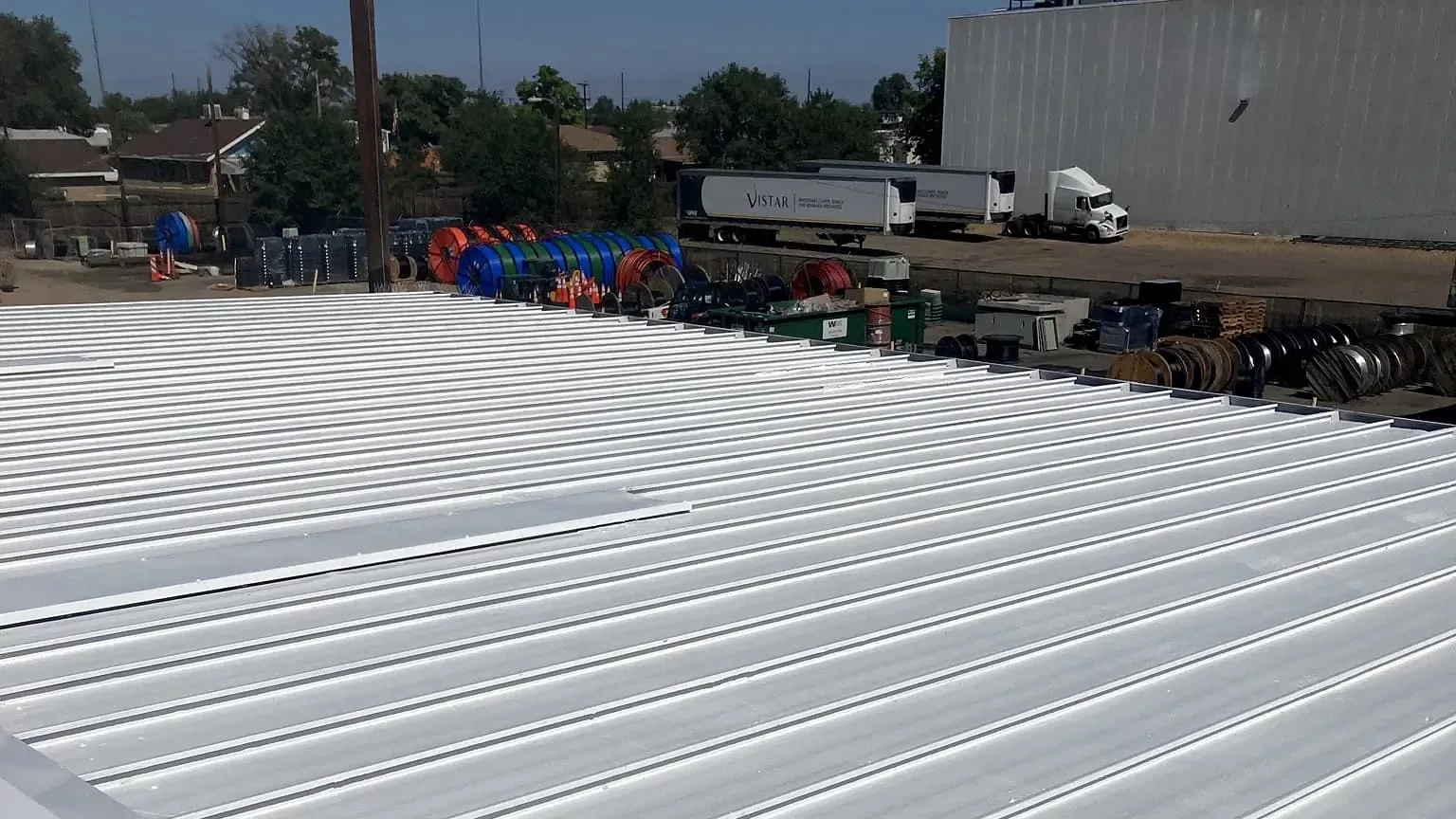
A manufacturer’s Bryan Business Park property needs staging and roof-entry arrangements confirmed against the production schedule and the contact who can authorize the affected work area. Northeast Bryan’s Texas Triangle Park has rail service; roofing deliveries at an individual property still need their own approved approach and unloading point. Keep each roof record tied to its own assembly and work zone while coordinating the roofing task with the site's operating sequence.
We use the confirmed access details to shape the field plan. A roof visit near Texas Triangle Park can begin with the approved delivery path and areas that must remain open. For a project near Bryan Business Park, the property contact can identify the work zone before materials arrive. That information helps the crew set up around the building's operations.
Assembly choice: match the repair to the existing roof
Manufacturing roofs often carry several generations of repairs, insulation and equipment changes. We verify the existing membrane and its attachment before specifying a repair, overlay or tear-off. On a single-ply surface, a patch must be compatible with the membrane and prepared so the seam can bond; at a metal curb or pipe, the flashing detail needs to move with the roof while remaining watertight. If moisture has entered the insulation, covering the symptom can leave a soft or wet area beneath the new work, so we mark where further investigation is warranted.
A TPO roof assembly may be a candidate when the existing conditions, drainage and tie-ins support it, but the material name alone does not decide the scope. We compare the current layers, edge details, penetrations and planned equipment work before recommending a repair or commercial roof replacement. The estimate can then show the work area, preparation, insulation and flashing as separate decisions instead of hiding them inside one broad line item.
Documentation: leave maintenance with a roof record
A manufacturer needs a record that remains useful after the roofing crew leaves. We can document the roof zones inspected, repairs completed, details left for follow-up and any conditions that still need a decision. Photographs tied to a roof sketch help maintenance distinguish a completed seam repair from an area that was only observed. When the work includes replacement within Bryan city limits, Bryan requires a building permit for replacing roof finishes and a final inspection; permit and inspection steps belong in the schedule before work is covered or the project is closed.
We can provide a photo-backed roof condition report with a repair boundary and next action for each finding. That record helps the facility contact compare future bids and coordinate maintenance without relying on a memory of which curb or drain was discussed. For a multi-building operation, a consistent naming scheme for roof zones makes follow-up easier to assign. The closeout should state what was repaired, what remains open, and who owns each next decision.
Before mobilization, align the repair boundary with the production calendar, roof-access rules and equipment clearances confirmed by the facility contact. If an opening exposes wet insulation or a damaged deck, pause at that defined area, protect the interior and document the condition for a separate scope decision.
Frequently Asked Questions
Can production continue while a roof section is replaced?
Often, with a defined work zone and dry-in limit. We coordinate access, equipment shutdowns and the point where each shift's roof opening will be closed, then adjust the sequence to the plant's operating constraints.
What should the first storm inspection cover at a plant?
We start with active openings and water entry, then check seams, edges, penetrations and equipment flashings near the reported impact. Photos and a marked scope help separate urgent stabilization from additional investigation.
How do you handle rooftop equipment that must be disconnected?
The work plan identifies the equipment, responsible trade, shutdown window and reset point before the roof is opened. We coordinate the flashing tie-in after the equipment is in its final position so the roof work is not closed around an unfinished connection.
When is an overlay a reasonable option for a manufacturing roof?
We first confirm the existing layers, wet insulation, attachment and drainage. An overlay can be considered only when those conditions support it and the details can be tied in; otherwise a repair or tear-off scope may be more appropriate.
What Bryan permit steps belong in a replacement schedule?
Inside Bryan, the contractor must secure a permit before replacing roof finishes, then arrange the required city inspection. Schedule both checkpoints before setting the final closeout date.
Set the next roofing work window
Share the roof condition, manufacturing use and proposed work window. We can arrange a walk, map the repair boundary and coordinate the next roofing task with your facility contact.