Home / Service Areas /
Commercial Roofing in Bryan, TX
For property teams planning work across Bryan, start by identifying the assembly and access constraints at each address; regional storm history cannot predict the condition of a specific roof. We inspect the membrane, flashing, drainage and interior reports, then document the roof zones that need protection or permanent repair. Bryan includes rail-served Texas Triangle Park alongside Bryan Business Park and Brazos County Industrial Park, providing several multi-property settings where roof access needs coordination with the individual building contact. A roofing opening near active work space needs a daily limit and clear trade handoff. For an owner or general contractor in Bryan, a commercial roof repair begins with the observed condition, the building use and the work window the site can release.
Storm sequence: Secure the opening, then define the repair
After wind or tornado conditions, exposed edges, displaced metal and lifted membrane details need prompt attention before a longer repair can be planned. An active leak needs the exposed area identified, interior protection arranged and a temporary closure attached to sound roof material. We photograph affected areas and distinguish temporary work from the permanent scope, so a claim file and roofing estimate do not treat one as the other. The 2019 tornado touched down east of Bryan in Brazos County; at the property, an inspection checks edge attachment, flashing transitions and any visible displacement. An emergency roof response can stabilize the opening, followed by a measured inspection that identifies seam, flashing or attachment work still required.
Building use: Coordinate across Bryan's operating properties
Roof work above a distribution building, a shop or an occupied office has different access and interior protection needs. Bryan Business Park and Brazos County Industrial Park are public industrial areas, while Texas Triangle Park has rail service; the roof project follows the access arrangements of its own property. That operating context makes delivery paths, equipment access and the roof opening sequence worth confirming with the general contractor. We inspect the assembly and set work zones around the actual operations below. A warehouse roof review records the roof area, drains, curbs and traffic paths, while the site contact confirms when that area can be released. This keeps a roof scope specific to the building instead of borrowing assumptions from another property.
Water trace: Connect the interior mark to the roof detail
A ceiling stain may sit far from the opening at a seam, curb, drain or wall transition. We compare the interior report with roof-zone observations, examine the membrane and flashing, and check insulation or substrate where the assembly allows. If moisture extends past the visible mark, the repair boundary may need to change before materials are ordered. We document what can be seen and identify any area that needs opening to confirm the condition. An infrared moisture survey can help map suspected wet areas for follow-up, while physical checks determine what the roof contains. For a localized failure, a wind damage repair states the detail being corrected and how adjacent membrane and drainage will be left secure.
Access plan: Keep roof work inside a safe window
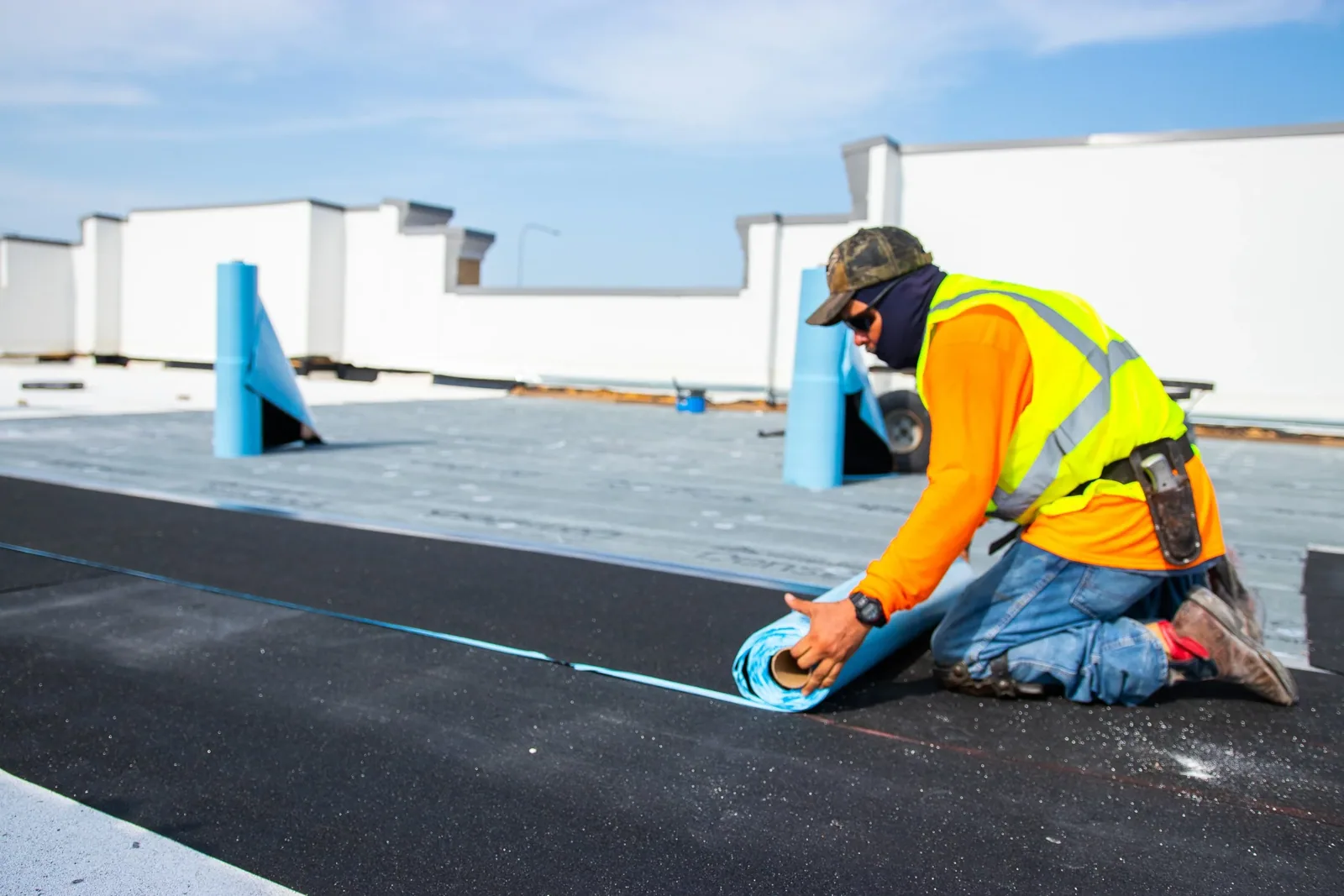
Before a section is opened, we confirm the delivery path, rooftop equipment tie-ins, lift location and the area that needs protection below. A roof crew can complete only the opening that fits the material, crew and dry-in plan for that shift. The next trade may need a curb, conduit or service route restored before the roof is closed, so those interfaces belong in the schedule. We coordinate with the general contractor on roof access and return-to-use rather than leaving an open detail for another crew to interpret. On an occupied property, occupied-building reroofing sets the phasing and daily closeout around people and operations below. This is useful where deliveries continue or an interior area cannot be taken out of service.
Assembly choice: Repair, recover or replace from evidence
A sound field membrane with a limited flashing failure may support a focused repair. Broader wear, trapped moisture, weak attachment or recurring leakage can lead to a recover or replacement review. A coating option requires a compatible assembly, a prepared surface and moisture conditions suited to the selected material. We check drains, seams, insulation and perimeter conditions before comparing the work. Cost and timing change with tear-off, deck repairs, edge metal, tapered insulation, equipment moves, disposal and access. A commercial roof replacement includes a sequence for removal, dry-in and tie-ins, while recovery needs a suitable existing roof and substrate. The recommendation follows the building's condition and the scope the owner can support, not the date of a storm report alone.
Before replacement, we mark which roof layers remain, where insulation needs to change and how curbs, drains and perimeter edges will meet the new membrane. That detail helps the general contractor coordinate HVAC, electrical and sign work while the roof is open. The work plan also limits each shift to the area the crew can protect and close. If removal exposes a deck or insulation condition that was not visible in the initial walk, the team can document the change and agree on the repair boundary before proceeding. This keeps temporary dry-in, permanent installation and the following trade in one sequence.
Frequently Asked Questions
Does Bryan's tornado history mean a roof needs replacement?
No. A recorded event is context for an inspection, not a condition report for one building. We check edges, seams, penetrations and interior reports at the property, then document whether the work calls for temporary protection, a local repair or a broader assembly review.
Can a Bryan business keep operating during roof repair?
Often, when the work window and interior protection are agreed before the roof is opened. We phase sections to match the crew's dry-in plan, coordinate access with the site contact and return each area to a watertight condition before shifting to the next zone.
What should be checked after wind or tornado exposure?
We inspect perimeter metal, seams, flashing, rooftop equipment and any area linked to an interior report. Photos and zone notes separate visible damage from conditions that require further opening, so the temporary protection and permanent estimate have distinct scopes.
When can a commercial roof be recovered instead of removed?
Recovery depends on the existing assembly, attachment, moisture and substrate. We verify whether the roof can support another system and check drainage and perimeter details. Wet insulation or structural concerns can make removal or additional investigation necessary before a recovery price is reliable.
How do Bryan roof permits and inspections affect a replacement?
For roof-finish replacements inside the municipal boundary, Bryan places permit filing with the roofing contractor and calls for a final city inspection. We schedule both checkpoints alongside section turnover and closeout records. For phased facilities, track each structure's handoff separately; a completed inspection does not close work on the next roof. Keep the approval alongside the matching section log.
Closeout record: Leave the next roofing task clear
At closeout, we provide the completed work zones, repair notes, photos and open items in a record the owner or project team can use. Bryan identifies Texas Avenue and South College as revitalization corridors, and Downtown Bryan includes restaurants, shops and art galleries. These different commercial settings can call for distinct staging and access choices, while the roof inspection remains specific to the property. We confirm completed flashings, penetrations and drainage details, then note any follow-up inspection or maintenance task. For a building near Downtown Bryan, pedestrian access may shape the delivery plan; for work near Bryan Business Park, the owner can coordinate with the site's operating schedule. The final handoff gives the next trade a clear roof boundary. Where one mobilization covers several zones, we list each completed area separately and flag any section intentionally held for later work.
Arrange a Bryan roof walk
Share the roof use, known condition and available work window. We can inspect the roof, document the repair boundary and coordinate dry-in and the next roofing task with your general contractor.