Commercial Roof Flashing Failure Repair in Bryan, TX
A flashing leak is a joint problem before it is a sealant problem. Water can enter where a roof meets a wall, curb, pipe or equipment base, then travel along the deck before it appears inside. Replacing the visible bead without checking the metal, membrane termination and substrate may leave the water path unchanged. For a Bryan building, we identify the transition, record how it meets the roof assembly and mark the area that must be opened to verify the repair.
Send the roof plan, interior location, prior patch record and work window before the walk. A commercial roof inspection can document the flashing profile, surrounding membrane and adjacent construction so the general contractor can sequence the repair with mechanical or wall trades.
Water path: identify which joint is admitting water
Map the inside stain to the nearest roof transition, but do not assume those points align vertically. Water can move beneath a membrane, follow a deck flute or collect at a low point before reaching a ceiling tile. We inspect the termination, counterflashing, sealant, fasteners and adjacent roof field, then note the likely route and the evidence supporting it. Photos should show the whole connection and a close view of the suspected separation.
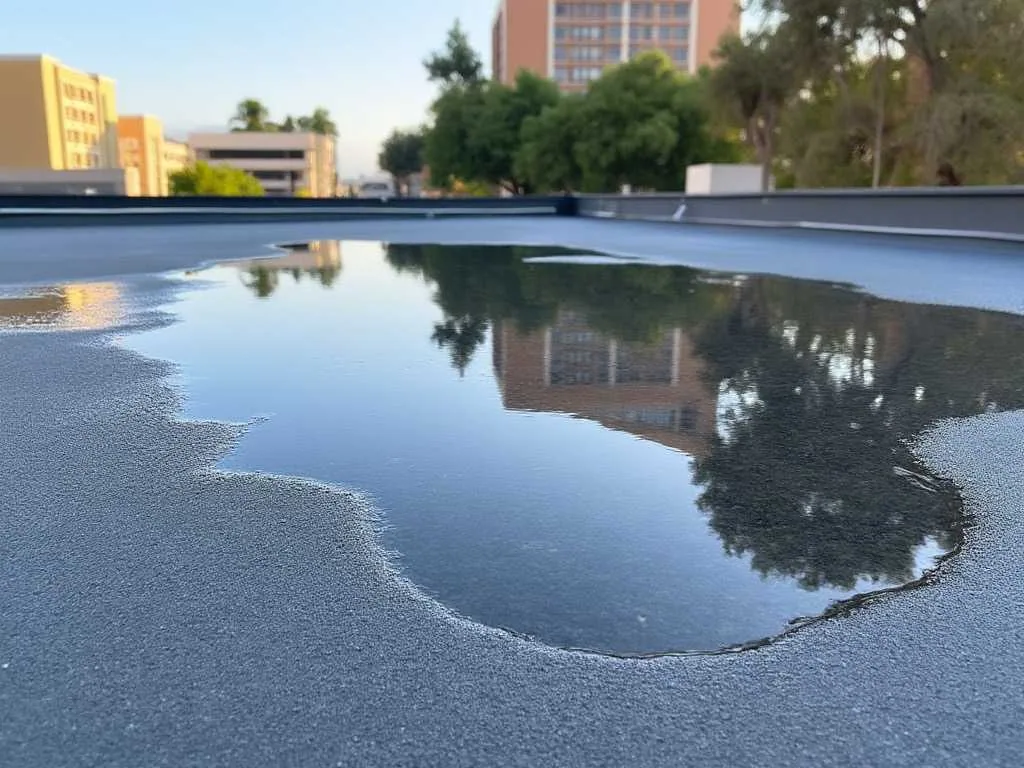
At a wall, check whether the flashing rises to a secure termination and whether counterflashing sheds water over the top edge. At a curb, inspect the corners, equipment support and connection to the roof membrane. Pipe and conduit penetrations need a compatible boot or field-formed detail that stays clear of moving equipment. If ponding is present near the joint, map that condition separately through a ponding water roof review rather than treating drainage and flashing as one defect.
Record whether the detail is wet, concealed or inaccessible. A roof opening may be needed to see the substrate or the back side of a termination. Keep a suspected condition separate from a confirmed failure in the estimate until the assembly is exposed and documented.
Movement: account for dissimilar materials
Metal, membrane, masonry and equipment supports do not move as one piece. Temperature changes, vibration and prior repairs can stress the connection between them. Look for a torn membrane at the corner, a loose termination, a split sealant bead, corrosion, fastener pullout or a gap where the adjoining surface has shifted. The photograph and notes should locate the defect and identify which materials meet there.
Bryan Business Park and Brazos County Industrial Park are the City’s named public industrial parks, each with its own commercial footprint. At either location, flashing work needs an agreed route to the affected wall or curb and a protected area beneath any exposed connection. For a building with receiving or production activity, plan how the crew can reach the transition without blocking material handling or leaving an opening above an occupied area. Receiving docks, production areas and rooftop equipment at those parks decide where the crew can set a lift and where the protected zone below the opening has to be.
Before proposing a detail, determine whether movement is expected at the joint and whether the existing flashing can be removed without damaging sound membrane. The scope should identify preparation, compatible materials, attachment method, laps and the point where existing work remains. If an adjacent panel or coping detail also needs attention, separate it in the estimate so each trade has a clear handoff.
Repair: replace the failed connection, not just its surface
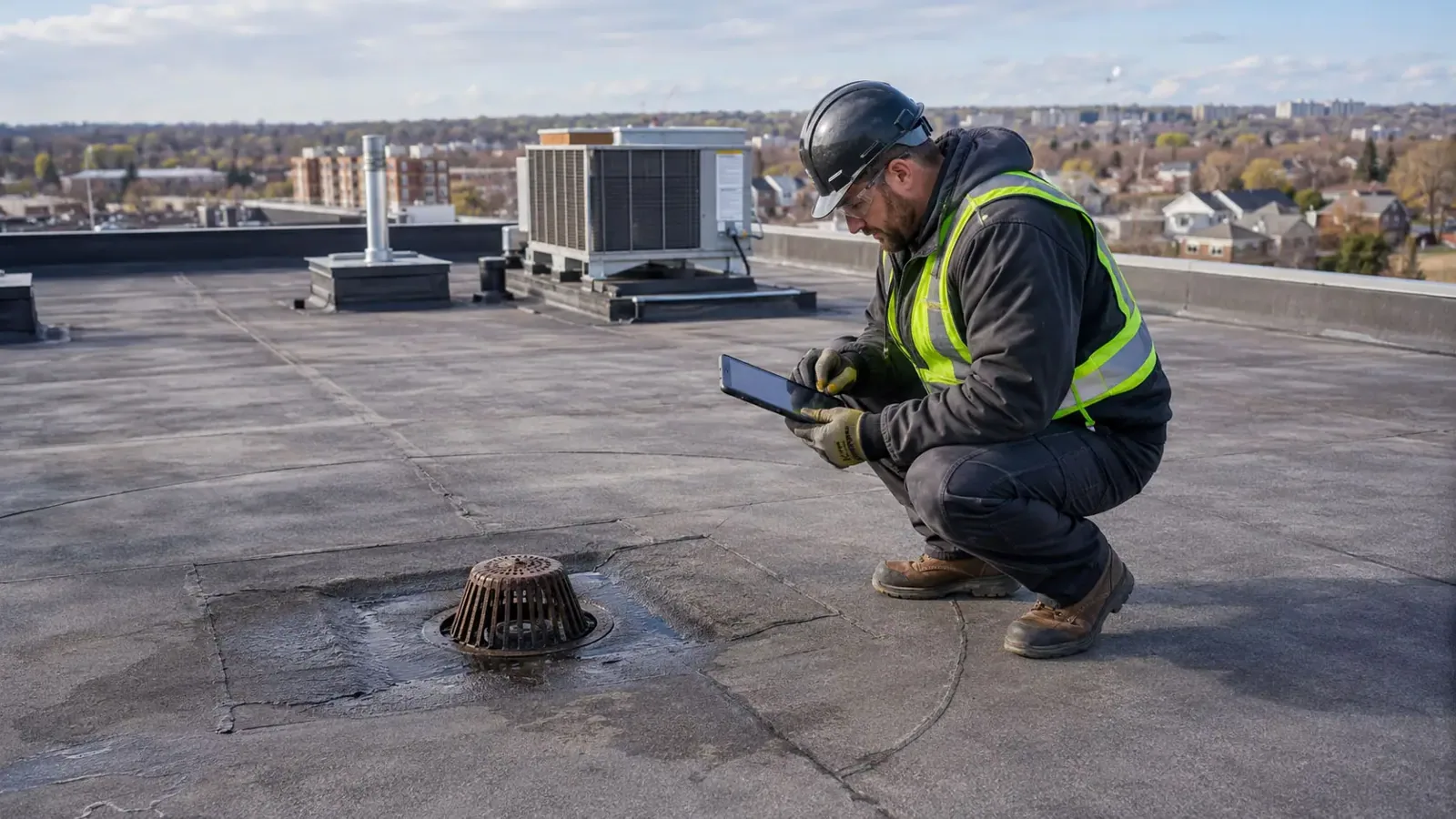
A durable repair begins with a clean boundary. Remove loose material, expose the condition needed for inspection, and photograph the substrate before installing a new transition. Where wet insulation or deteriorated deck is found, pause at the agreed limit and document the area before quantity or price changes. The owner should know whether the patch is a localized repair, a new flashing assembly or part of broader roof work.
For metal edges and wall transitions, a coping and edge-metal scope should explain laps, cleats, terminations and how runoff is directed. Around skylights or penetrations, penetration flashing work needs the actual opening and adjoining materials identified. If the roof field is also split or pulled away, wind-related roof conditions can be recorded separately from the flashing detail.
Our proposal states which transition is included, what preparation is planned, what materials will be installed, and how the finished joint will be checked. A repair should not conceal an unresolved path or imply that nearby roof areas were inspected when they were not.
Access: coordinate above and below the joint
Agree on roof access, ladder or lift placement, material delivery and interior protection before opening the assembly. Identify the person who can approve a temporary closure and the path the crew must keep clear. For occupied properties in Downtown Bryan, where restaurants, shops and galleries are part of the local commercial mix, the delivery and debris plan should avoid customer entrances and keep the work boundary visible to facilities staff.
At a mechanical curb, coordinate shutdowns and removal responsibilities with the equipment trade. At a wall or parapet, establish who is responsible for adjacent masonry or cladding repairs. Photograph the conditions before work, mark the membrane that will remain and record how the roof is protected at each shift end. This avoids a disputed handoff when the next trade returns to the same area.
If the repair is part of a larger reroof, a phased occupied-building plan can set the order of work areas and daily dry-in points. Where water is actively entering, use temporary roof protection while the permanent detail is scheduled. Keep temporary measures labeled so they are not mistaken for completed flashing work.
Record: document the completed flashing
Closeout photographs should show the repaired joint, its connection to the roof field and the surrounding wall or curb. Record the materials, preparation and attachment method, then label any nearby area that was not included. A commercial roof repair scope can retain those observations with the work order, while a later maintenance inspection can compare the same transition after weather exposure.
A commercial district with dining, retail and gallery uses, Downtown Bryan calls for roof work staged around occupied properties. On occupied properties, a clear record of access, debris handling and interior protection can help the facilities team coordinate future work around the same entrances and roof areas. The note should describe what was observed and completed, not promise how an uninspected adjoining section will perform.
For a commercial property in Bryan, send the roof type, transition location, interior symptom, prior patch details and proposed work window. We can inspect the joint, define the repair boundary and coordinate the next roofing task with your general contractor.
Frequently Asked Questions
Why can a flashing leak appear away from the joint?
Water can travel beneath a roof covering or along the deck before it reaches an interior finish. We compare the ceiling report with roof details and record the likely path rather than assigning the entry point from the stain alone.
Can new sealant fix a failed flashing?
Only when the connection and substrate remain suitable for that repair. A loose termination, damaged membrane, failed attachment or moving joint may need the detail rebuilt instead of covered with another bead.
What should a flashing repair estimate include?
It should identify the joint, preparation, materials, attachment, laps, access, protection and closeout photographs. Concealed conditions should have a defined inspection and approval step before the scope expands.
Do equipment trades need to be part of the work plan?
They may need to coordinate shutdowns, equipment removal or curb work. We identify the roof boundary and handoff so each trade knows which connection it owns and when the roof can be closed.
Can flashing repairs be made while the building remains open?
The work window depends on access, interior protection, equipment and the size of the opening. We divide the scope into manageable sections and agree on the daily dry-in point with the project team.
Set a flashing repair walk
Share the Bryan property address, roof system, affected transition, interior report and requested work window. We can inspect the connection, document its repair boundary and coordinate the handoff with your project team.