Commercial Skylight and Roof Penetration Flashing in Bryan, TX
After Bryan hail or wind exposure, a leak at a skylight or equipment curb needs a closer look than a bead of sealant. Water may enter at flashing, travel below the membrane and appear away from the roof opening. We check the curb or penetration, membrane attachment, counterflashing and surrounding surface before defining a repair. The work plan includes safe access, interior protection and coordination with the equipment or glazing trade when required.
At a property in Bryan Business Park, the flashing scope follows the roof’s own penetrations, occupancy and route for equipment service. The occupied space affects the interior protection and work window beneath a roof opening. We identify the actual space and equipment involved rather than making assumptions from the district. Where an opening admits water, the repair sequence identifies the failed connection, temporary protection and any glazing or equipment work required before the flashing is rebuilt. The first task is stabilization and a clear handoff to permanent repair.
Opening inspection: Follow the flashing boundary
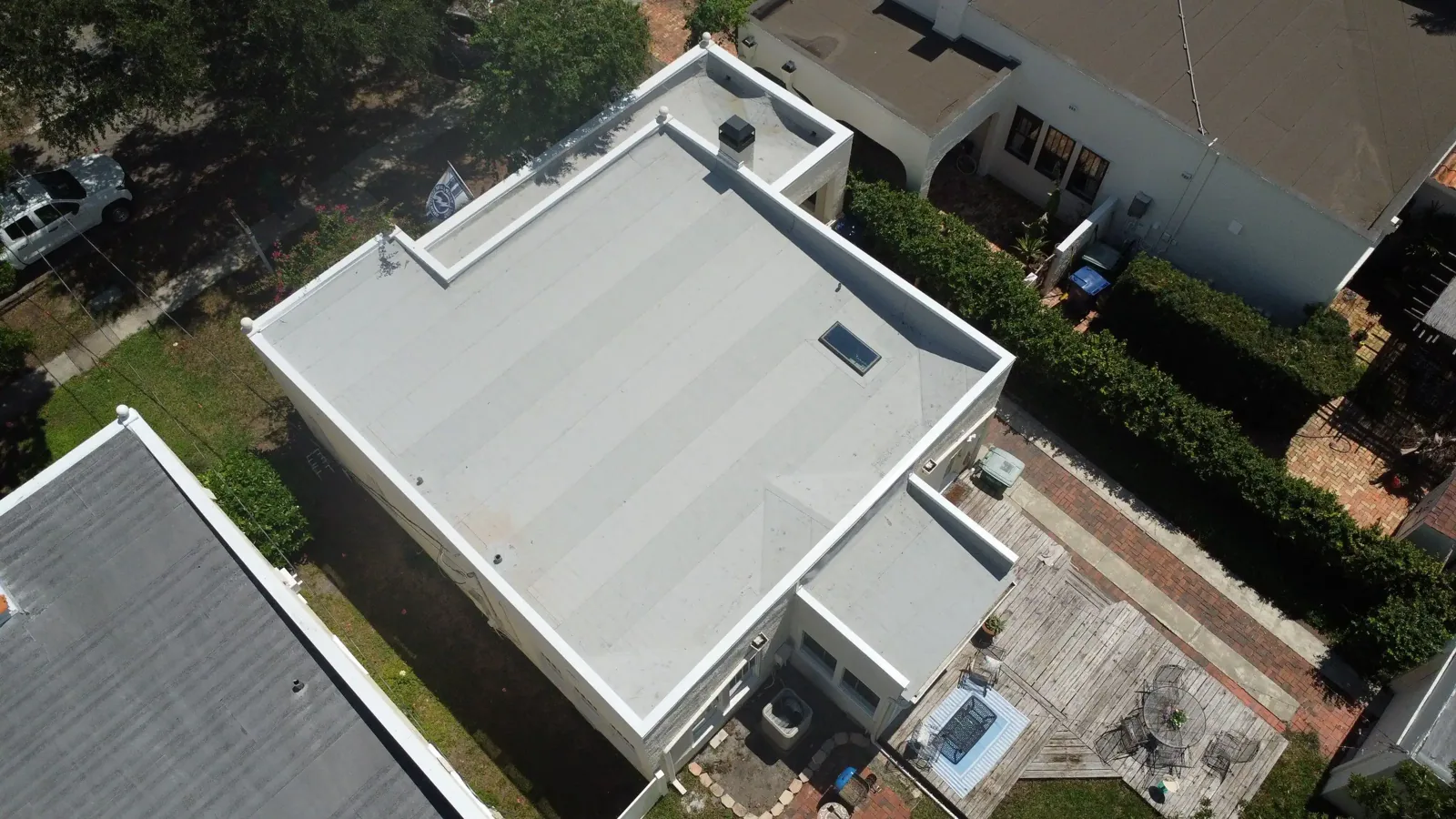
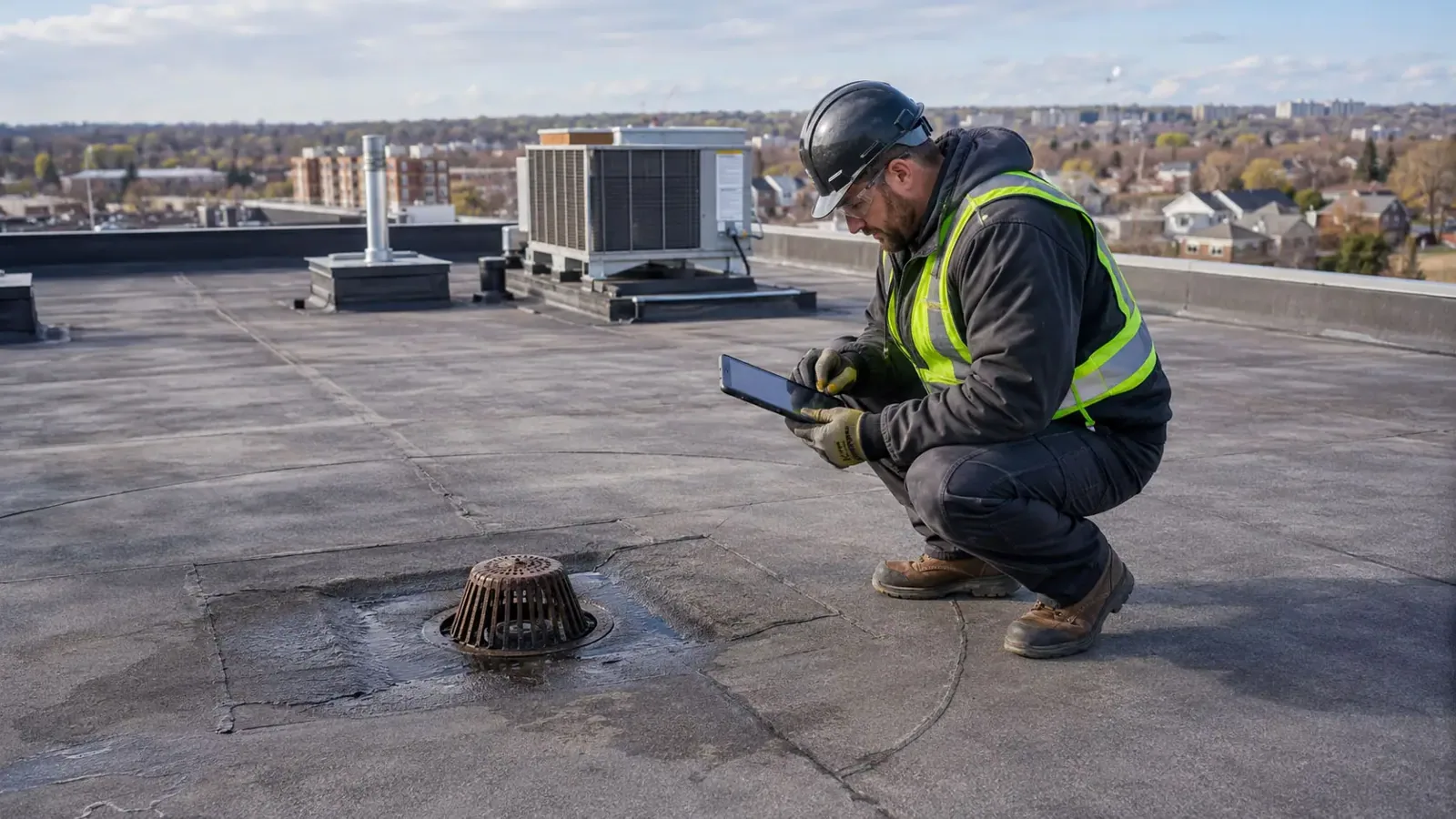
We inspect the membrane around the skylight or penetration, the base flashing, seams, curb corners and termination at the upper edge. A roof inspection records the detail and nearby conditions, including any puncture, loose patch or water path. The opening itself may need attention from a glazing, mechanical or electrical trade, so the roofing boundary is identified before components are disturbed.
At a skylight, we compare the curb-to-roof connection and visible perimeter with the ceiling stain and water path. Condensation, a cracked component and roof flashing can present similar interior symptoms. We photograph the exterior detail and identify whether the next check belongs to the roofing, glazing or mechanical trade before setting the repair boundary.
Curb and membrane: Restore a compatible transition
A curb repair needs stable support and a membrane detail compatible with the installed roof. We inspect corners, laps, attachment and curb height, then determine whether flashing can be renewed locally or whether part of the roof assembly must be opened. Damaged insulation beneath the detail is removed to a sound limit and recorded. The scope may include a flashing failure repair at the curb and adjoining field membrane.
At a pipe or conduit penetration, movement can stress the boot or seal around the opening. We identify the material, movement and surrounding roof type before selecting a repair method. A generic bead of sealant may not accommodate the connection or restore an underlying membrane lap. Where the penetration belongs to rooftop equipment, we coordinate disconnection or movement with the responsible trade and protect the opening while work is staged.
Skylight water path: Check drainage and frame joints
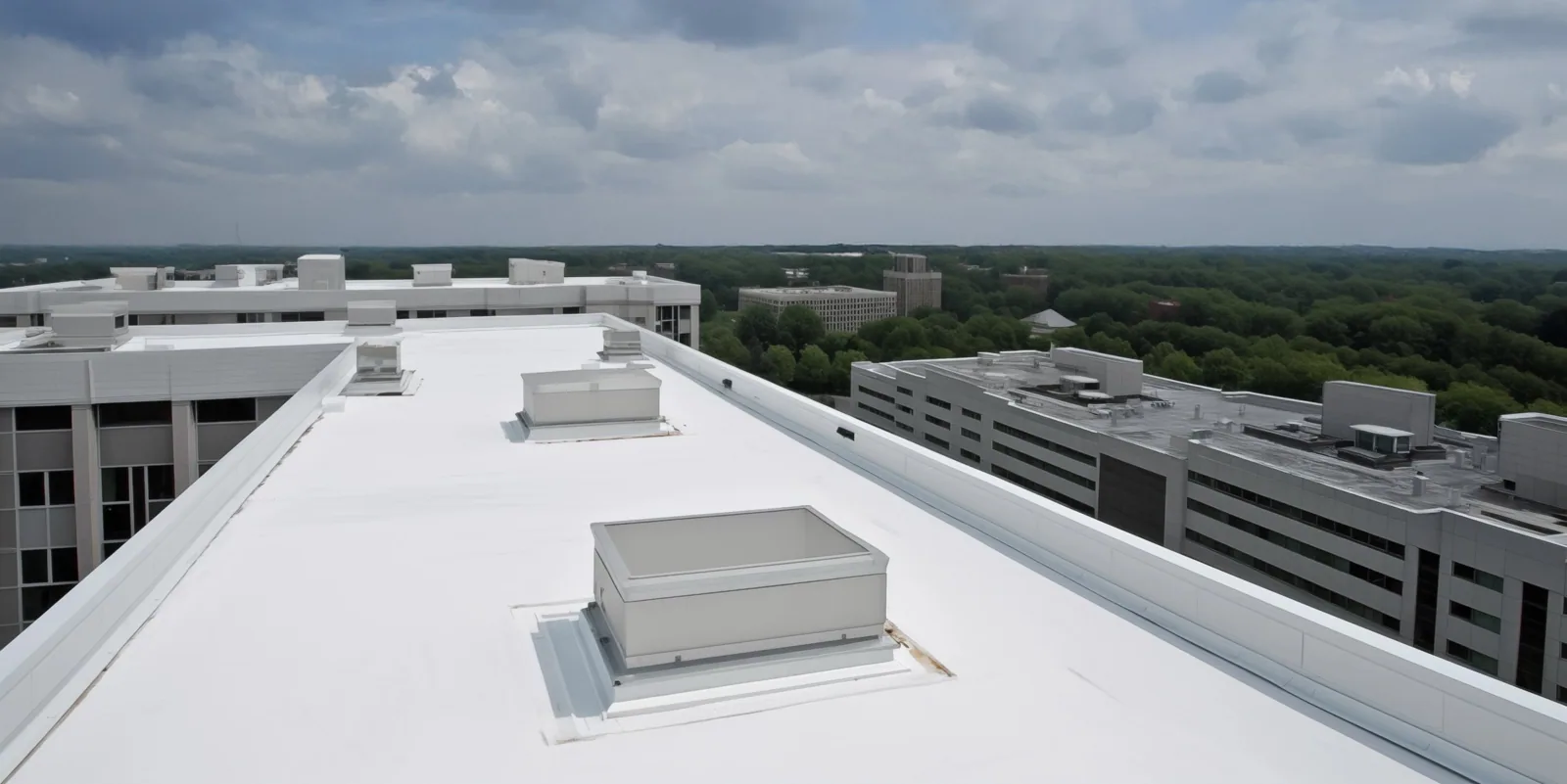
Water can collect against the uphill side of a curb if debris or the surrounding roof surface interrupts drainage. We check the water path, curb corners and accessible frame joints for openings and failed transitions. Cleaning a blocked route is different from rebuilding membrane flashing or repairing the skylight frame. We record which component appears to be involved and define the correct trade handoff before work begins.
The repair should leave the opening weather-tight without directing runoff toward another seam or drain. We protect the skylight and adjacent interior during material removal, then restore flashing to a sound termination. If glazing or frame work is needed, the roofer and glazing contractor coordinate sequence so each connection can be inspected before it is concealed. The closeout notes the repaired components and any limit that still requires testing.
Occupied building: Coordinate below and above
Bryan’s Downtown district includes restaurants, shops and galleries; access within Bryan Business Park also needs to be coordinated with each property’s occupants. An opening above a public area or production floor needs a clearly marked interior boundary and a roof access route that fits the building’s schedule. We ask about sensitive equipment, work hours, deliveries and ceiling conditions, then coordinate protection with the site contact before the flashing is opened.
Skylight work can affect daylight, weather protection and interior operations while the curb is under repair. We stage removal and dry-in so the roof is not left open beyond the agreed work window. Equipment penetrations may require a service shutdown or a mechanical handoff; that need is identified before mobilization. We keep the repair area and remaining exposure visible to the contact so the next trade does not disturb new flashing or enter a restricted zone.
Storm review: Recheck details after severe weather
Wind can move rooftop components, while hail can affect exposed metal or skylight surfaces. The 2019 tornado struck Brazos County east of Bryan; April 2021 brought significant hail to the Bryan-College Station area. After a reported storm, we inspect the skylight surface, curb attachment and nearby flashing at the property.
If a storm opens the roof detail, temporary protection is installed only when access and weather allow a safe, stable closure. Permanent repair restores the curb or penetration connection and its surrounding membrane. A storm roof repair scope records the affected area, interim material and follow-up work. Within Bryan city limits, roof-finish replacement requires a permit and final inspection, which is addressed if the project extends beyond a localized detail repair.
Frequently Asked Questions
How can you tell whether a skylight or its flashing is leaking?
We compare the curb, membrane, frame and water path with the interior symptoms, then test the connection that matches the observed condition.
Can flashing be repaired without replacing the skylight?
Often the roof transition can be repaired while the skylight remains, provided the curb and glazing assembly are sound. We coordinate a glazing trade when the frame or unit itself needs work.
Who handles a leak around HVAC piping?
We repair the roof membrane and flashing connection. The mechanical contractor handles equipment or piping work that must be moved, disconnected or altered.
Can the building stay open during flashing work?
The building can remain open when the protected area below, roof access and work window support it. We coordinate the arrangement with the contact before opening the detail.
What should be checked after a storm?
After a storm, we inspect accessible curb attachment, membrane laps, exposed metal and signs of movement or impact. The property condition determines the repair.
Closeout: Keep the penetration record clear
The closeout identifies the opening, materials repaired, adjacent membrane work and any glazing or equipment task performed by another trade. Photographs show the curb corners and completed terminations. We note unresolved interior conditions, testing limits or follow-up inspections so the building contact knows which question remains open. A maintenance visit can include accessible skylight and penetration checks after later storms.
The next service trade receives the opening’s repair boundary and any restrictions on walking, fastening or equipment movement around the new flashing. Loose material is removed, the protected area is released with the contact and the repair is added to the roof record. This makes the handoff practical for facilities and general contractors who need to schedule the next roof or equipment task without disturbing the completed connection. The field membrane, curb corners and weld preparation all need to match the installed roof system.
A roof opening also needs a clear record for future equipment service. We identify where technicians can walk, where fasteners must stay clear and whether access panels or glazing components have restrictions. The building contact can share that boundary with the service contractor before work begins. When the roof detail is later inspected, photographs and location notes help distinguish a new disturbance from the repaired flashing.
A commercial roof inspection can record nearby seams and drains during the same access window.
Describe the leaking opening
Tell us whether the detail is a skylight, pipe or equipment curb, where water appears inside and what access is available. We can inspect the transition and coordinate the repair.