Sika Sarnafil Commercial Roofing in Bryan, TX
Impact marks on a PVC membrane need examination of the sheet and surrounding flashing, so a Sika Sarnafil review in Bryan starts with the installed assembly and the available dry-in boundary. A 2019 tornado touched down in Brazos County, east of Bryan. Significant hail affected the Bryan-College Station area in the April 2021 storm. We check seams, edge securement, penetrations, insulation and cover board before deciding whether a compatible repair, recover or replacement fits the roof.
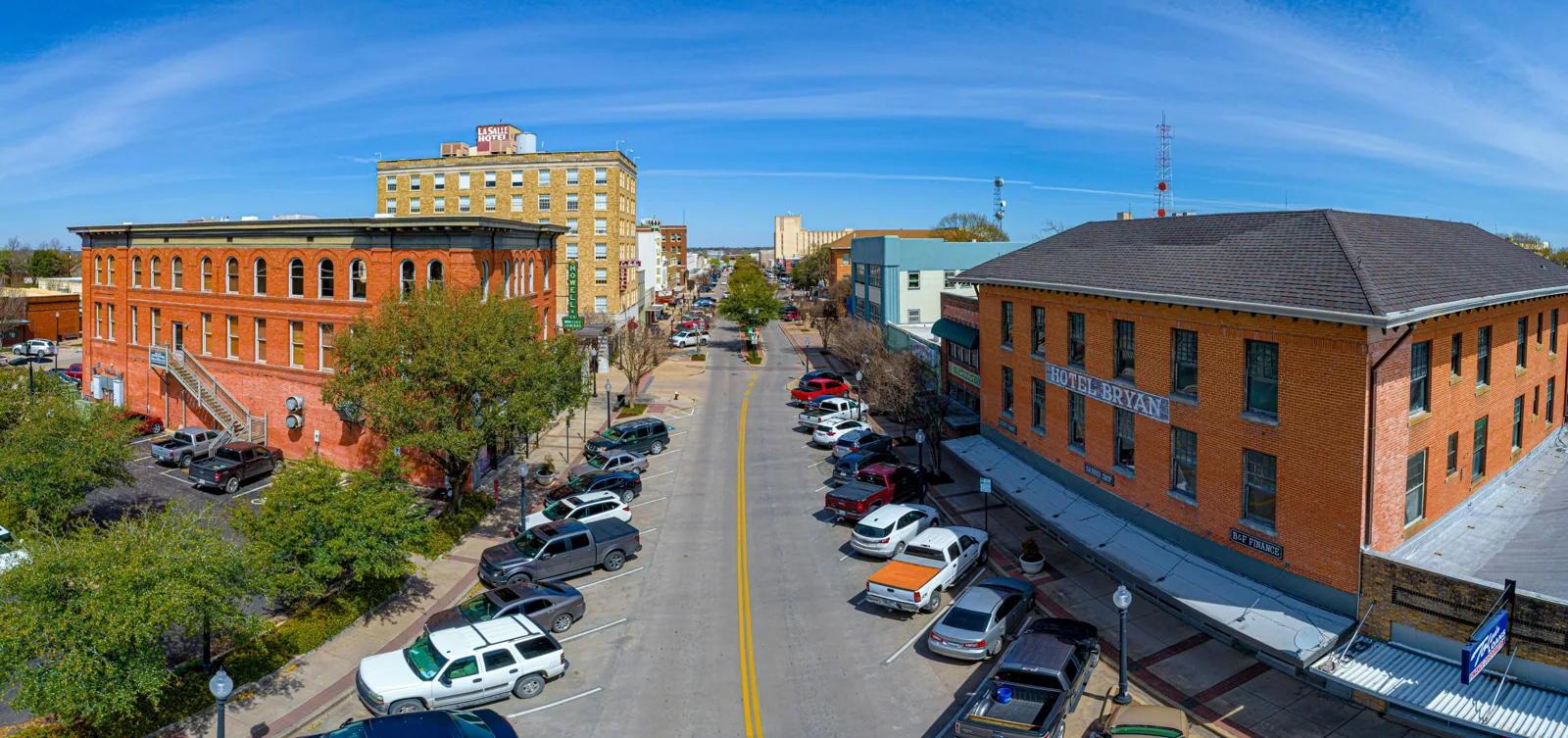
Sarnafil is a line of PVC thermoplastic roofing membranes. Its G membrane family is reinforced for adhered systems, while the S family uses polyester reinforcement for mechanically attached systems. Across the separate properties in Bryan Business Park, staging and roof access are coordinated with each building’s own occupants and service arrangements. A commercial roof review in Bryan should match the membrane to current conditions and the available work window.
Membrane families: identify the attachment first
Sarnafil G membranes are fiberglass-reinforced PVC products designed for adhered assemblies. That reinforcement supports dimensional stability in the specified configuration, but the deck and substrate still determine whether an adhered system fits. We verify what is below the membrane, identify previous adhesive or cover board, and check for moisture before setting patch or replacement limits. Adhesion over an unknown or wet layer can leave the actual problem in place.
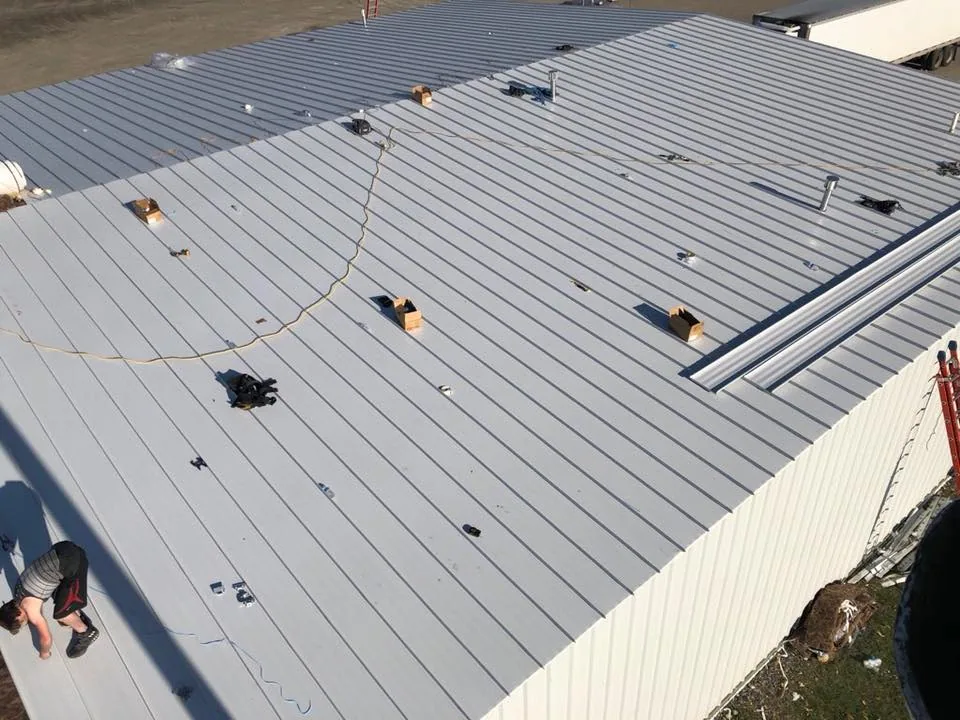
Sarnafil S membranes use polyester reinforcement and are designed for mechanically attached roof systems. The attachment pattern, deck condition and perimeter securement have to work together, especially where wind exposure concentrates at corners and edges. We locate fasteners, plates and laps before proposing a repair. For a PVC roofing assembly, the system selection includes membrane, flashing details and the approved attachment method, not just a roll width.
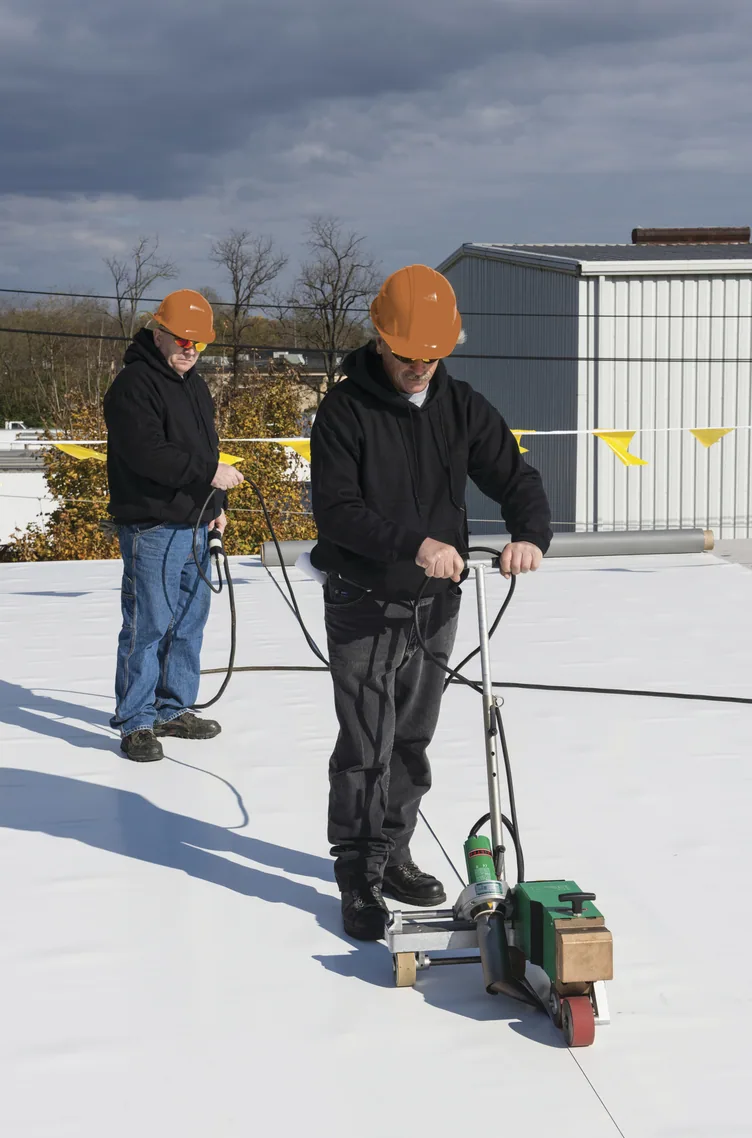
Sika Sarnafil PVC seams and flashings are joined with hot-air welding. The crew prepares the surfaces, sets welding conditions and checks the finished seam so the tie-in is continuous. Dirt, moisture, incompatible coating or an earlier patch can affect the weld. We test and probe the finished seam before covering the repair area. A TPO system uses a different thermoplastic formulation, so product identity matters when working near existing membrane.
Assembly layers: resolve water, insulation and roof boards
Before laying out replacement, mark drains, scuppers, overflow outlets, curbs and low areas. Tapered insulation can redirect water when the structure and outlet locations allow it, but it will not correct a blocked drain or a deflected deck. We trace the water path and identify any area that remains wet after drainage clears. That check helps decide whether to retain the existing insulation, open a test section or include new tapered boards in the assembly.
Sarnatherm products include polyisocyanurate and other insulation board types, with tapered options in the product line. Sika also offers high-density roof boards for specified assemblies. A cover board can protect insulation and create a more durable membrane substrate, but thickness, attachment, roof access and system compatibility control the choice. If hail has damaged a board or moisture softened the insulation, we record the affected zone and verify the depth before pricing. The commercial roof inspection maps those layers and transitions before material quantities are fixed.
New insulation can change curb height, thresholds, drain elevations and perimeter transitions. Mark these points on the roof plan, then assign any curb adjustment before membrane placement so flashing closes over finished work.
Repair work: make each patch compatible
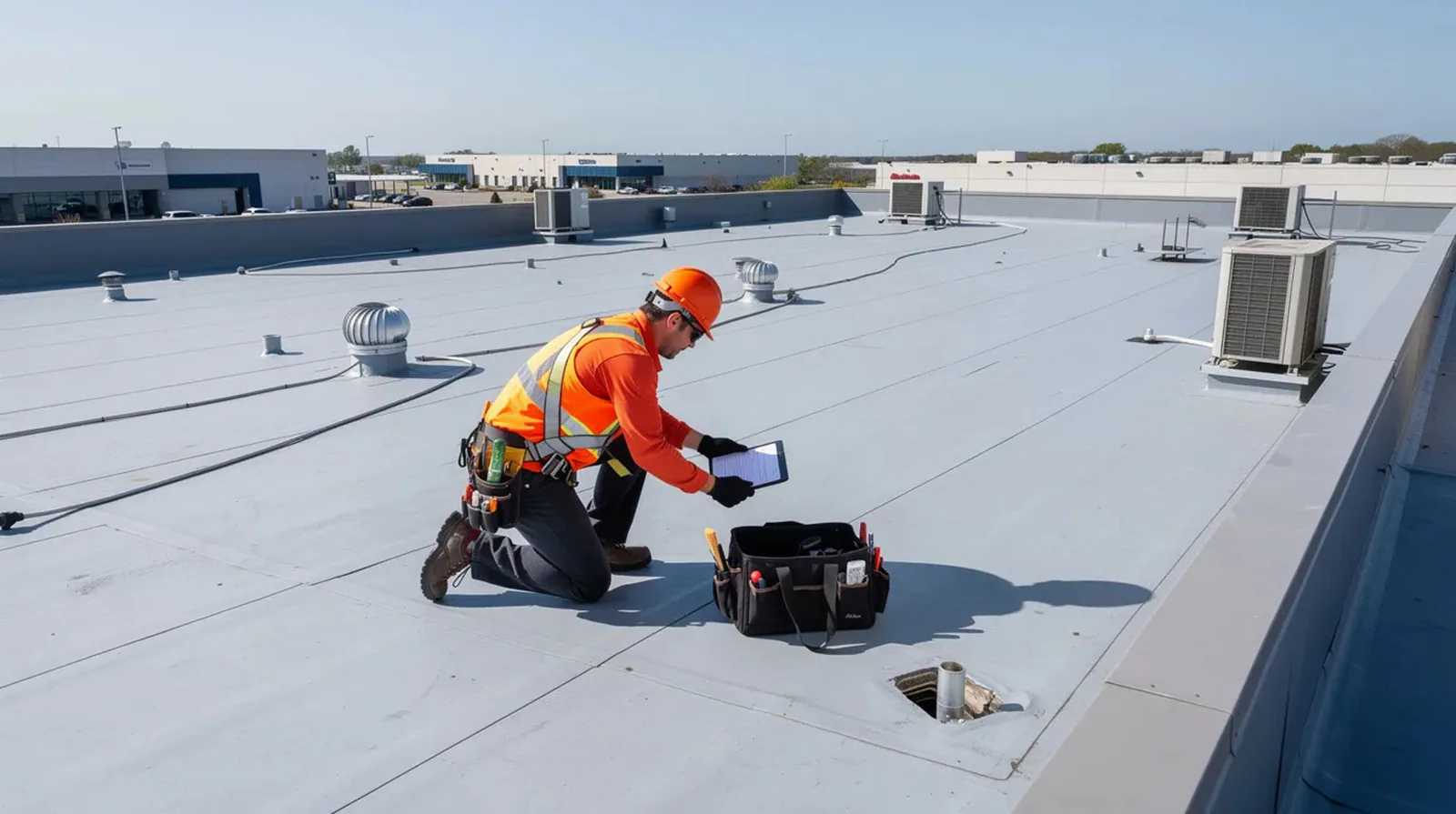
A puncture or split at a seam needs a repair tied to sound PVC. We clean and prepare the area, check whether the membrane can be welded, and test the seam after it cools. At flashings, the repair needs a formed detail around the penetration with a continuous connection to the field sheet. We photograph the original condition and mark the patch limit so later maintenance can distinguish a completed repair from an area that still needs investigation.
Surface coatings and old repairs can complicate a hot-air weld. We identify the coating or patch material, remove incompatible residue where included, and test preparation before installing new membrane. If insulation is wet or the deck has deteriorated, a surface patch alone does not restore the roof. A commercial roof repair scope lists membrane work, flashing, substrate correction and any test opening as separate tasks.
A recover requires dry layers, sound attachment, adequate drainage and room for added load. Wet insulation or transitions that cannot be raised may favor replacement. Cost and timing depend on access, removal, curb work, roof boards, edge metal and work zones. A commercial roof replacement plan should separate removal, substrate correction, new layers and tie-ins.
Storm coordination: plan the dry-in boundary
After a storm report, inspect the roof promptly, but let current findings set the system decision. We inspect the reported area, nearby seams, edge details, equipment flashings and drains. Hail can fracture cover board or leave a membrane mark; wind can disturb terminations or perimeter metal. We note each observation by roof zone and separate temporary cover from permanent work. A hail damage repair scope can connect the roof evidence to the work boundary.
For active water entry, around-the-clock response can protect an opening overnight, on weekends or during a holiday interruption. We record where temporary material is placed and the next check needed. Before exposing additional area, agree on the daily limit, weather protection and the point where the Sarnafil assembly will be watertight. The general contractor and any equipment trade should know who owns each disconnection, reset and flashing tie-in.
In a multi-trade job, delivery routes and roof access can shape staging. Confirm loading paths and operating hours with the property contact. Divide the work into sections that can be dried in during each shift, then mark who receives the handoff before another trade resumes.
Closeout record: document the installed system
At completion, note whether the assembly is adhered or mechanically attached, which membrane and roof boards were installed, and where repairs or test openings occurred. Photograph seams, terminations, penetrations, drains and edge details while they remain visible. Record approved changes and any sections that could not be fully inspected. A roof condition report with photos helps the property team track maintenance and compare future observations with the current roof map.
For a multi-building operation, use roof-zone names that remain clear to maintenance, operations and contractors. Keep the Sika Sarnafil product identification with the assembly notes and mark where a later repair needs to connect with existing membrane. Do not assume every section uses the same layers or attachment. The closeout record lets the next roof walk begin with a known repair boundary, drainage path and access constraint.
Share the current membrane if known, leak or storm locations, roof access limits, equipment changes and the desired work window. We can inspect the roof and compare a Sika Sarnafil repair, recover or replacement scope with the observed layers. For another PVC system, compare the roof conditions with a Johns Manville PVC system or a Carlisle-SynTec membrane option on the same roof map.
Frequently Asked Questions
What is the difference between Sarnafil G and S membranes?
The G family is fiberglass-reinforced for adhered systems. The S family uses polyester reinforcement for mechanically attached assemblies. We check the existing deck, substrate and edge conditions before selecting either configuration.
Can a Sarnafil seam be repaired with a hot-air weld?
A compatible PVC patch can be welded where the surface is clean, dry and suitable. We identify prior coating or repair material, prepare the area, test the weld and probe the finished seam.
Does hail damage require a complete Sarnafil replacement?
Not by itself. We inspect the membrane, cover board, insulation, seams and flashings, then define the damaged area. A localized repair may fit when surrounding layers remain sound and the patch can tie in.
Can tapered insulation correct ponding on a Sarnafil roof?
Tapered boards can guide water toward outlets when the deck and drainage design support the change. We first check drain function, low areas, deck movement and overflow height so the slope work addresses the actual water path.
What affects the schedule for a Sarnafil reroof?
Access, tear-off, wet insulation, curb height, perimeter details, weather and equipment moves can change the work sequence. We set the daily exposure limit and identify who owns each disconnection, reset and flashing tie-in before opening the roof.
Review a Sarnafil roof in Bryan
Share the roof system if known, current condition, building use, access limits and proposed work window. We can arrange an inspection and define the next repair or replacement task.