Carlisle-SynTec Commercial Roofing in Bryan, TX
After hail, a roof surface can appear intact even when seams, flashing or cover board absorbed stress. The April 8, 2021 storm produced significant hail in the Bryan-College Station area; a Carlisle-SynTec review examines the installed assembly, observed damage and sound material available for a compatible tie-in. We identify the membrane, inspect transitions and determine whether repair, restoration or replacement fits. That decision sets the material list and dry-in sequence.
Carlisle-SynTec commercial offerings include Sure-Weld TPO, Sure-Flex PVC and PVC KEE, Sure-Seal EPDM, FleeceBACK membranes, X-Tenda Coat systems, insulation, cover boards and accessories. At Bryan Business Park, roof access and staging are confirmed with the individual building contact before the work window is fixed. For a commercial roof in Bryan, building use belongs in the scope before materials arrive.
Membrane: match it to roof conditions
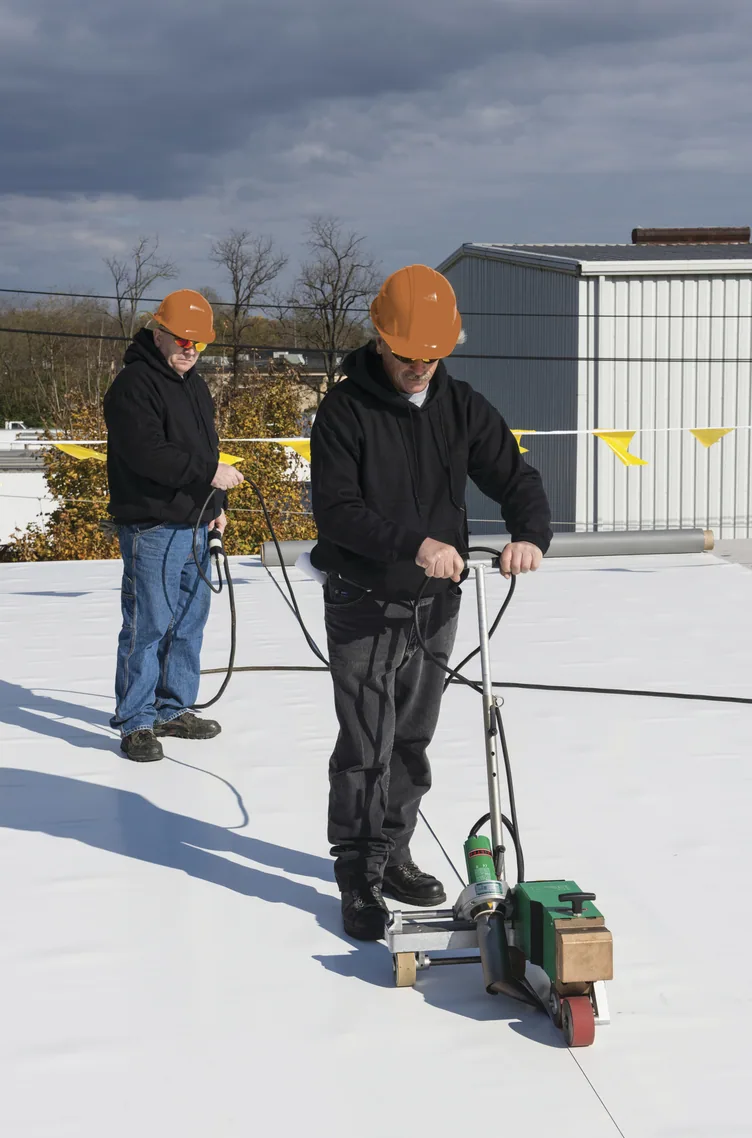
Sure-Weld TPO is Carlisle's heat-weldable thermoplastic membrane family. Clean sheet edges, planned layout and inspectable seams shape the installation. We identify the existing attachment, inspect the deck and decide whether a repair can reach sound material. For a new system, compare those conditions with a TPO roof assembly before choosing details.
Sure-Flex PVC and PVC KEE HP are heat-weldable options with their own membrane and accessory details. PVC may suit a roof where grease or chemical exposure matters, but the operating condition must be identified before selecting materials. We record the exposure, inspect nearby joints and verify the specified flashing. A PVC roofing assembly can be evaluated when conditions support it.
Sure-Seal EPDM is a flexible synthetic rubber membrane. Existing seams, splice tape, patches and flashing determine the repair method; thermoplastic welding is not interchangeable with EPDM preparation. Check for contamination, aging and moisture before setting patch limits. Carlisle also sells EPDM and fleece-backed variants for defined assemblies, each with matching attachment and accessory details.
FleeceBACK membrane products use a fleece backing in specified assemblies, including adhered configurations. Adhesive compatibility and substrate condition set the work steps. Carlisle's X-Tenda Coat line includes acrylic and silicone restoration systems. These need a suitable substrate and repaired details; they do not replace wet insulation or failed attachment.
Layers: check them before pricing an assembly
A roof is more than its top membrane. Record deck condition, insulation, cover board, attachment, edge securement, drains and penetrations. Carlisle supplies insulation, cover boards, fasteners and adhesives, but the design has to fit the building. If visible conditions do not reveal retained layers, agree on a test-opening location and closure detail before the crew cuts.
Adhered, mechanically fastened and induction-welded configurations use different components and sequences. Confirm deck capacity, wind design and substrate before selecting attachment. A change in deck or insulation can alter the fastener, plate or adhesive plan. At the perimeter, follow securement through terminations and edge metal, then record the transition on the roof plan.
Drainage constrains system choice. Mark drains, scuppers, overflow points and low areas before setting insulation or membrane. Tapered insulation can direct water toward outlets when design and structure allow, but it does not correct a blocked drain or raised overflow. A commercial roof inspection can establish roof geometry and the water path before the assembly is priced.
At a business-park property, lift access and delivery schedules are reviewed before selecting a staging location. After the April hail event, inspect the membrane surface, seams and cover board instead of assuming every roof needs the same system. Set a dry-in boundary with the general contractor and identify which section can be completed during the available work window.
Repair and restoration: work from the installed system
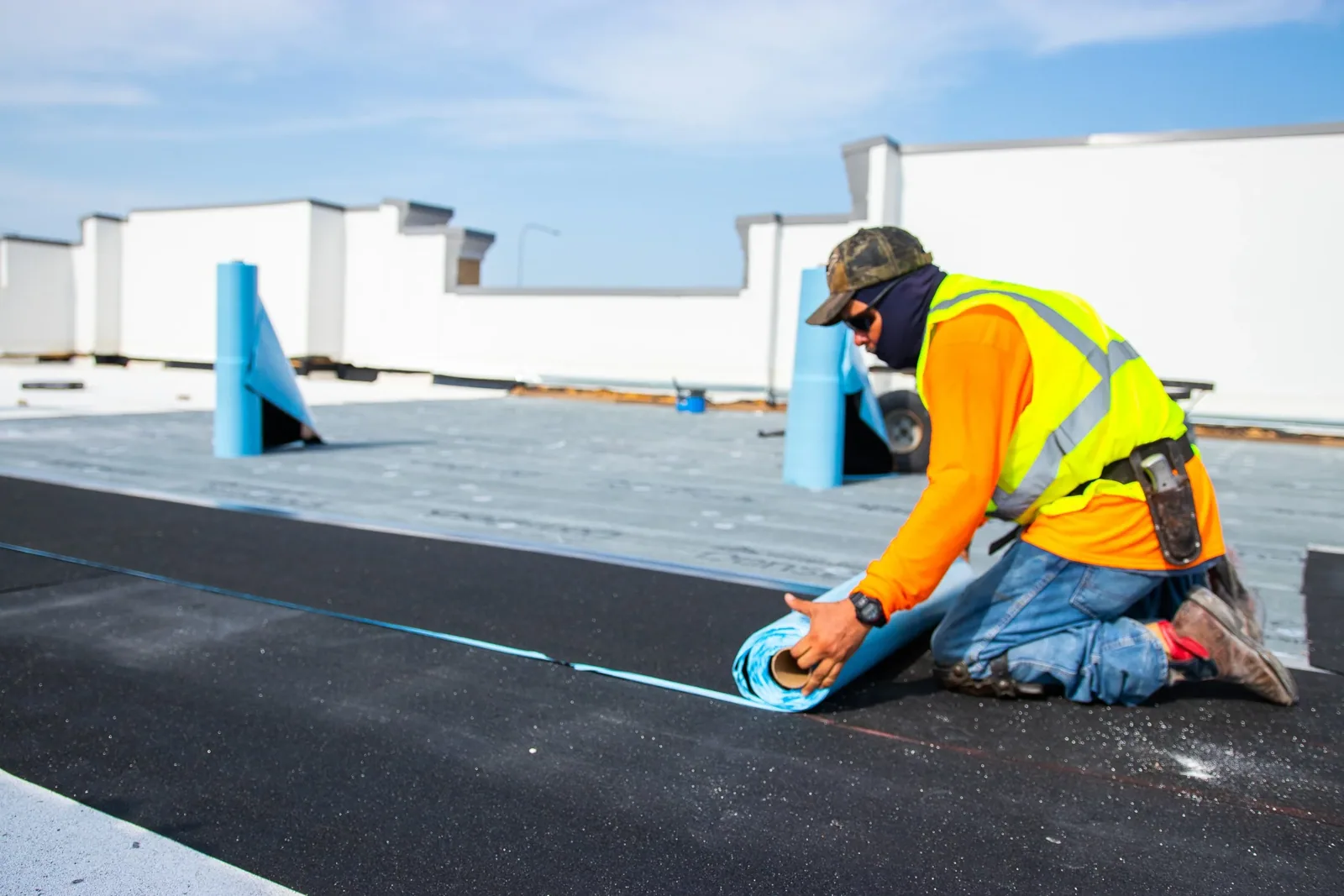
For a leak or puncture, identify whether the existing roof is Sure-Weld TPO, Sure-Flex PVC, Sure-Seal EPDM or another assembly. Surface contamination, prior coating and trapped moisture change preparation. Map the area, photograph seams and transitions, then decide whether a compatible patch can tie into sound material. A commercial roof repair scope names each condition and boundary.
If moisture has reached insulation or deck, a surface patch does not describe the full work. Open a test area when it will clarify the extent, remove unsound layers where included and rebuild with compatible components. Keep temporary protection separate from permanent repairs. The estimate should show access, drying time, preparation and how concealed conditions will be approved.
Coating restoration starts with a substrate and adhesion check. Repair seams, penetrations and fasteners, then address drainage before application. X-Tenda Coat acrylic and silicone options have different application characteristics, so prior coating and water behavior inform the choice. Loose metal panels or failed attachment require correction before a coating is considered. A roof restoration scope should name preparation and reinforcement work.
When replacement fits the observed condition, identify removal, retained layers, insulation, cover board, attachment, tie-ins and closeout checks. A recover is suitable only when the retained assembly and added load are acceptable. A commercial roof replacement proposal should show how the new system closes at curbs, drains, parapets and perimeter metal.
Weather and access: plan the work around both
Before mobilization, review current product data, system specifications and application requirements for the selected Carlisle assembly. Confirm sheet layout, fasteners, adhesives, flashing accessories and edge details against the roof plan. Keep materials protected as directed and do not substitute a cleaner or sealant without confirming compatibility. Mark each transition where the assembly changes.
After hail, inspect reported areas for punctures, fractured cover board, seam stress or displaced metal. Separate fresh findings from earlier repairs and note what remains concealed. If interior restoration is part of the project, agree on which roof sections must be dry before ceiling work resumes. Assign who receives inspection photographs and who can approve added work.
Set roof access, staging, lift placement, safety controls and delivery routes before materials arrive. The property contact confirms any loading windows that constrain roofing deliveries or the route to the work area. Divide the project into sections that can be opened and closed during the work window. If weather interrupts, protect the opening and define the return task before another trade uses the roof.
At closeout, check seams, flashings, terminations, drains and edges against the selected assembly. Photograph completed sections and note deferred items or concealed areas that remain unverified. Keep material records and approved changes with the building file so later maintenance can identify the installed system.
Next task: set the next roofing step
For a Carlisle-SynTec roof in Bryan, share the existing membrane if known, leak or storm locations, building use, access limits and work window. We can inspect the assembly, mark the repair boundary and compare options against deck, insulation, drainage and trade sequence. The proposal states what fits one work period and what needs a return visit.
Where specifications call for another system, compare its GAF commercial system or Johns Manville membrane option against the same roof conditions. A brand name does not settle whether attachment, transition or repair details fit. Keep the choice tied to approved documents and observed conditions.
Send the roof plan, prior repairs, interior reports and access dates. We can arrange a walk, confirm the assembly and agree with the general contractor on the next task and handoff.
Frequently Asked Questions
Which Carlisle membrane fits a low-slope commercial roof?
Sure-Weld TPO, Sure-Flex PVC, Sure-Flex KEE HP and Sure-Seal EPDM have different material and detail requirements. We compare exposure, deck, attachment, drainage and existing layers before recommending a system.
Can a Carlisle coating go over the existing assembly?
Only when the substrate and existing roof support restoration. We inspect adhesion, moisture, seams, penetrations, fasteners and water behavior, then identify preparation and repairs before pricing an application.
How does hail affect the choice of repair materials?
The inspection documents surface damage, seams, flashing and any affected cover board. We identify the installed membrane first, then specify compatible repair components and testing where hidden damage may change the scope.
What can delay a Carlisle roof installation in Bryan?
Deck or insulation changes, wet conditions, delivery access, material staging and trade openings can alter the work window. The daily plan should identify the dry-in point and who approves concealed-condition changes.
What should the contractor include in the bid package?
Share roof plans, existing assembly records, leak locations, access limits and turnover dates. We record the system, attachment, removal or recover assumptions, transitions and closeout checks before the proposal is finalized.
Set the next Carlisle-SynTec roof task
Share the existing membrane if known, leak or storm locations, building use and access dates. We can arrange a walk, confirm the assembly and agree with the general contractor on the next task and handoff.