Johns Manville Commercial Roofing in Bryan, TX
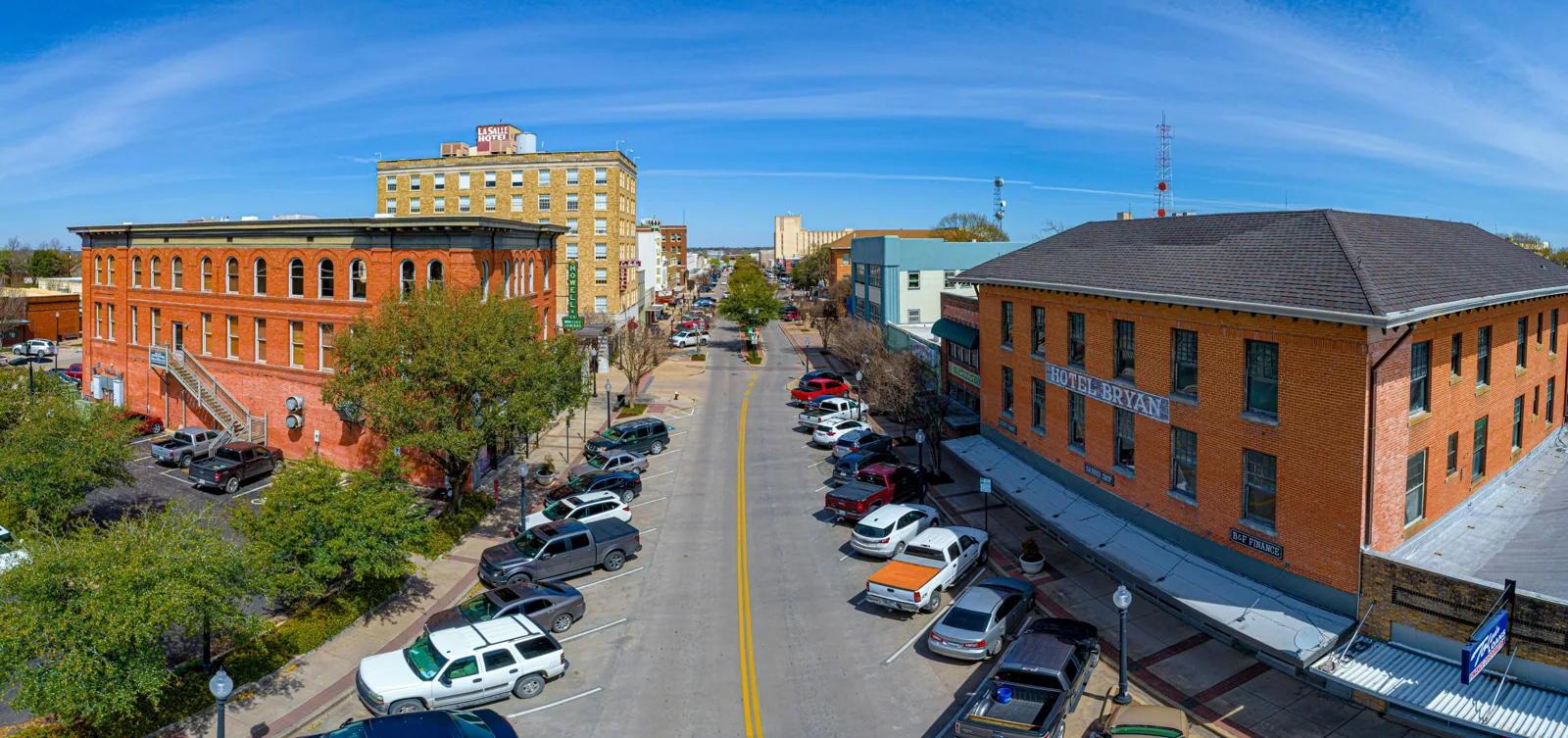
Hail can bruise a membrane or stress a flashing while leaving the roof surface mostly in place. The 2019 tornado occurred in Brazos County east of Bryan; significant hail later fell in the Bryan-College Station area in April 2021. For a Johns Manville system, that weather context puts the first decision on the existing assembly: membrane type, edge securement, insulation, cover board and the area that can be opened during one work window. We inspect those layers before selecting a repair or replacement detail.
When records name Johns Manville, check whether they refer to the membrane, insulation, cover board or a previous scope. The existing layer stack and current details control repair method, not the brand name on one file. Bryan Business Park includes multiple business properties, so the delivery sequence and access route are confirmed with the contact for the property in scope. A commercial roofing plan in Bryan should match the verified system to the deck, water path, building use and available work window.
Membrane families: compare the roof assembly
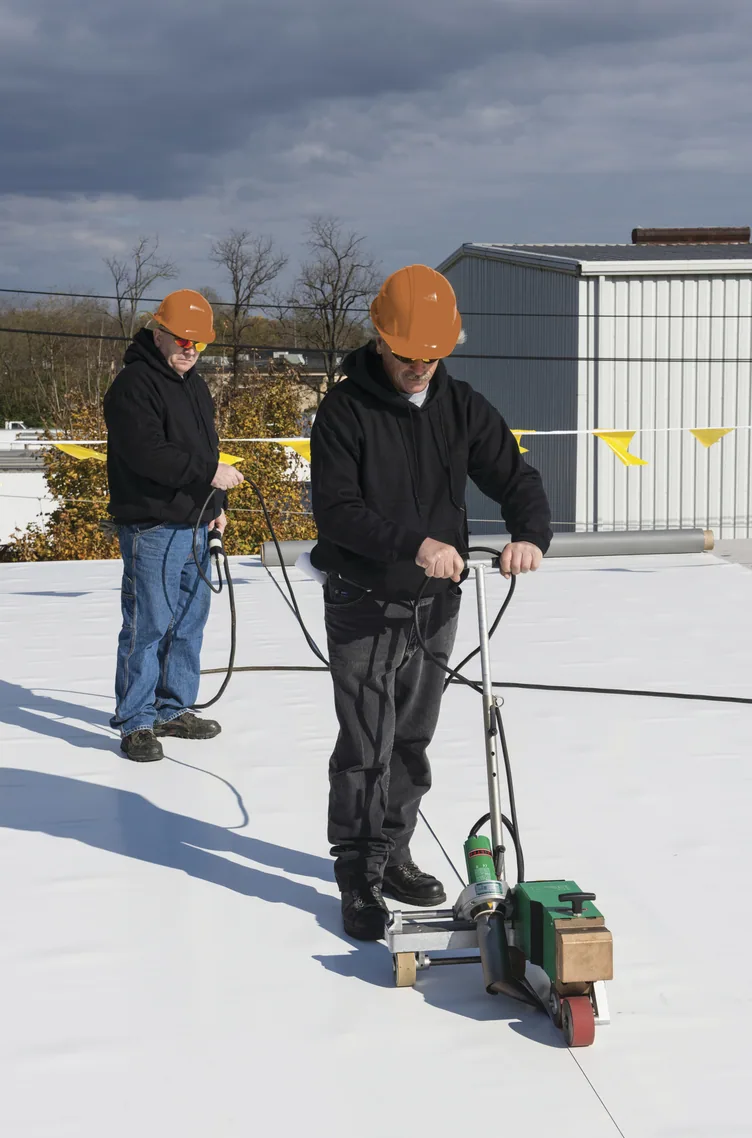
Thermoplastic TPO and PVC assemblies use welded seams, but surface preparation, weld settings and seam geometry follow the installed membrane and project documents. Before pricing a sheet, we identify the existing system, attachment and perimeter details. A TPO roof assembly is a candidate only when the deck, drainage and tie-ins support that system.
PVC selection also depends on the actual building process and exposure. Where oils, fuels or chemicals may reach the roof, confirm compatible materials and supplier instructions before specifying a repair or replacement. We check discharge, exhaust and maintenance routes against the roof area rather than assuming that an exposure reaches the membrane. A PVC roofing system can be compared when those conditions fit.
EPDM relies on compatible bonding and flashing materials; thermoplastic welding does not apply. We inspect existing seams, patches and surface contamination, then select a method that can bond to sound material. This distinction matters during a partial repair, where matching the installed assembly and closing each transition are more important than using one method everywhere.
Assembly review: verify insulation and cover board
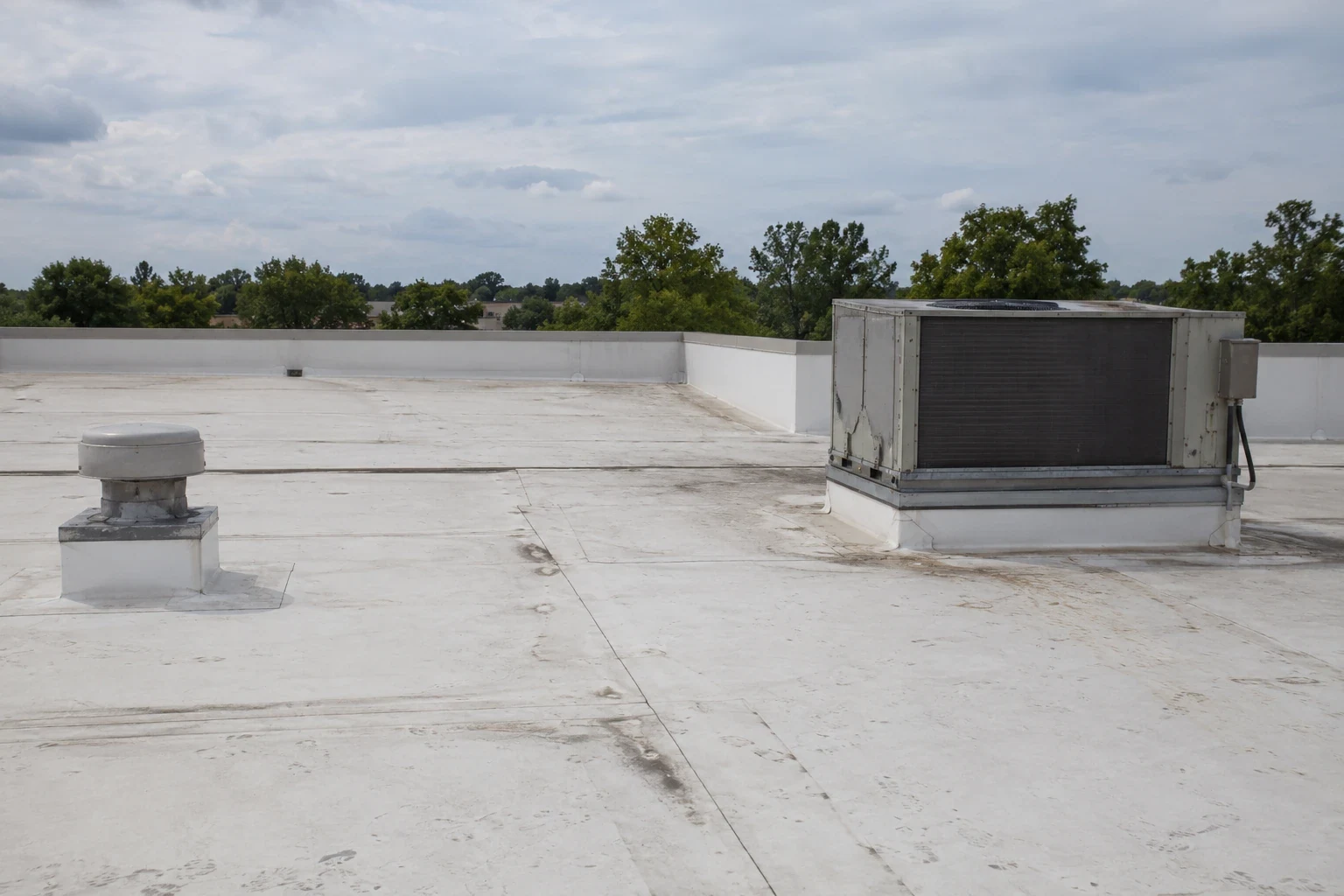
Insulation may be flat or tapered, with layout coordinated to the deck, slope and outlet positions. Tapered boards can direct water toward drains when the structure and design allow, but they do not repair a blocked drain or correct a deflected deck. We mark drains, scuppers, overflow points and low areas before setting a new slope plan. The inspection should identify where water travels and whether existing layers can remain in the assembly.
A cover board can protect insulation and provide a more durable working surface, but selection depends on attachment, membrane compatibility, impact exposure and the project specification. If hail has fractured a board or moisture has softened insulation, we map the affected section and verify layers with a test opening. A commercial roof inspection records the assembly before scope and material quantities are finalized.
Attachment has to match the deck, wind design and approved assembly details. Adhered and mechanically attached systems require different substrate preparation and component layouts. At the perimeter, follow securement through edge metal and parapet terminations. Changes in insulation thickness affect curb height and flashing dimensions, so mark them on the roof plan before ordering material.
Repair method: keep materials compatible
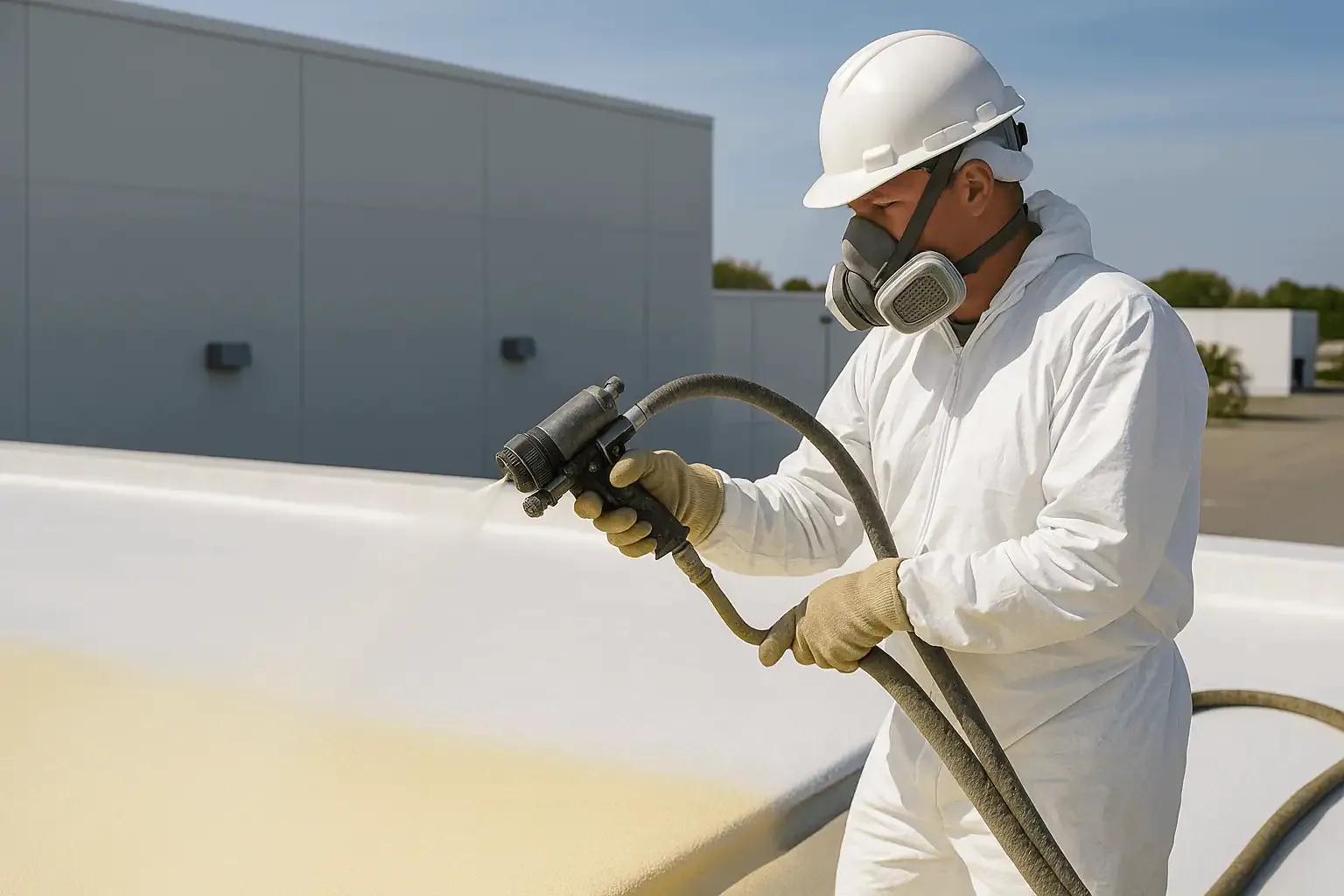
A leak repair starts with the membrane identification and the condition around the opening. For TPO or PVC, we remove contamination and prepare the surface for a compatible welded patch. For EPDM, the patch and seam method must match that rubber assembly. At a curb or pipe, the flashing needs a sound substrate and a detail that accommodates movement. We mark the repair boundary and note whether insulation or deck needs investigation before the surface is closed.
Coatings, old adhesives and prior patches can complicate a tie-in. When adhesion is uncertain, we test a small area and document preparation and patch limits. If moisture extends beyond the leak, surface repair may not restore the assembly. A commercial roof repair scope names compatible materials, flashing and any needed layer investigation.
Where the roof is broadly aged or repeated repairs no longer make a sound assembly, compare recover with tear-off and replacement. A recover requires suitable existing layers, acceptable moisture, drainage and added load. Replacement can address wet insulation, failed attachment or inconsistent transitions, with removal and closeout steps identified in the estimate. A commercial roof replacement estimate should separate membrane, insulation, cover board, edge details and tie-ins instead of grouping every condition into one allowance.
Storm review: connect weather to current findings
After a storm report, inspect the membrane, flashing and transitions promptly. Inspect the affected roof area, then check seams, equipment curbs, drains and perimeter details nearby. Photograph punctures, displaced metal, cracked cover board and prior repairs as separate observations. A weather event explains why the roof is being reviewed; the observed condition sets the repair boundary. A photo-backed roof condition report can connect each finding to a roof zone and next action.
Wind-related conditions call for a different check from hail marks. At corners and edges, inspect securement, coping, terminations and transitions where uplift can work against the assembly. If an active opening is present, temporary dry-in should state its location, materials and return check. For an active opening, confirm current response availability, safe access and temporary protection with the property contact before setting the permanent repair scope. The work record keeps emergency stabilization distinct from repair or replacement.
Each business-park property needs delivery windows and roof access checked against its actual operating arrangements. We confirm staging and access paths with the property contact. If equipment or conduit moves, assign the reset and roofing tie-in before a section is exposed.
Installation sequence: make the handoff visible
Before mobilization, confirm the selected system and approved components and existing roof conditions. Map sheet direction, seams, insulation and cover-board joints, fastener patterns and flashings. Verify adhesive or weld preparation and protect materials as specified. Check compatibility before any substitution, especially where membrane meets metal or equipment supports.
For a multi-section replacement, set a daily exposure limit and dry-in boundary. Record which areas are opened, which are closed, and any concealed conditions that changed the work. If a mechanical trade must disconnect equipment, coordinate the reset before flashing is completed. At closeout, inspect seams, edges, drains and penetrations against the selected assembly and photograph the finished tie-ins. Link the material record and approved scope changes to the roof sketch for later maintenance.
Send the existing membrane if known, reported leak or storm areas, roof access limits, building use and preferred work window. We can arrange a walk, compare the JM assembly options with the observed roof and agree on the next roofing task with the general contractor. For another manufacturer system, compare the conditions against a GAF commercial roof system or a Carlisle-SynTec assembly using the same roof map and scope boundaries.
Frequently Asked Questions
How do you identify which membrane assembly is on the roof?
We compare available records with the exposed sheet, seams, attachment and layers at the property. A brand name on one document does not settle the condition or repair method for every section.
How should rooftop oil or chemical exposure affect PVC selection?
We identify the actual process, discharge path and roof area, then confirm material compatibility against the project documents before specifying a system.
When should a cover board be part of the assembly?
A cover board can protect insulation and provide a suitable surface for the membrane. Hail exposure, attachment, substrate, compatibility and the specified roof assembly determine which board is appropriate.
Can a hail-damaged JM roof be patched?
A compatible patch may work where the membrane and surrounding layers remain sound. We inspect seams, flashings and insulation, then mark the patch boundary or identify a test opening if moisture may extend beneath the surface.
What changes the schedule for a JM replacement?
Deck repairs, wet insulation, curb heights, material staging, weather and other trades can change the sequence. We define the daily exposure limit, tie-in responsibilities and dry-in point before opening each roof section.
Review a Johns Manville roof in Bryan
Share the existing system, roof condition, building use, access limits and work window. We can inspect the assembly and set a repair, recover or replacement scope.