GAF Commercial Roofing Systems in Bryan, TX
Hail can leave a membrane intact at first glance while stressing seams, flashings or the cover board below. Reported hail in the Bryan-College Station area ranged from 1 to 2.75 inches during the storm on April 8, 2021. A GAF roof review starts with the assembly and its current condition, not a product label. We identify the existing system, inspect the roof layers and decide whether the work is a repair, restoration, recover or replacement. The material choice follows the roof and the job sequence.
GAF’s commercial range includes EverGuard TPO, PVC and PVC KEE membranes, asphaltic systems, liquid-applied coatings, insulation, cover boards, adhesives and accessories. Bryan Business Park and Brazos County Industrial Park are Bryan's public industrial parks, so truck and freight routes decide roof access, staging and the dry-in handoff. A commercial roof project in Bryan should account for building use and the following trade before materials reach the roof.
System family: choose one that fits the roof
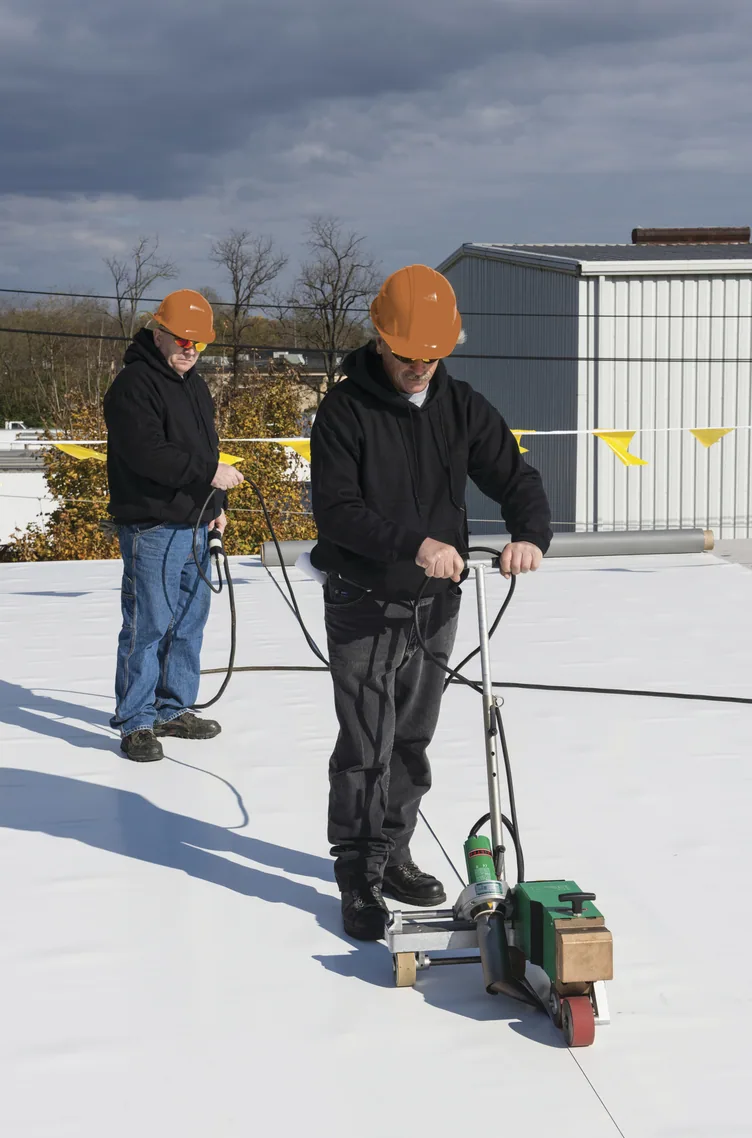
EverGuard TPO is a thermoplastic single-ply option, with smooth and fleece-back configurations. Its seams are heat-welded, so layout, clean weld zones and consistent field checks matter across each sheet run. We look at deck condition, attachment options, insulation, cover board and perimeter requirements together. A TPO roof assembly needs compatible flashing and details at drains, curbs and edges as well as a sound field membrane.
GAF also makes EverGuard PVC and PVC KEE membranes. PVC can be considered where the roof’s use involves exposure concerns, but the actual chemical, grease or process conditions must be identified before a system is selected. Membrane resistance does not establish coverage for a particular exposure. The proposal should describe the use, detail the protection required and keep any unconfirmed assumptions out of the scope. Compare the conditions with a PVC membrane assembly when chemical resistance, seam design or system details are part of the decision. When project documents call for another system, verify compatibility with its Carlisle membrane assembly or Sarnafil membrane system before considering a substitution.
For built-up and modified-bitumen construction, GAF’s asphaltic families include APP and SBS materials as well as BUR systems. These systems use layered components with details matched to their application method. We review the existing layers before considering an asphaltic recover or replacement.
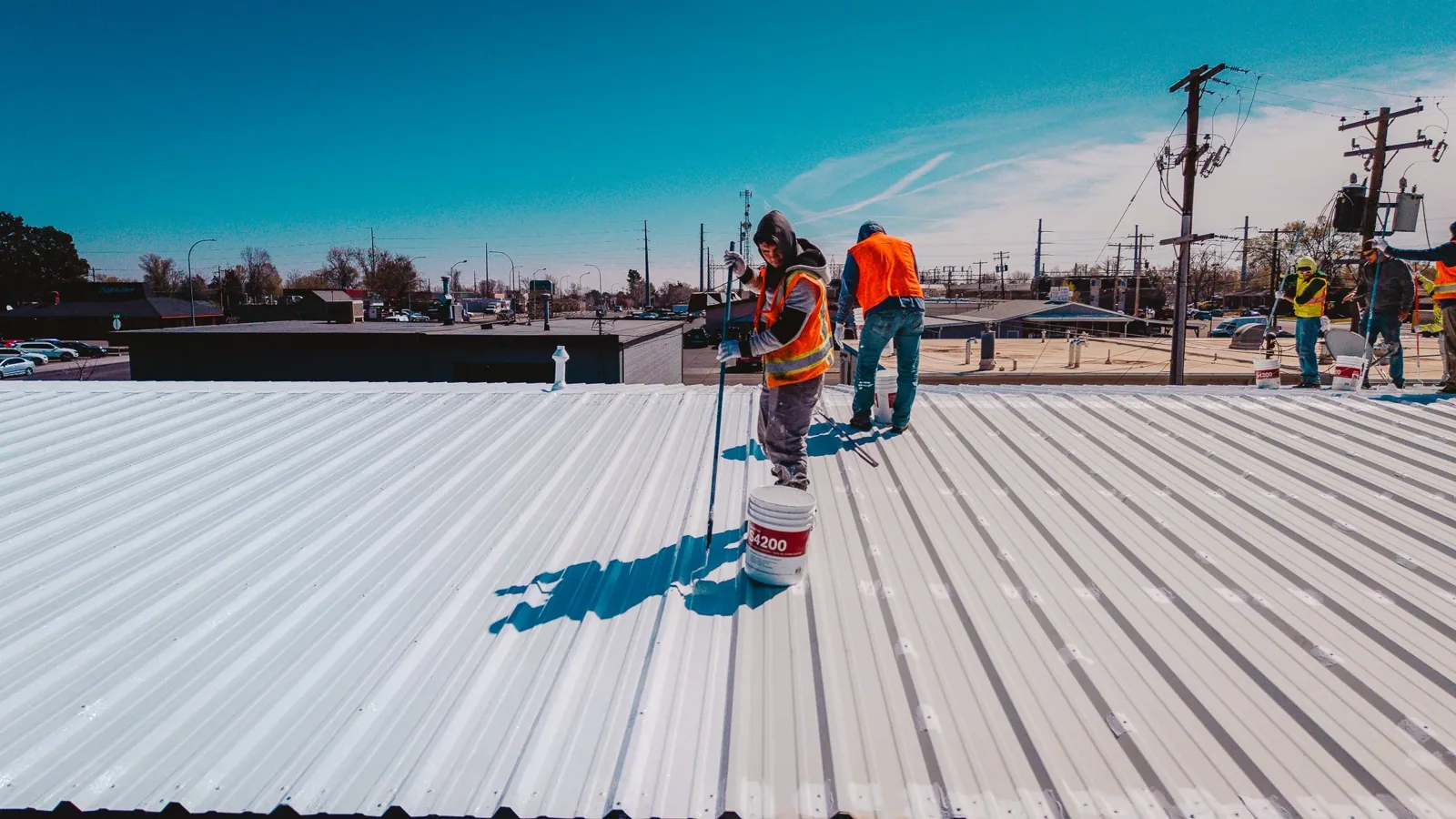
Liquid-applied coatings and restoration systems serve a different purpose. GAF’s coating lines include acrylic and silicone options, and HydroStop is a system for restoring structurally sound metal roofs. Coating is not a substitute for correcting wet insulation, failed attachment or active leaks beneath the surface. The crew first checks substrate condition, drainage, seams, penetrations and coating compatibility, then defines preparation and reinforcement work. If a coating path fits, coordinate it with a commercial roof restoration scope.
Layers: review attachment and drainage
A roof system is a coordinated assembly, not a membrane roll by itself. We document deck type and condition, existing insulation, cover board, air or vapor control layers where applicable, membrane attachment, edge securement and flashing. GAF offers flat and tapered polyiso insulation, cover boards and system accessories; their role depends on the roof design and the selected assembly. If a core or test opening is needed, agree on its location, closure detail and responsibility for the repair before work begins.
Drainage affects both selection and execution. Measure low points, identify drains and scuppers, and compare ponding with the roof layout. Tapered insulation may improve slope when the design and structure allow it, but the roof should not be regraded by guesswork. A drain or overflow that sits above the finished plane can remain a problem after new membrane is installed. Record the drainage plan with the tie-ins, then align it with the commercial roof inspection findings.
Attachment must match deck capacity, wind design, roof geometry and the system’s approved details. Mechanically attached, adhered and induction-welded configurations have different components and construction sequences. Verify fastener pull-out where needed, note substrate variations and keep the fastening pattern tied to the approved assembly documents. At the perimeter, trace securement from membrane termination through edge metal and backing. A sound field does not compensate for a weak transition.
For occupied commercial buildings, sequence the roof opening around deliveries, equipment and interior protection. Set limits for each work area, stage material without blocking access, and identify when another contractor needs a clear route. Within Bryan Business Park, the building contact identifies delivery routes and any loading activity that needs to continue during the roof work. The general contractor receives the work window and dry-in plan.
Repair: restore the system already there
When an existing GAF membrane is damaged, identify its type before selecting a repair product. Inspect seams, flashing, penetrations, patches and the surface around the defect. For thermoplastic membranes, surface condition and weldability affect patch preparation; PVC and TPO details should not be treated as interchangeable. Existing contamination, aging or earlier coating can change the method. A commercial roof repair scope records each condition, material and tie-in separately.
A patch should extend onto compatible, sound material. Check for wet insulation or deck and determine whether a curb or drain contributes to the leak. Widespread failure calls for more investigation before pricing replacement or restoration.
Before coating, test adhesion and compatibility with the substrate and any prior coating. Repair seams, flashings and penetrations, then address drainage. Acrylic and silicone differ in application characteristics. HydroStop is a metal-roof restoration system for structurally sound assemblies; it cannot correct loose panels or a compromised deck.
When replacement is the better path, confirm deck condition after tear-off, address wet insulation and detail how the new assembly meets curbs, walls and perimeter metal. The scope should show recover eligibility separately from full removal, identify what remains in place and set a concealed-condition process. A commercial roof replacement plan gives the owner and other trades a sequence for tear-off, dry-in and closeout.
Handoffs: keep installation details visible
Before mobilization, check product data, application instructions and system specifications. Confirm membrane layout, insulation, fasteners, adhesives and prefabricated details against the roof plan. Record approved substitutions and mark assembly transitions.
Heat and UV shape the work window and material handling. Protect adhesives and membrane, and expose only the area that can be made watertight that day. After hail, document impact evidence separately from wear and earlier repairs.
At closeout, check seams, terminations, penetrations, drains and edges against the assembly. Remove debris, photograph each roof section and record conditions that need a return visit.
For GAF system work in Bryan, share the existing roof type, leak or damage locations, building use and proposed work window. We can inspect the assembly, compare repair and replacement paths, and plan the next roofing task around access and the handoff.
Frequently Asked Questions
Which GAF commercial systems are used on low-slope roofs?
GAF offers EverGuard TPO, PVC and PVC KEE single-ply membranes, APP and SBS modified bitumen, BUR and liquid-applied systems. The roof condition, building use and project design determine which family is suitable.
Can a GAF coating go over an existing roof?
Only when the substrate and existing assembly support restoration. We inspect moisture, adhesion, seams, flashing, drainage and prior coatings, then define preparation and reinforcement before a coating scope is priced.
How do you determine whether a repair or replacement is appropriate?
We document the defect, membrane condition, wet insulation, deck and adjacent details. Local damage on sound material may support repair; widespread deterioration or repeated failures can change the recommendation.
Does choosing a GAF product include a specific warranty?
No warranty length or eligibility is assumed in the roofing scope. Any applicable manufacturer coverage depends on the chosen assembly, current requirements and project documentation, which must be reviewed for that specific installation.
What information helps prepare a GAF roof proposal?
Provide the roof plan if available, current system, leak history, building use and access constraints. We inspect the assembly and confirm the work area, repair or replacement boundary and trade sequence before pricing.
Set the next GAF roof task
Share the existing roof type, leak or damage locations, building use and the proposed work window. We can inspect the assembly, mark the repair boundary and agree on the handoff with your general contractor.