Holcim Elevate Roofing Systems in Bryan, TX
A roof decision starts with the assembly overhead, not an old invoice. Significant hail was reported in the Bryan-College Station area during April 8, 2021, making seams, exposed edges and roof transitions relevant inspection points after a reported storm concern. That regional history is a reason to inspect current membrane and flashing conditions, not infer damage from a report. We identify the system, check attachment and trace water paths before recommending repair, restoration, recover or replacement.
The current U.S. commercial range includes UltraPly TPO, RubberGard EPDM, PVC, insulation and accessories. Their seams and installation methods differ. Our commercial roofing service in Bryan begins with roof use, access, existing layers and the work window.
Membrane: identify it before setting scope
UltraPly TPO is a reinforced thermoplastic family with standard, fleece-backed XR and self-adhered SA configurations. Listed attachment methods vary by configuration, including mechanical attachment, adhesion and InvisiWeld. Deck, insulation and perimeter conditions determine which assembly can be specified. A TPO roof assembly needs a coordinated plan for field seams, penetrations and terminations.
RubberGard EPDM includes standard, pre-taped, reinforced and self-adhered options. Standard EPDM can be fully adhered, ballasted or mechanically attached, but not every method suits every roof. We review deck, perimeter, wind design, traffic and retained layers first. An EPDM roofing system requires seam preparation and flashing that match the membrane.
The product line also includes PVC, PVC XR, PVC InvisiWeld and PVC KEE systems. PVC and TPO differ in formulation and product details. A PVC roof assembly can be considered when building use, exposure and design support it. The proposal should name the selected membrane and compatible flashing, not blend families into a generic specification.
For any of these systems, field identification includes more than looking for a printed label. We compare sheet texture, color, seam construction, patches, edge details and available records. If repairs have covered the original membrane, we mark those areas separately. That keeps a proposal from treating an older patch as proof that the full roof uses the same product or attachment.
Layers: read what lies beneath the surface
The membrane is only the visible part of a roof assembly. We inspect accessible deck, insulation, cover board, attachment and perimeter securement. The manufacturer sells insulation and accessories, but a catalog does not establish what is installed. We compare available records with field conditions and resolve conflicts before materials are ordered.
Recover work depends on retained layers. Wet insulation, weak attachment, damaged cover board or an open leak path can undermine a new layer. We map roof zones, note patches and identify testing needed before pricing. A photo-backed roof condition report records observed details and unanswered questions. If a test opening is needed, we agree on its location and closure first.
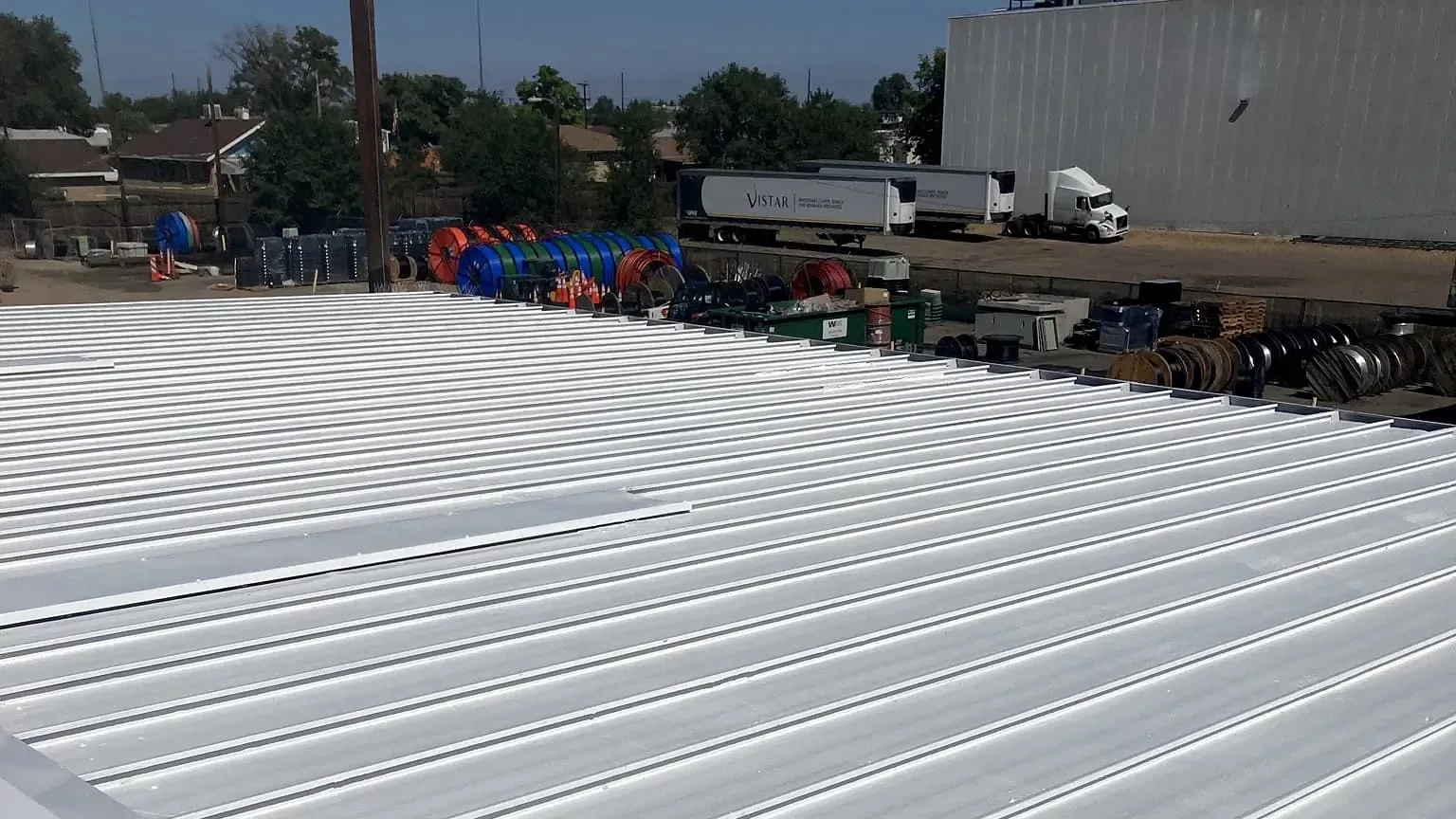
On a production or distribution roof, active loading can constrain lift access and material staging. We coordinate delivery windows, protected travel paths and a daily dry-in point with the operating schedule. The system must fit the assembly; sequencing keeps each area protected as the work advances.
Drain locations, overflow points and roof slopes also belong in that record. We note whether water can reach an outlet, whether debris or equipment restricts flow, and whether a new layer would alter the path. Those observations help distinguish a membrane concern from a drainage correction and give the owner a clearer order of work.
Seams, edges and penetrations: inspect them together
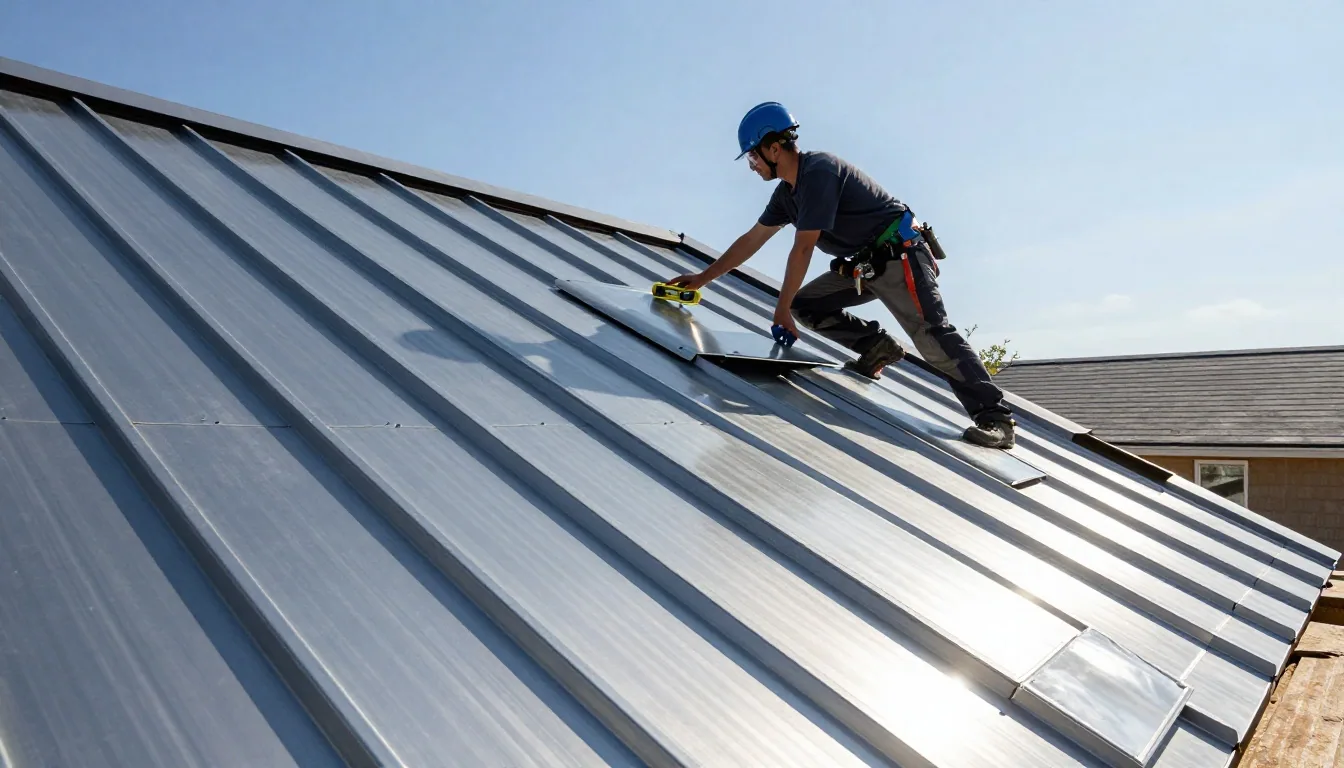
TPO and PVC seams are heat-welded, so we inspect weld consistency, contamination, lap ends, patches and transitions. EPDM uses different preparation and splice details. We identify the membrane before choosing a repair method, examine adjoining material and set a boundary that reaches sound roofing.
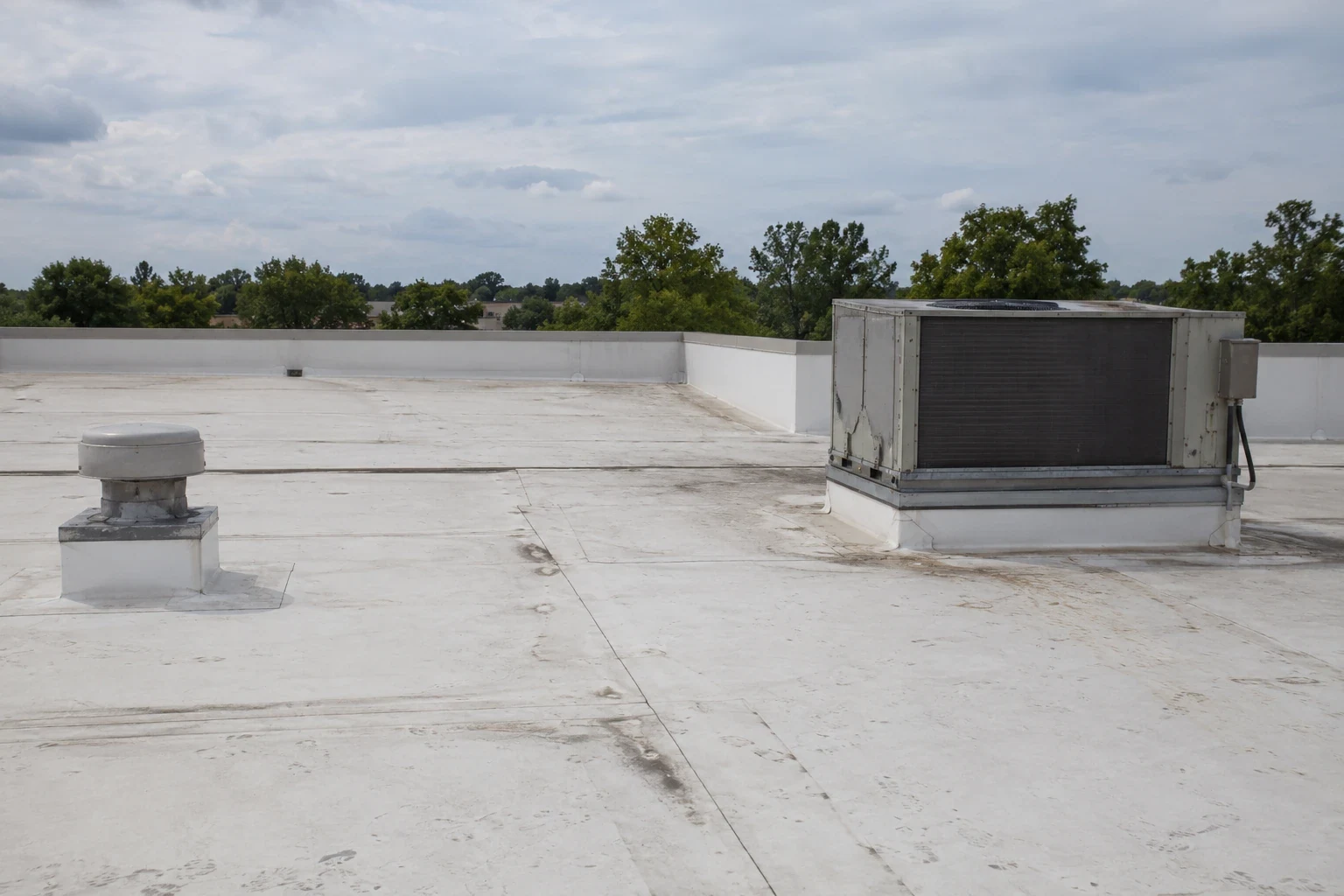
Water often enters where field membrane meets a curb, drain, pipe, wall or edge. We check flashing height, termination, metal, sealant and drainage together. A blocked drain can keep water at a weak detail, while a flashing patch may leave the cause untouched. A commercial roof inspection can trace an active leak and separate immediate dry-in from permanent correction.
Mechanically attached, adhered and induction-welded assemblies use different components and checks. We confirm the installed method before proposing repair or replacement tie-ins. Wind and hail exposure make edge and corner conditions important, but a weather report is not a roof assessment. The scope states what we observed and which detail will be rebuilt.
Repair records should show the roof zone, material used, preparation, weather conditions, photographs and any follow-up inspection. A clear boundary lets maintenance staff compare the same detail later. It also helps separate a new opening from an older repair edge when water appears again after a storm.
Weather history: use it as inspection context
In 2019, a tornado touched down east of Bryan, within Brazos County. The Bryan-College Station area experienced significant hail during April 2021. Those events provide local context, not a diagnosis of a particular roof. We inspect current punctures, displaced metal, open seams, flashing and interior water reports. The repair boundary comes from field conditions and any agreed testing.
Heat also affects work planning. Roof surfaces and equipment can make some work windows harder for crews and materials. We sequence the area, handle products within their requirements and define protection before shifting zones. A reflective option should be judged against assembly and building conditions, without promising an energy result from membrane color alone.
Localized damage on sound materials may support repair. Repeated failures, widespread moisture or deteriorated layers can point toward a larger project. We document what the inspection shows and compare repair and replacement boundaries so the decision follows the roof, not the date of a storm.
Replacement: plan it around access and closeout
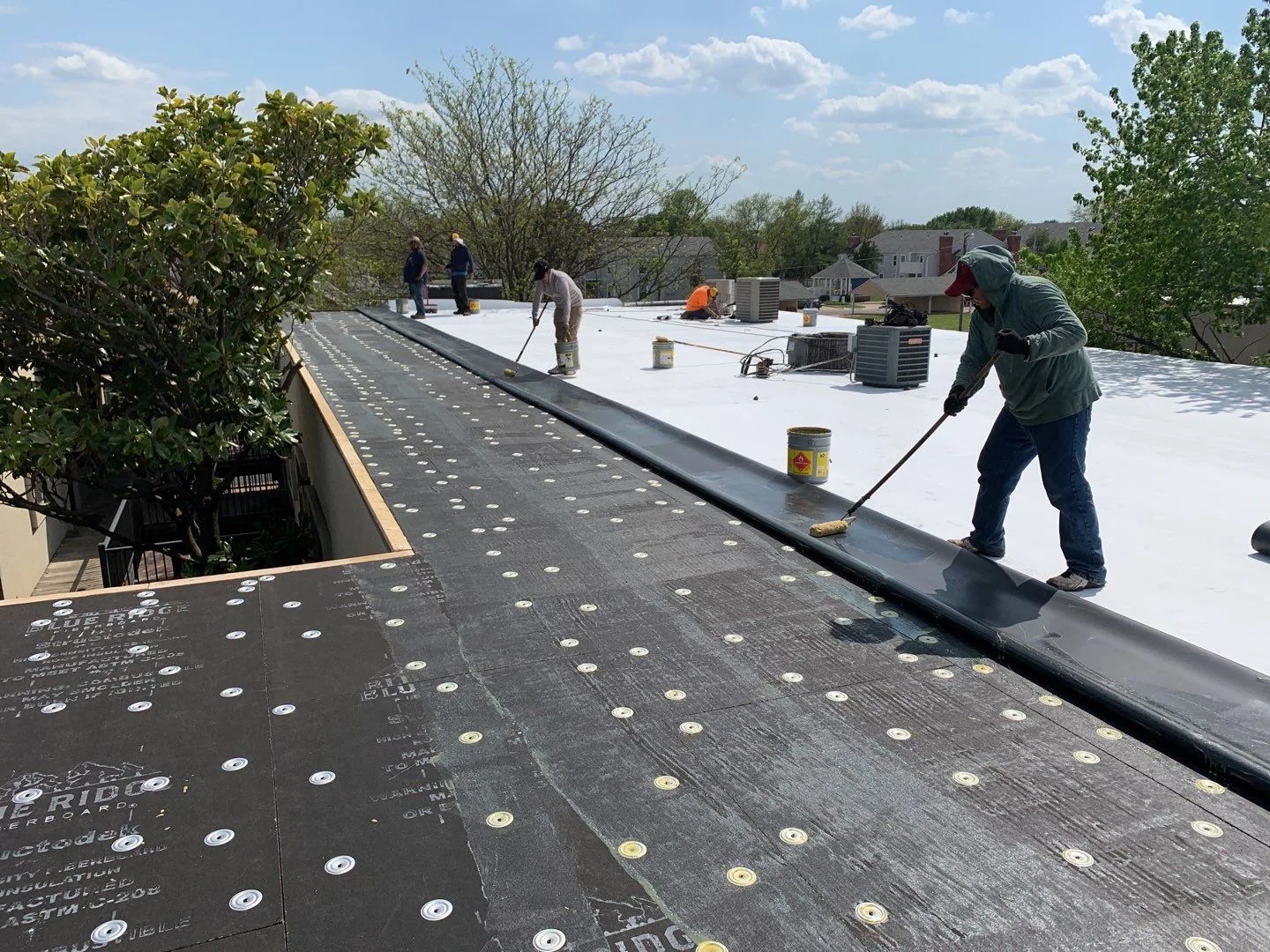
A replacement proposal should state system, attachment, insulation, flashing and perimeter work, along with exclusions and field-confirmation items. The sequence covers staging, tear-off or recover limits, temporary dry-in, debris handling and inspection points. If existing layers are uncertain, we identify what could change after testing.
Within Bryan city limits, replacing roof finishes requires a building permit obtained by the roofing contractor and a final inspection. We allow for that approval path and keep the records needed for closeout. A commercial roof replacement plan should include product identification, photographs, inspection notes and change records.
For comparison, owners can review a GAF commercial roof assembly or a Versico membrane system against the same building conditions. Hold scope, attachment, insulation, flashing and closeout requirements consistent. We explain how each alternative changes work method, access or maintenance records.
For occupied sites, the plan should identify where crews enter, what areas stay available to building staff and how deliveries avoid blocking routine operations. We set a contact for day-to-day changes, protect completed roof zones and review weather before exposing another section. These steps turn a material specification into a workable roof project.
Frequently Asked Questions
How do you confirm whether an existing roof uses a membrane in this product family?
We compare closeout records or labels with the installed sheet and details. If the family remains uncertain, we note it and verify the material before specifying a product-specific repair.
Can UltraPly TPO SA or TPO XR be installed over the current roof?
Each configuration has defined assembly requirements. Before considering a recover, we check deck, insulation, attachment, drainage, perimeter and retained layers. A sound surface alone is not enough.
What is different about repairing RubberGard EPDM?
We follow EPDM preparation and compatible splice details, checking the membrane, seam, flashing and substrate together. The boundary must reach sound material; thermoplastic welding is not used on EPDM.
Does the 2021 hail report mean a roof in this product family needs replacement?
No. The event is local context, not a roof diagnosis. We inspect the membrane, seams, edges and interior reports, then compare repairable damage with broader replacement conditions.
What should the closeout record include after replacement?
Keep the approved scope, product identification, permit and final inspection records, photographs and change notes together. These records help future inspections compare roof zones with completed work.
Review the roof assembly
Tell us which system is present, how it is attached and what condition needs review. We can inspect the installed system and define the next repair, maintenance or replacement task.