Multi-Site Commercial Roofing in Bryan, TX
A multi-site roofing program needs common intake fields and separate findings for each building. Bryan-College Station had significant hail in April 2021, while the 2019 tornado touchdown was in Brazos County east of Bryan. Each location’s file should identify the storm-related complaint, roof zone inspected, access limitations and completed repair, so a shared program does not assign one building’s condition to the rest of the portfolio. Those dated events can sit beside current inspection notes and completed repair records. We build a multi-site program around shared intake, common field records and a clear escalation path. A leak report should identify the property, roof zone, building use and access contact before a crew is dispatched. A Bryan roof program visit can set that starting process with the owner or general contractor.
Dispatch path: sort calls by the roof condition
One call may concern active water entering an occupied space; another may ask for a scheduled review of an aging membrane. The intake separates those jobs before the route is set. We record the symptom, property contact, safe access details, roof type if known, and any ongoing work that could affect the opening. Active leaks or exposed materials receive a response path for stabilization. A non-urgent inspection can be grouped with nearby work when access and staffing allow, but the visit still records the roof zone and findings separately for each property.
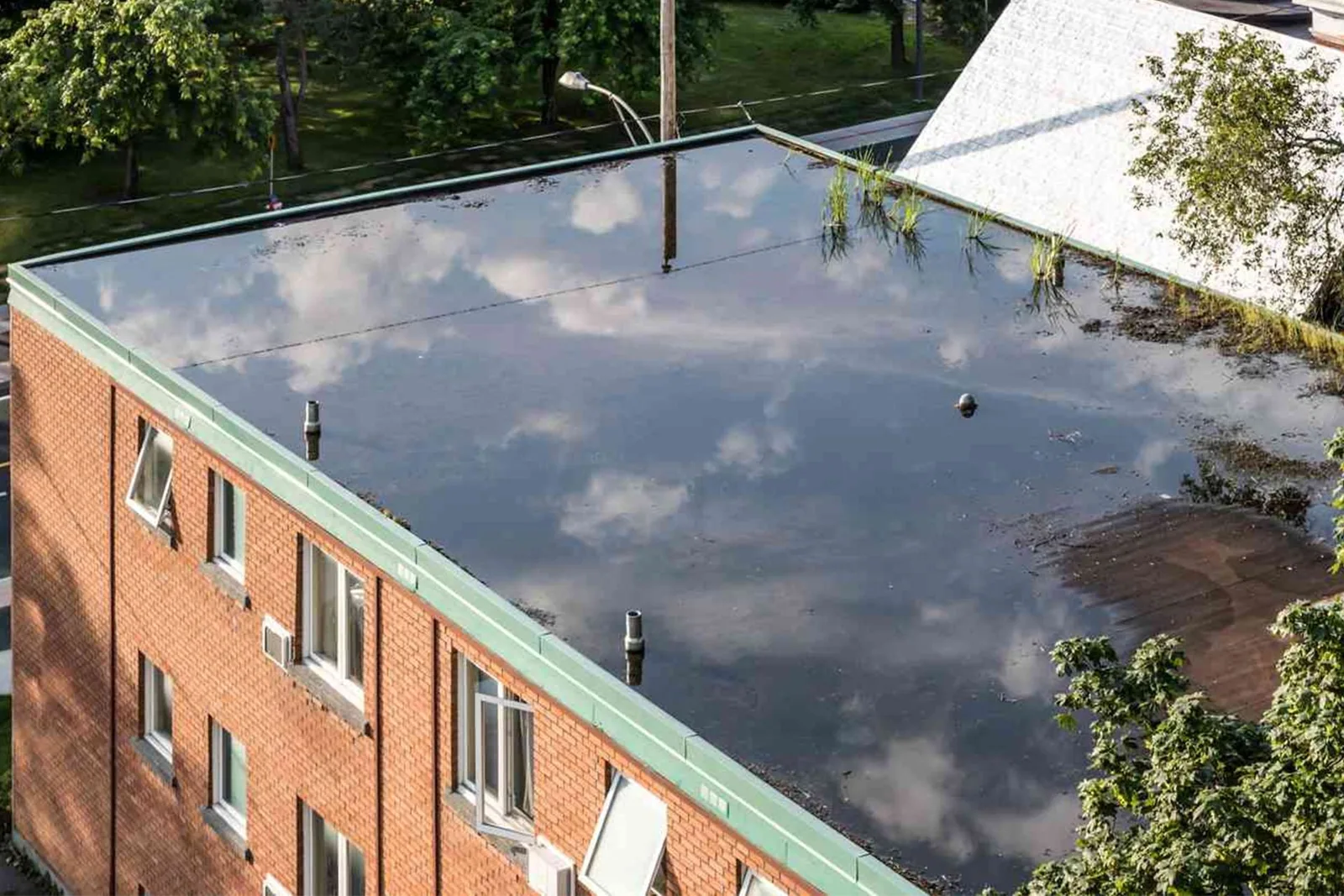
During a storm response, the first field task is to identify openings and protect affected areas, then document details that need permanent repair. A roof emergency visit can be scheduled around the building contact and operating hours. After stabilization, the owner can request a condition inspection for surrounding seams, edge details, penetrations and drainage. This keeps the response from turning into a broad replacement recommendation before the roof assembly and repair boundary are understood.
Program records: use the same fields at every property
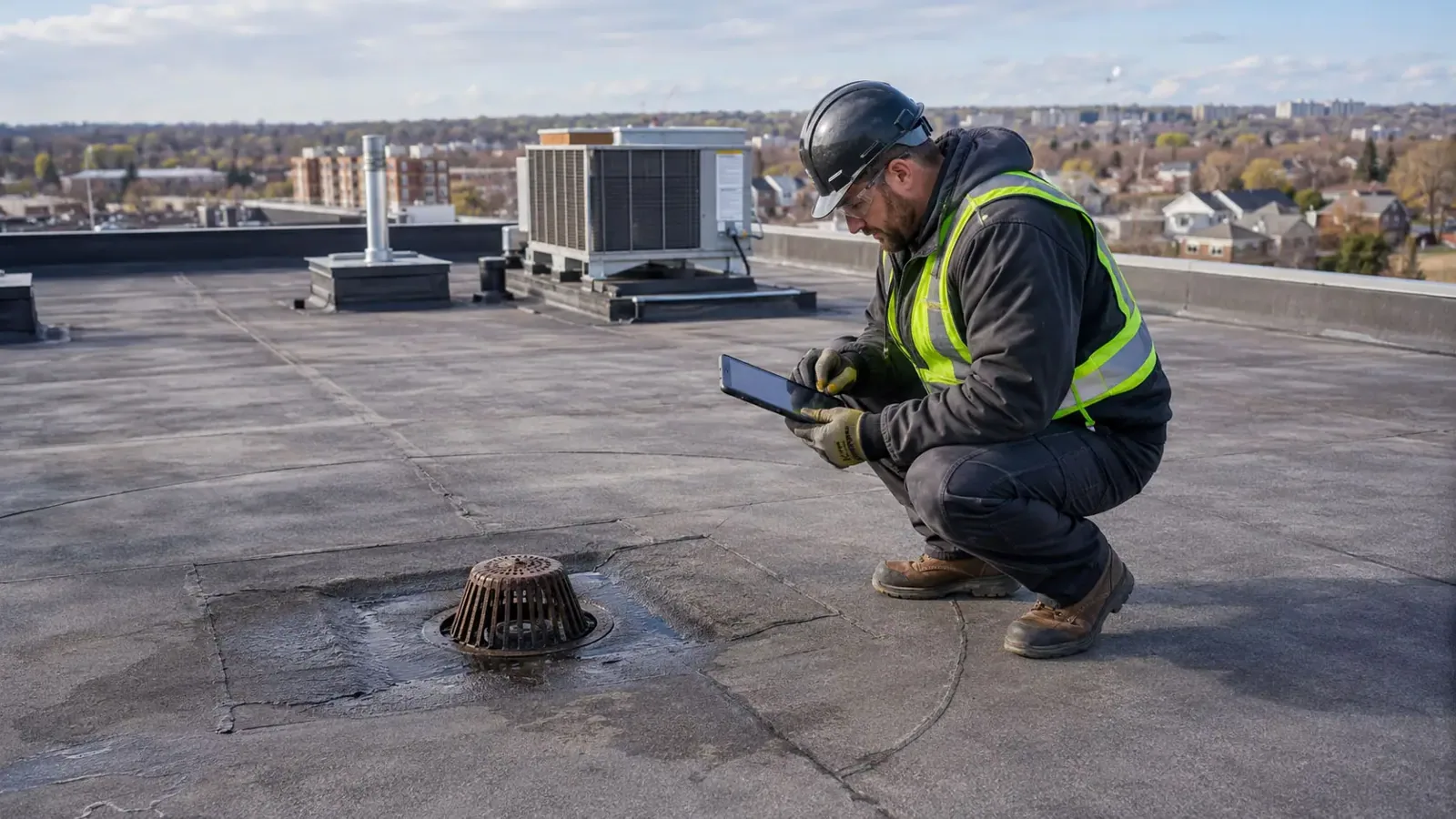
A multi-site program needs a record that staff can use across locations without pretending the buildings are identical. We use a consistent set of entries for roof area, membrane where identified, visible repairs, drains, edge conditions, equipment details, photographs, access notes and next action. A finding marked for repair stays separate from an item that needs a test opening or further review. This makes it possible to compare open work without treating an inspection note as a completed repair or a known roof age.
Each entry should lead to an owner or contractor decision: approve a defined repair, arrange a follow-up test, add a maintenance task or request a separate replacement proposal. Our roof asset record can retain those entries and inspection dates, while a field condition report carries photos and repair boundaries from a particular visit. If a different manager takes over, the roof history can show what was inspected, what was completed and which item remains open without relying on a verbal handoff.
Local property patterns: coordinate by use, not by label
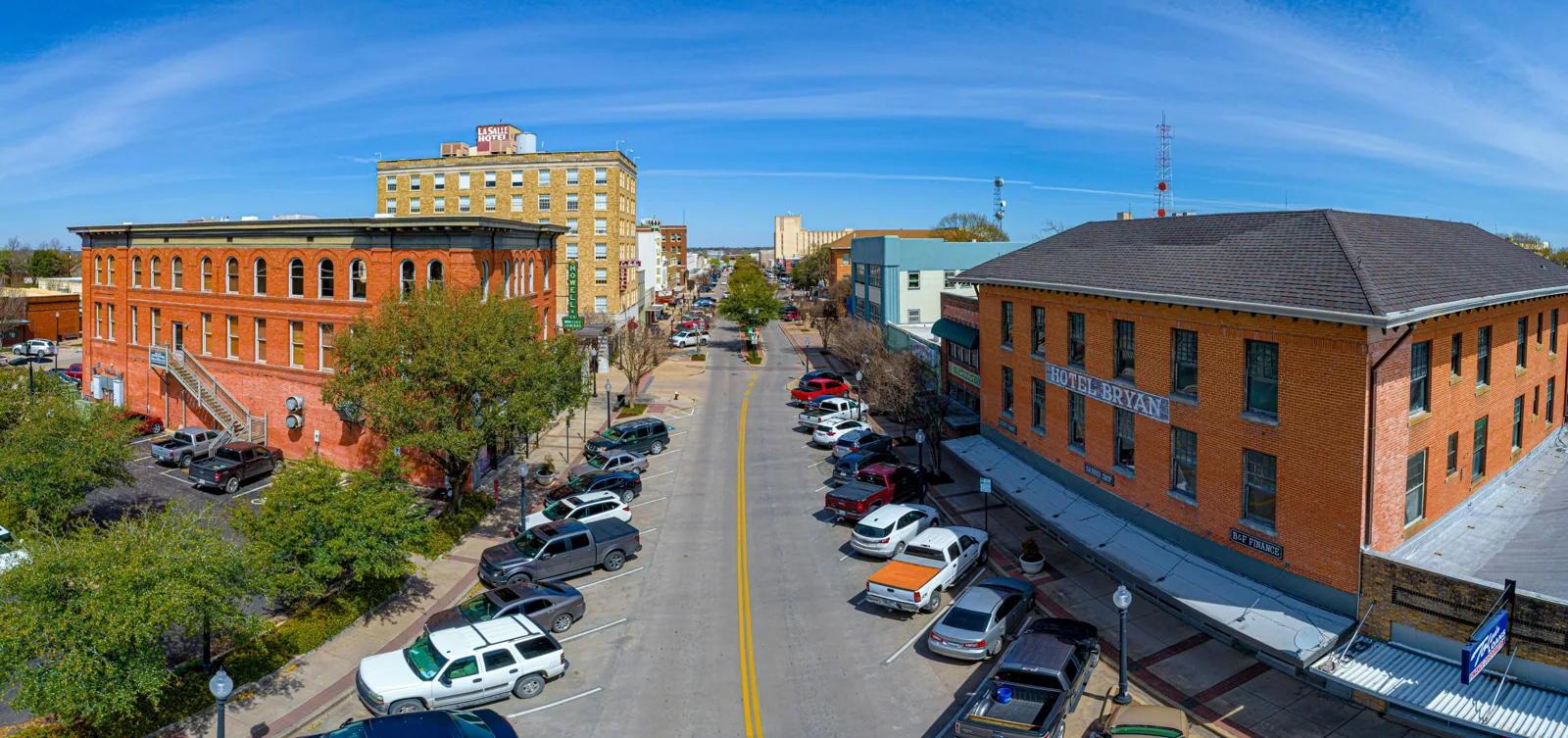
Bryan Business Park is a local commercial business area where roof access and delivery plans need confirmation with the property contact. For a portfolio with different building uses, we record the contact, approved staging point and work window for each property rather than carrying one site's assumptions to another. The same intake can track tenant notices and service access while keeping each roof's findings separate.
Before mobilization, we ask the property contact where the crew can stage, which entries must stay clear, and who can approve a change to the work zone. A roof walk near Bryan Business Park can be sequenced around the access conditions confirmed for that property. A manager responsible for several buildings can carry the same notification fields to each visit while preserving site-specific directions. The program template organizes communication; the roof's observed condition determines the repair scope.
Work packages: keep comparable scopes separate
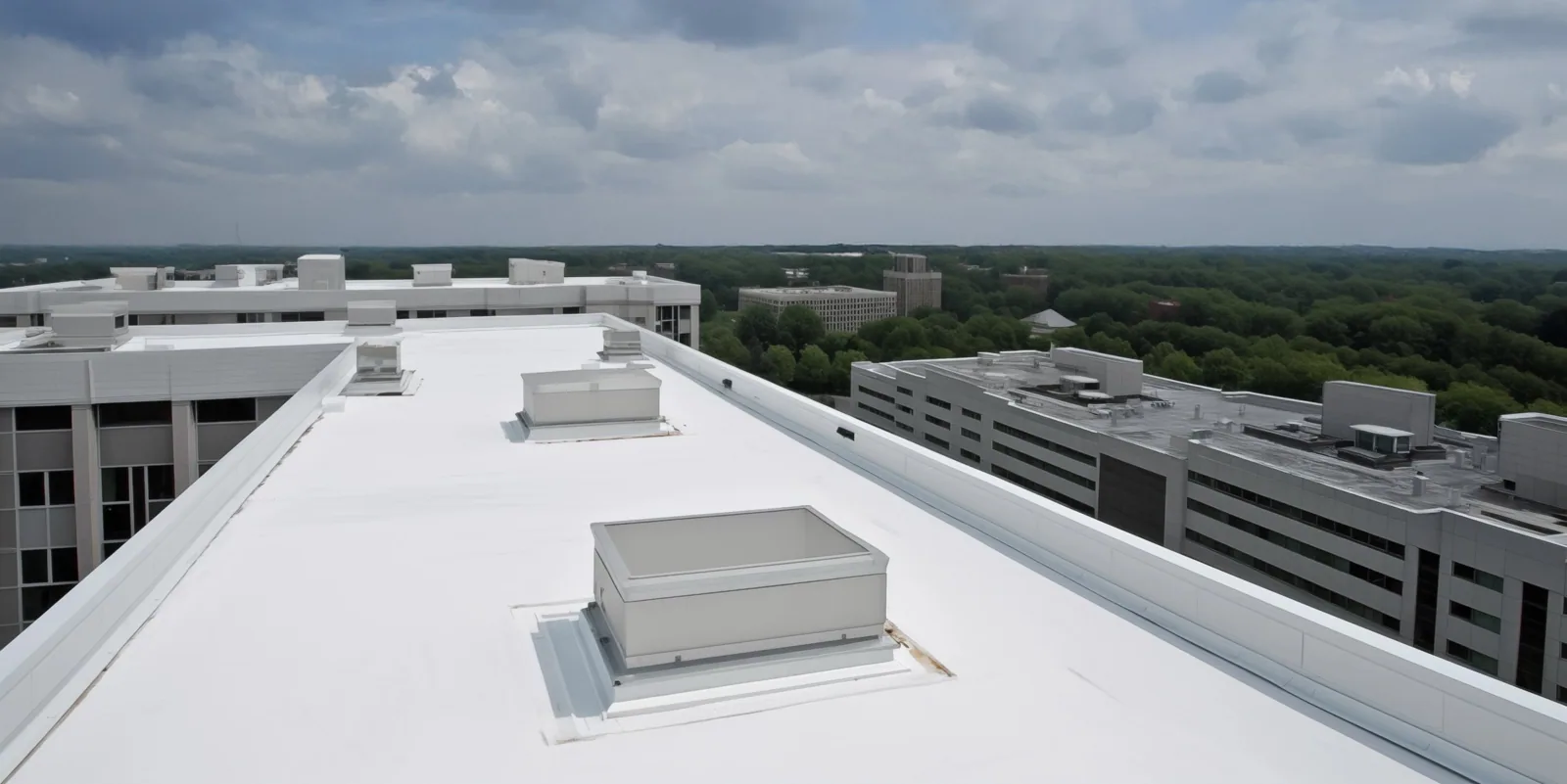
For repeated repair work, each proposal should identify its roof zone, preparation, material, flashing or edge detail, access needs and closeout check. For replacement, the scope can break out removal, insulation, membrane, perimeter work and equipment tie-ins. A standard format makes review easier, but identical line items do not prove that two roofs need the same work. We keep observations and assumptions attached to each property so a condition found at one address is not copied into another building's estimate.
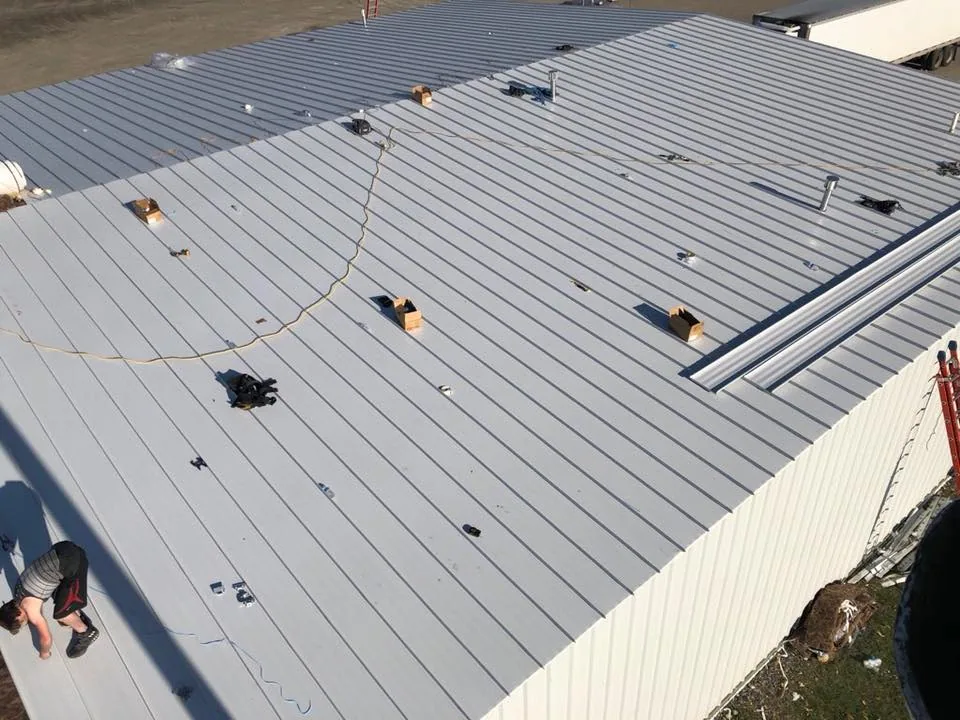
Recurring visits can be grouped by geography or building contact when that reduces unnecessary remobilization and does not delay an urgent condition. Our scheduled roof maintenance can track drains, seams and flashings as separate tasks. When a roof has a leak or isolated damage, the repair scope identifies the patch or detail and its boundaries. If replacement is being considered at several properties, each building receives its own roof walk and a site-specific replacement proposal before work is packaged into a program schedule.
General contractor handoffs: name the next trade
A program often includes tenant work, mechanical changes or other construction that touches the roof. We note whether equipment must be disconnected, a curb reset or a penetration sealed by another trade. The roofing scope then identifies its tie-in and the point where the next contractor can proceed. If the scheduled work crosses several buildings, a route list can show the site contact, roof access, material staging and stop point for each location without merging the repair records.
The roofing handoff for a general contractor gives the GC a field-specific work boundary and a dry-in sequence to coordinate with the rest of the schedule. We confirm who receives the photographs, who approves concealed-condition work and who checks that the roof opening is closed before another trade returns. A change in timing gets carried back to the property contact so tenant notices and access arrangements remain current.
Frequently Asked Questions
How does a multi-site roofing program handle an urgent leak?
We route the active leak for stabilization, record the property and roof zone, and coordinate access with the building contact. A later inspection can determine whether nearby details need repair or additional testing.
Can several properties share one maintenance schedule?
Visits can be grouped when timing and access allow, but each building receives its own inspection notes and work record. An urgent condition keeps its own response path.
What does the owner receive after each site visit?
The record identifies roof zones visited, observed conditions, photographs, repair boundaries and open actions. It also notes access limits or trade dependencies that affect the next task.
How do you compare replacement scopes across a portfolio?
We use a consistent scope format but inspect each assembly separately. The proposal states removal, insulation, membrane, edge and tie-in work for that roof, along with assumptions that still need confirmation.
Can a general contractor use the same program record?
Yes. The GC can use roof-zone notes, access instructions, dry-in boundaries and trade handoffs to coordinate each work package while the owner retains the property-specific findings.
Program review: close open items before the next cycle
At the end of a service cycle, the owner can sort records by completed repair, deferred item, requested investigation and next inspection date. We confirm that each visit has a closeout note and that the reported condition was either addressed or left with a specific next task. If the plan depends on a test opening, equipment reset or inspection result, that dependency remains visible rather than disappearing into a general maintenance line.
A program can change as tenants, access rules and roof work change. We update the field record when a repair is completed, add photographs of the finished detail and identify any new condition that merits follow-up. For properties managed under one operations team, the same format can support a roof review without claiming a shared condition. The next visit begins with a known list of open roof tasks, while the physical inspection confirms what remains necessary at each building.
Set a repeatable roof service process
Share the properties to include, building uses, access contacts and current roof concerns. We can set an intake and field-record format, then schedule the first inspection or repair visit.