Commercial Roof Asset Management in Bryan, TX
A useful roof record connects event dates to a roof zone, assembly, repair history and next decision. A Brazos County tornado rated EF-2 touched down in 2019 roughly four miles eastward of Bryan, damaging a house and four commercial buildings or warehouses. April 8, 2021 hail around Bryan-College Station was reported at 1-2.75 inches; its most significant period there was 9 to 9:30 p.m. Our roof asset management service builds a working record from field observations, repair history and current building use. We can start with a commercial roof walk in Bryan, then organize the information so a later maintenance visit or replacement discussion begins with the same roof map.
Asset register: identify each roof area before work is assigned
A useful register begins with the roof areas people can distinguish in the field. We identify the building or property group, note the section name used by the owner, and record visible assembly details where they can be confirmed: membrane or metal type, edge and wall transitions, drains, curbs, access points and prior repair locations. If a plan set uses different labels from the maintenance team, we preserve both references so the next work order points to the same place. A surface view cannot identify concealed layers, so we mark those assembly details for a closer look before entering them in the register.
That structure matters when several roofs share one ownership file. A repair ticket that says “north roof” may mean a different area to the tenant, facility lead and roofing crew. We pair each label with a roof sketch, photo index or plan reference available for the job, then keep those identifiers consistent in later records. The owner can request a roof condition report with zone observations when a current field picture is needed, while the asset register retains the longer sequence of changes. Each entry has a date, original record, responsible contact role and status, so an open question is not mistaken for completed work.
Work history: connect the repair to its roof location
A membrane patch without a location and repair boundary is difficult to use later. We capture the roof area, the observed issue, the work performed, materials identified when available, and any adjacent detail that remained outside the scope. Where a leak call involved a curb, seam, drain or wall transition, the record links the symptom to the physical inspection and repair notes rather than treating the ceiling location as the roof entry point. That gives the next technician a starting point and helps the owner see whether a new report concerns a known repair or a separate condition.
Photos are useful when they answer a question. A wide view locates the area; a closer image shows the seam, flashing, penetration or drainage detail involved. We label them to match the register and add a short note describing what the image can support. If water testing, selective opening or another examination is needed, the entry states that as a pending step, not a conclusion. Linking completed work to the repair scope and field closeout keeps the record useful after the crew leaves. The history should show what changed, what remained, and whether a follow-up inspection was scheduled.

Operating context: keep the record useful across Bryan property types
Bryan Business Park is a local commercial business area. For a roof entry there, we record the property contact, approved access route, delivery limits and equipment coordination needs before setting a work window. The register keeps those operating notes beside the roof-zone labels, photographs and repair history, so a general contractor can coordinate roofing with mechanical work without blending separate properties.
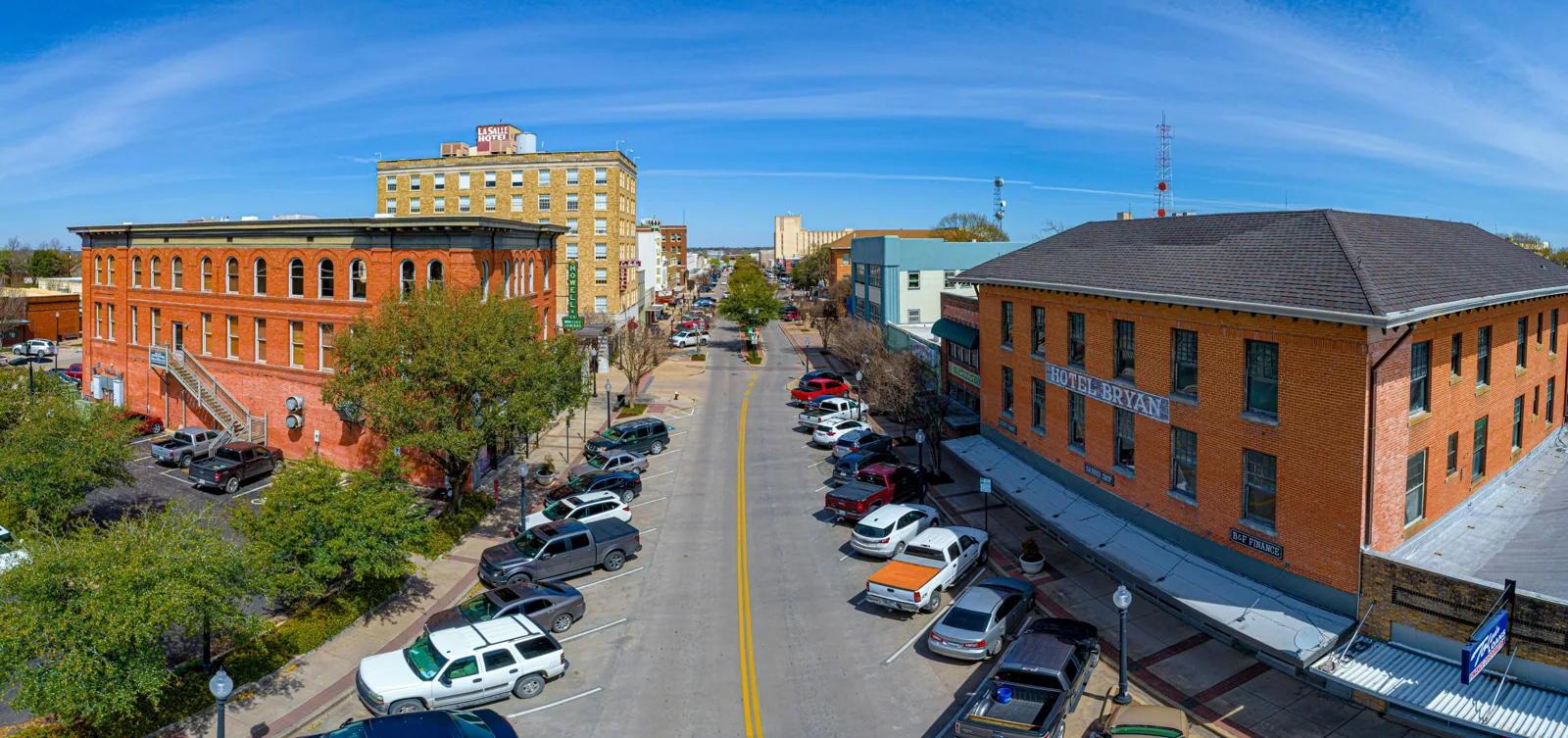
Downtown Bryan’s commercial mix includes restaurants, shops and art galleries, where customer entrances and exterior work timing can affect how a repair is staged. The record should capture the owner-approved access method and work-hour limits. For a group of buildings, we can organize locations consistently through a multi-building roofing program and compare notes without blending separate roof histories. A roofing walk near Bryan Business Park still starts with the specific building and its operating plan. We record the assembly and condition observed during that walk, then carry the confirmed details into the register.
Record maintenance: update the file when the roof changes
Roof records go stale when repairs, coatings, equipment changes or replacement work are filed under different names. We update the area identifier, date, scope and photo references after each completed roofing task, and keep proposals or inspection notes attached to the part of the roof they address. If the work changes a tie-in or drainage path, the register should point to the affected detail and note what inspection would confirm the result. Owners can keep their own service logs; our role is to make the roofing information readable and consistent enough for the next decision.
Maintenance entries should distinguish a scheduled task from a completed one. A planned drain cleaning, for example, is not evidence that water was moving freely during the next storm. We record what was checked, what was cleared or repaired, and any item that needs another work order. That makes a preventive roof maintenance visit part of the building’s roof history rather than a recurring calendar label. When the record points to a condition requiring deeper review, we can arrange a commercial roof inspection and link its findings to the existing area names.
Handoff and closeout: preserve the decision trail
A good handoff gives the next owner's representative enough context to make a roofing choice without reconstructing the file. We can separate confirmed roof details, completed work, open questions and recommended next actions, with each item tied to its area and supporting record. When replacement is under consideration, a roof replacement scope can refer to the same mapped sections used in prior repair history, making boundaries and exclusions easier to compare. The asset record does not select a system by itself; it keeps the observations and decisions in view so the owner and project team can evaluate the available work.
For Bryan roof-finish replacements inside city limits, the roofing contractor obtains the building permit and schedules the final city inspection. Bryan also provides online applications, inspection scheduling and results through its development-services permitting portal. We include permit and inspection status in the closeout record when those steps apply, then attach the final documents to the same roof-area identifiers. That gives a property manager a clear trail from observed condition to approved scope, work completion and the next planned check. Tell us which buildings are in scope, how the roof areas are labeled and when access is available; we can arrange a walk and establish the first record set.
Frequently Asked Questions
What belongs in a commercial roof asset register?
Start with building and roof-area identifiers, known system details, access notes, dated inspection records, repair history, photos and open follow-up items. We mark what is confirmed in the field and what still needs a closer look, so a future work order has a usable starting point.
Can older repair records be added if the roof map is incomplete?
Yes. We can index the documents you have, preserve their original dates and labels, then note where a field walk is needed to connect a repair to a roof area. Missing detail stays visible as an open item instead of being filled in by assumption.
How does the register help after a storm report?
The date and affected area can be tied to current observations, photos and any repair decision. Bryan has documented hail and tornado events, so keeping separate event notes beside the roof history helps the team distinguish a new inspection from earlier work.
Does an asset record replace an inspection?
No. A register summarizes the history available; an inspection checks current conditions. We can use the existing area labels during a new roof walk, then add the observations and next steps to the same record.
What do you need before organizing several roofs?
A building list, any roof plans or service logs, available access windows and the contact who can confirm area names are a strong start. We can then identify gaps during the walk and agree on how later repair entries will be filed.
Set up a usable roof record
Share the building list, current roof documents and preferred access window. We can arrange a Bryan-area walk, confirm practical roof-area labels and outline the records needed for the next maintenance or repair decision.