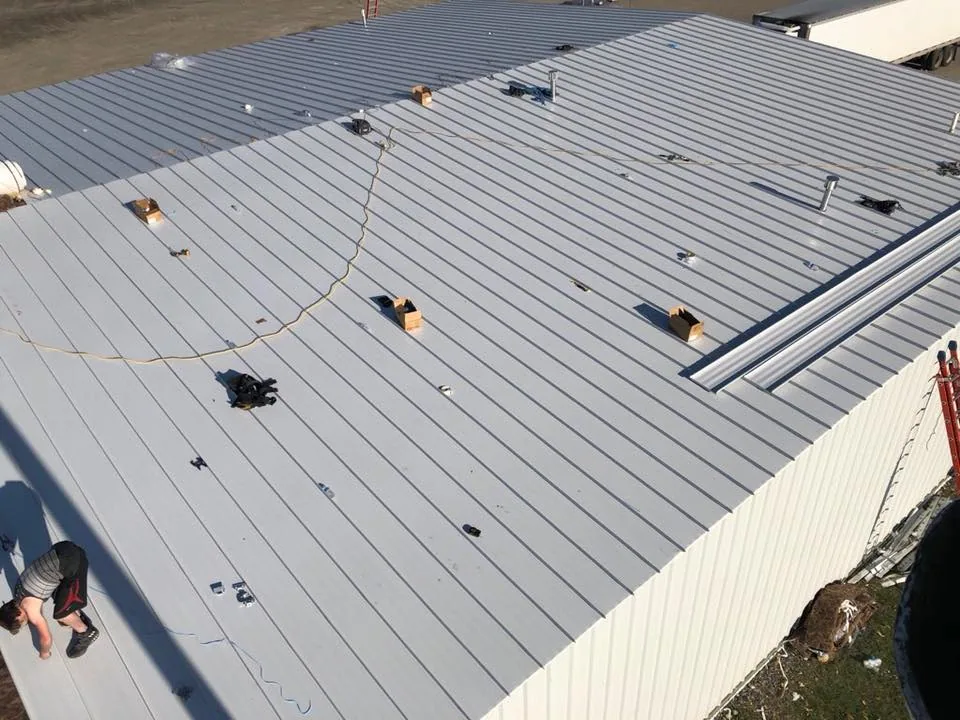
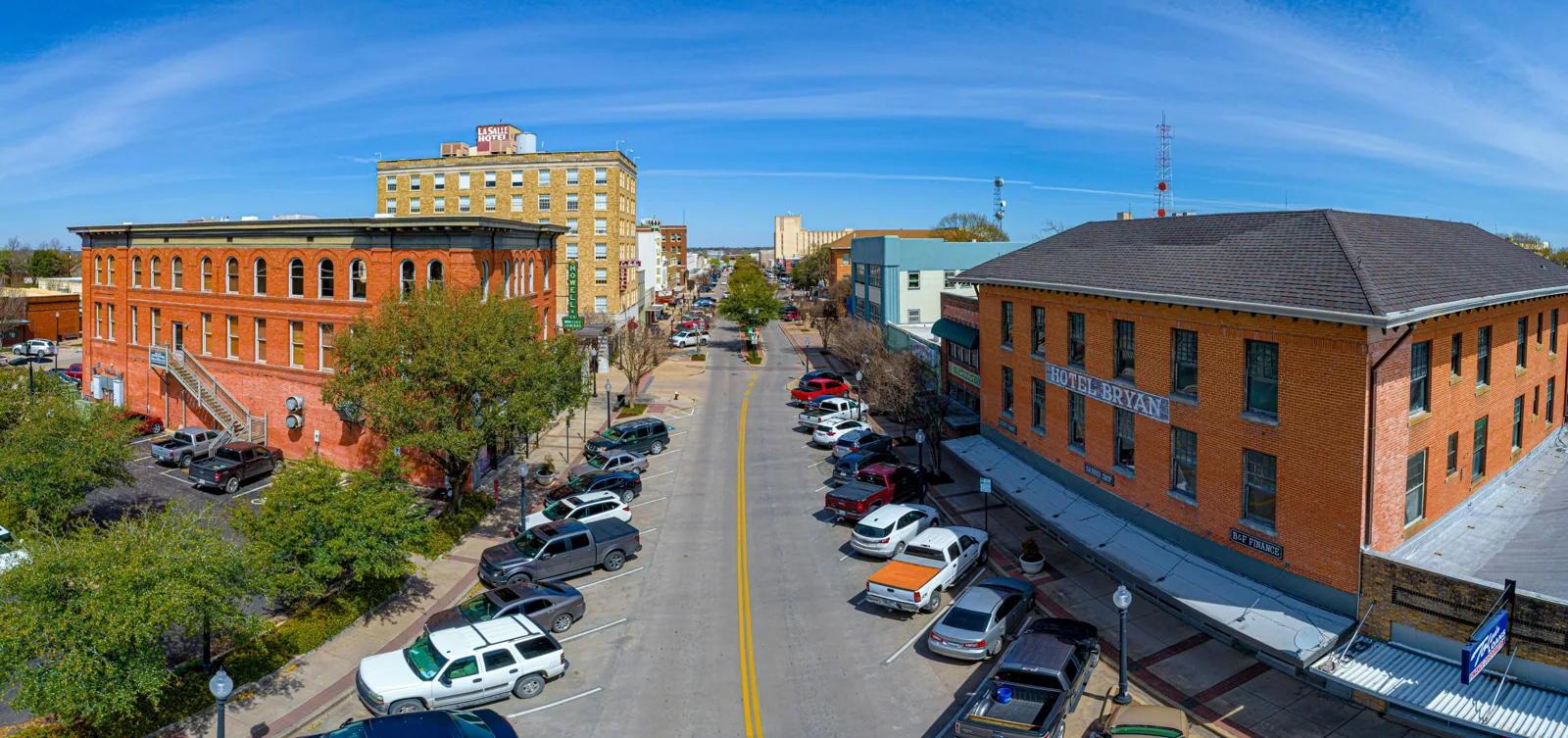
Commercial Membrane Puncture Repair in Bryan, TX
A puncture can be smaller than the water mark it leaves below. The April 2021 storm produced reports of 1-2.75-inch hail around Bryan-College Station; on April 8, its most significant hail there occurred from 9 until 9:30 p.m. We locate the opening, trace the water path and decide whether the membrane around it can support a lasting patch. The repair scope should identify the break and the material that will close it.
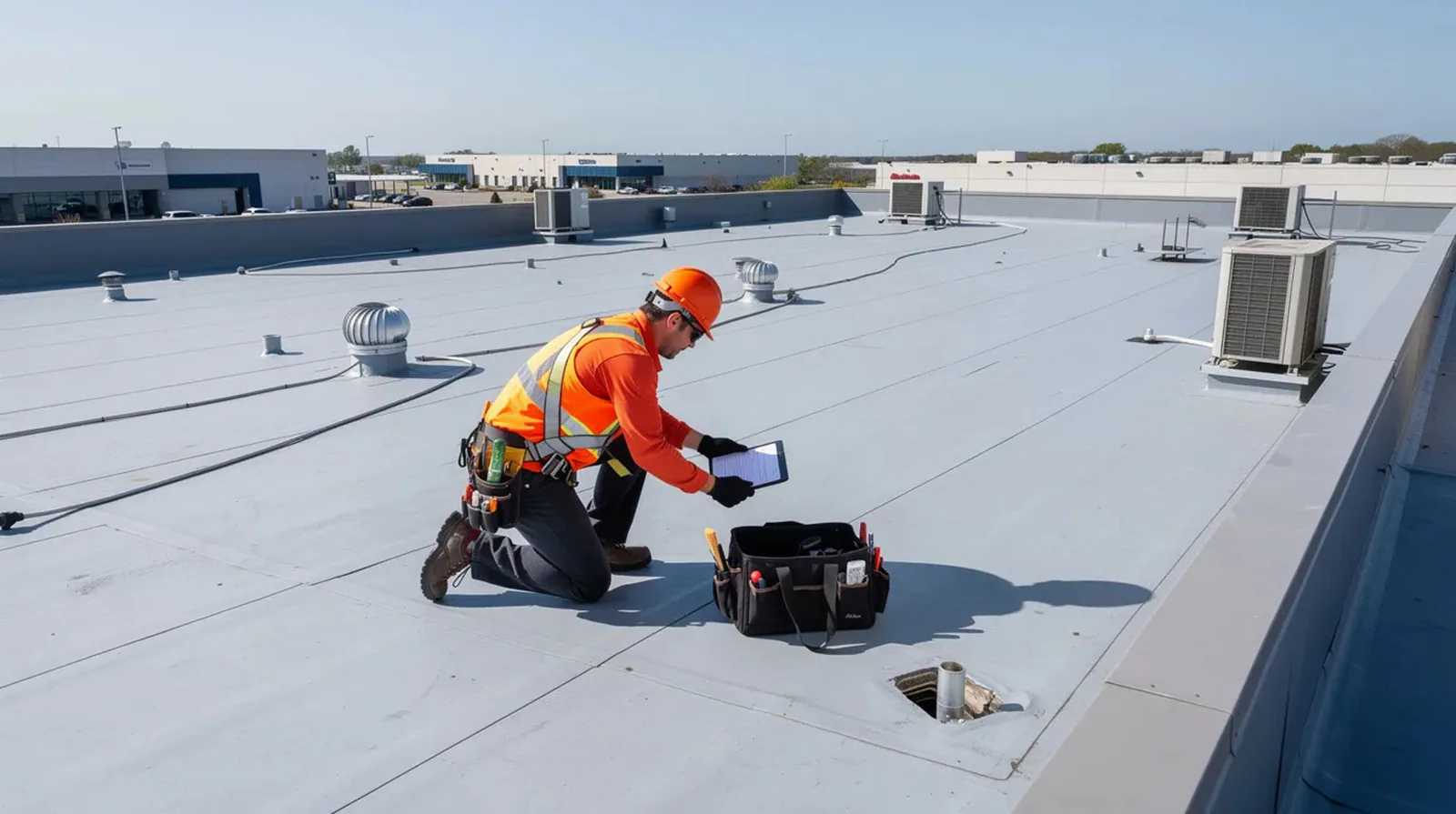
Start with the building use, roof assembly, date the leak appeared and any recent rooftop work. Bryan Business Park and Brazos County Industrial Park are public industrial parks. At either park, confirm roof entry and material staging before a puncture repair interrupts a shared approach. A commercial roof inspection connects the visible damage with seams, flashings, drains and interior reports before the crew opens or covers the membrane. We arrange a walk for a commercial property in Bryan with the roof condition and work window in view.
Break: locate it and map what it can affect
A puncture may come from dropped hardware, a sharp edge, foot traffic, stored materials or work by another trade. The likely cause is a starting point, not proof of the exact opening. We photograph the suspected area, record its roof section and check nearby walk paths, equipment supports and transitions. A small hole near a lap may have a different repair boundary from a cut across an exposed field membrane.
Water can travel laterally above insulation before it appears inside. Compare ceiling marks and reports with the roof layout, then inspect the route between those points. Note whether the leak began after rain, whether it recurs under particular conditions and whether temporary protection changed the pattern. A commercial roof leak repair assessment can trace the entry path and separate confirmed wet areas from locations that still need testing.
Membrane: confirm it before choosing a patch
Repair materials must match the existing assembly. Identify whether the roof uses TPO, PVC, EPDM, modified bitumen or another membrane, and check for coatings or previous repairs that affect bonding. Record the membrane surface condition: clean or contaminated, dry or damp, flexible or brittle. A patch applied over dirt, moisture or loose material can separate even when it covers the original opening.
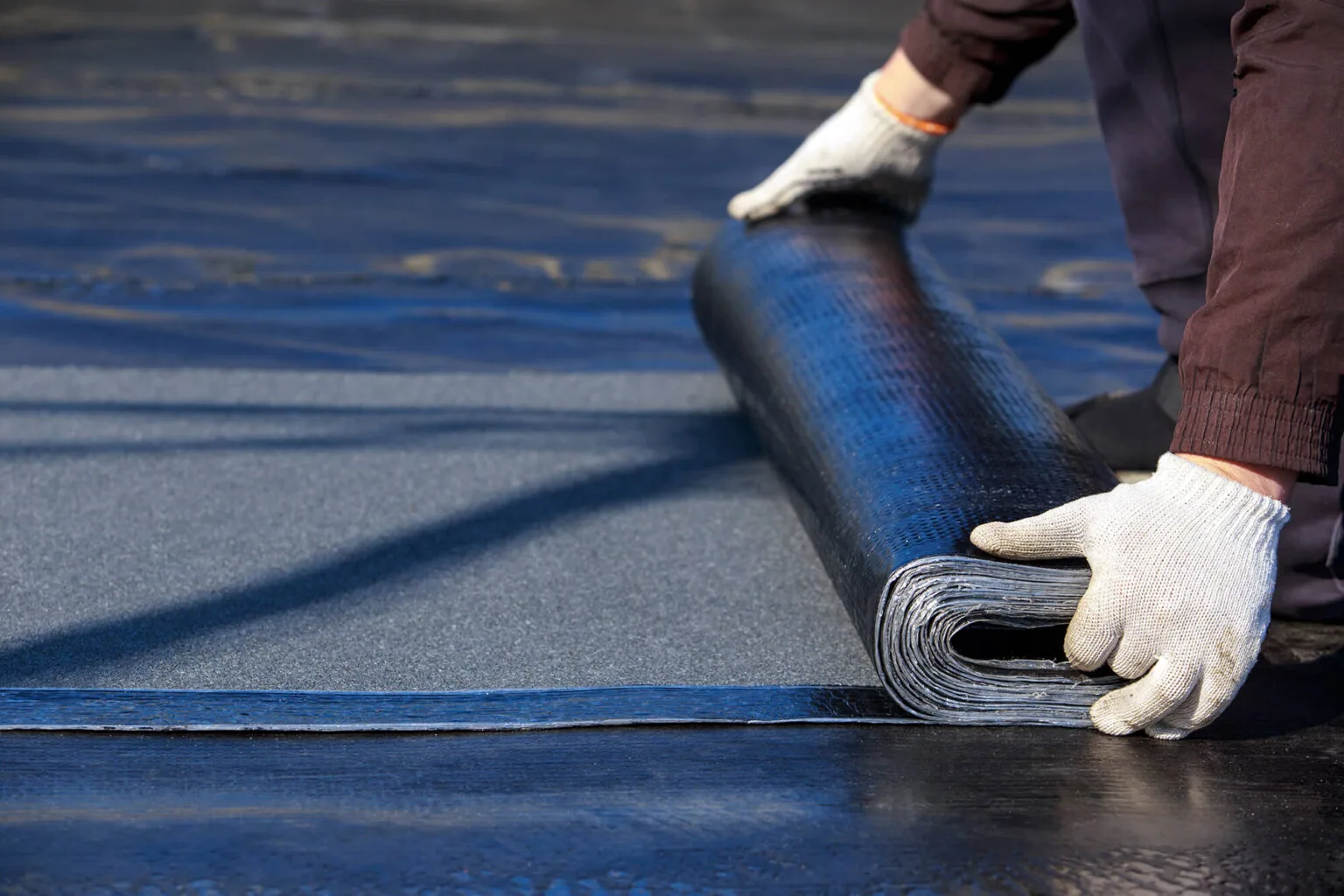
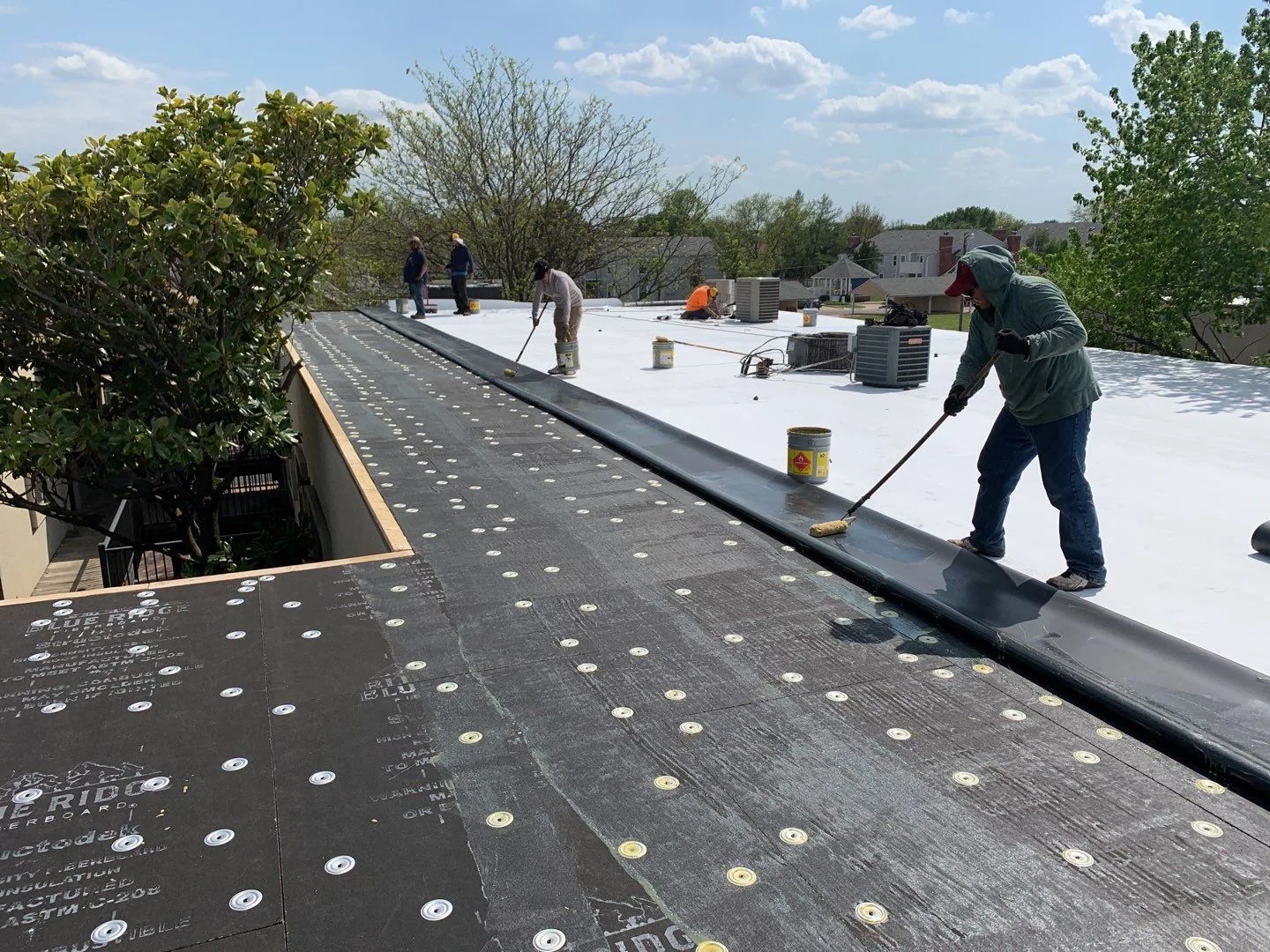
For a thermoplastic membrane, the repair may require cleaning and a heat-welded patch with adequate overlap on sound material. Verify the surface can accept a weld, remove incompatible residue and check the finished seam for continuity. EPDM and other adhered or vulcanized systems call for their own cleaners, primers, tapes or compatible repair materials. Do not substitute one system’s preparation steps for another. If the assembly is unknown, use a test area or sample review before setting the patch method.
Measure beyond the visible cut to establish how much sound membrane is available for the patch. Rounded corners can reduce the chance of an edge lifting, while an irregular opening may require a larger prepared area. At a penetration or wall transition, determine whether the patch can tie into the detail without trapping water or creating a raised edge. A puncture that reaches insulation or deck needs a broader repair than a surface-only patch. If water also remains at the low point, document it with a ponding water review. Photograph each exposed layer and include concealed-condition limits in the scope.
Repair boundary: set one that can be priced
A useful scope states the number and location of punctures, membrane type, preparation, patch dimensions, attachment method and tie-ins. It also records whether insulation or deck was opened, what was replaced and what remains concealed. If wet material extends beyond the initial opening, define how additional work will be measured and approved before the crew proceeds.
When only one isolated break is present and surrounding material remains sound, a local patch may restore the membrane. Multiple cuts, brittle material, repeated patch separation or widespread wet insulation can change the recommendation. Compare the localized work with a broader commercial roof repair plan or a replacement option if the assembly cannot support reliable tie-ins. The recommendation should follow observed conditions, not the size of the interior stain alone. A nearby joint or curb may need a separate seam failure repair or flashing failure scope.
Include access, protection, materials, cleanup and verification in the estimate. If equipment, stored items or another contractor’s staging blocks the area, identify the required clearance and the party responsible for moving it. State whether the repair fits one work window or needs a dry-in handoff. For an active opening, emergency roof protection can stabilize the area while permanent materials and dry conditions are arranged.
Work window: coordinate it with dry-in
Before mobilization, agree on roof access, material staging, the path to the repair and who can approve a concealed-condition change. For an occupied commercial building, keep tools and removed material out of active routes, protect nearby equipment and coordinate any shutdown needed to open the roof safely. Bryan has two public industrial parks, but repair sequencing still follows the property's loading route and work window; roofing activity should not block a dock or the next trade's path.
Choose a work window that allows the prepared surface to remain dry. Remove loose or contaminated material, expose only the area that can be closed in the available period, and maintain temporary protection if conditions change. If insulation or deck must be replaced, set the dry-in sequence before the opening is made. The crew should know which materials are on hand, how the perimeter will be secured and what condition requires work to stop.
Within Bryan city limits, replacing roof finishes requires a permit and final inspection. A localized membrane puncture repair is not automatically a roof-finish replacement, so describe the actual scope accurately and confirm applicable requirements before work is scheduled. When the project changes into a finish replacement, account for the permit and inspection sequence in the estimate rather than treating it as part of a patch.
Closeout: check the repair and preserve the record
After the patch is installed, inspect the full perimeter and confirm the repair is bonded to prepared, sound material. Use the appropriate probe or field check for the membrane system without cutting or stretching the finished work. Confirm that edges are sealed, transitions lie flat and the repair does not redirect water toward another detail. Photograph the finished patch from a wide view and close view, then mark its location on the roof plan.
Retain the repair date, materials used, crew observations and any work by other trades around the area. If a future report occurs nearby, compare it with the prior photographs and conditions rather than assuming the patch failed. The record should show whether water returned at the same location, traveled from another detail or followed a different path across the assembly.
For a Bryan roof with a fresh cut, soft membrane or active interior water, send the building use, roof system if known, photos and preferred work window. We can arrange a walk, define the repair boundary and identify the next roofing task while the building’s access and trade sequence are still clear.
Frequently Asked Questions
Can a small puncture be patched without replacing the roof?
Often, when the opening is isolated and nearby layers remain sound. We verify the material, check for moisture and confirm the patch can bond to stable edges. Broader deterioration may call for a larger repair or replacement comparison.
Why does water appear far from the puncture?
Water can travel between membrane and insulation. We compare ceiling reports with roof details and the suspected opening, then document areas needing further testing.
How do you choose a compatible patch?
We identify the membrane and its condition, then use preparation and attachment methods suited to that system. TPO, PVC, EPDM and modified bitumen require different materials; an unknown assembly should be checked first.
What if insulation below the puncture is wet?
We document the opened area and affected layers. Wet insulation may need removal before the membrane is restored. The scope records concealed conditions and how additional quantities will be approved.
Can repair work fit around an operating building?
Access, staging, noise, equipment and dry conditions shape the work window. We coordinate routing, protection and the handoff with building staff and other trades.
Arrange a puncture repair walk
Send the building use, roof system if known, photos of the opening and the preferred work window. We can locate the break, define the patch boundary and coordinate the handoff with your project team.